Reverse Osmosis Water Filter: How It Works and Whether You Need One
A reverse osmosis water filter is one of the most thorough ways to treat drinking water at home. It pushes tap water through a very fine membrane that blocks dissolved solids, leaving cleaner water on one side and a stream of concentrated waste water on the other. The result is water that tastes noticeably different from ordinary tap water. But the system is also more complex, more expensive, and more wasteful of water than a simple tap filter, so it is worth understanding how it works before you decide whether you need one.
This guide explains the process in plain terms, what a reverse osmosis water filter does and does not remove, the parts that make up a typical system, the maintenance involved, and how it compares with other types of filter. It also helps you work out whether your water actually needs this level of treatment.
What Is a Reverse Osmosis Water Filter?
A reverse osmosis water filter is a drinking water system that uses pressure to force water through a semi-permeable membrane, a thin sheet with pores so small that water molecules pass through while most dissolved solids are held back. The name comes from osmosis, the natural process in which water moves across a membrane from a weaker solution to a stronger one; reverse osmosis applies pressure to push the water in the opposite direction, which is how the dissolved solids get separated out.
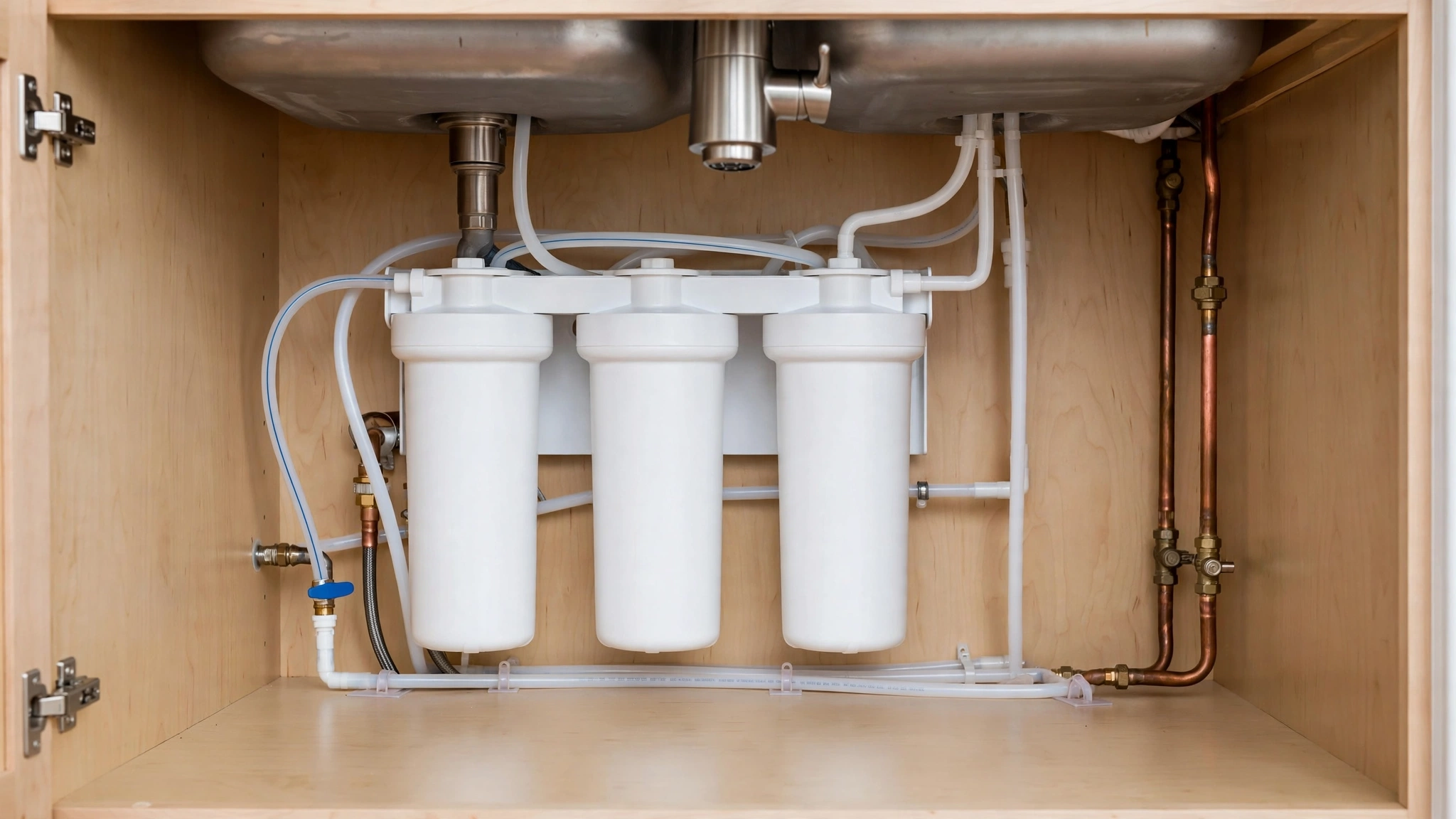
In a home system, the membrane is only one part of the setup. Before the water reaches it, pre-filters remove sediment and chlorine, which protects the membrane and extends its life. After the membrane, a final polishing filter, often carbon, improves the taste. The clean water is stored in a small tank under the sink, ready to flow from a dedicated tap, while the rejected water runs to the drain.
Most home systems are installed under the kitchen sink and serve a single tap, which is why they are often called point-of-use systems. They treat only the water you drink and cook with, not the water for showers, laundry, or the garden. A reverse osmosis system is a drinking water solution, not a whole-house treatment system.
How a Reverse Osmosis Water Filter Works
The process happens in stages, and each stage has a job. First, tap water passes through a sediment pre-filter, which catches sand, rust, and other particles, and then a carbon pre-filter, which removes chlorine and some of the chemicals that give tap water its taste and smell. Chlorine removal matters because chlorine can damage the membrane over time.
Then comes the membrane itself, the heart of the system. Under pressure from your mains water supply, water is forced against the membrane: pure water molecules pass through, while dissolved solids are held back. The water that passes through is collected in a storage tank, and the rejected water flows away to the drain. This is why the system uses more water than it produces: the membrane needs a flow of water across its surface to carry the rejected solids away.
What a Reverse Osmosis Water Filter Removes, and What It Does Not
It removes a wide range of dissolved solids, which is its main strength. It is effective against dissolved salts and minerals, and against many of the substances that affect the taste and hardness of water. This is why the water tastes soft and neutral: much of what gives tap water its character has been taken out. If your tap water has a strong taste, a noticeable odour, or a high mineral content, reverse osmosis is one of the few home treatments that makes a clear difference.
It is equally important to know what it does not do. It is not a disinfectant: it is not designed to make microbiologically unsafe water safe to drink, and if your water supply is not already treated and safe, reverse osmosis alone is not the answer. It also does not remove everything: some dissolved gases and very small molecules can pass through the membrane, and a system with an old, worn membrane or clogged pre-filters will not perform as well as a maintained one.
Another point people are often surprised by is that reverse osmosis removes beneficial minerals along with the unwanted ones, which is why the water tastes soft. Some people prefer that taste, while others find it flat.
The Main Parts of a Reverse Osmosis Water Filter System
A typical under-sink system has several recognisable parts. The pre-filters are the first thing you will see: usually two or three canisters in a row, holding the sediment filter and the carbon filter. These are the parts you change most often, and they are designed to be unscrewed and replaced without tools or a plumber. The membrane sits in its own housing, often a longer canister, and it lasts longer than the pre-filters but costs more to replace.
The storage tank is a small pressurised vessel that holds the filtered water until you need it, because the membrane produces water slowly, and a dedicated tap beside your main kitchen tap delivers it. When you compare systems, the quality of the membrane matters more than the number of extra features.
Do You Need a Reverse Osmosis Water Filter?
Whether you need one depends on your water and on what bothers you about it. The strongest reason to get one is taste and mineral content: if your tap water tastes strongly of chlorine, has a metallic or earthy flavour, or leaves heavy scale on kettles and taps, reverse osmosis will make a noticeable difference. It is also a good choice if you use a lot of filtered water for drinking and cooking and want a thorough, consistent result rather than a jug filter you have to keep refilling.
There are also good reasons not to get one. If you are happy with the taste of your tap water, it adds cost, complexity, and water use for little benefit. If your main concern is hard water and scale throughout the house, it is the wrong tool, because it only treats the water at one tap; a whole-house water softener is designed for that job, and our guide to the whole house water softener explains how that approach works.
Before you buy, it helps to know what is actually in your water, so check your supplier’s water quality report and give the tap water a simple taste and smell test. It is a strong tool, but it is not a substitute for knowing what you are treating.
Installation, Maintenance, and Running Costs
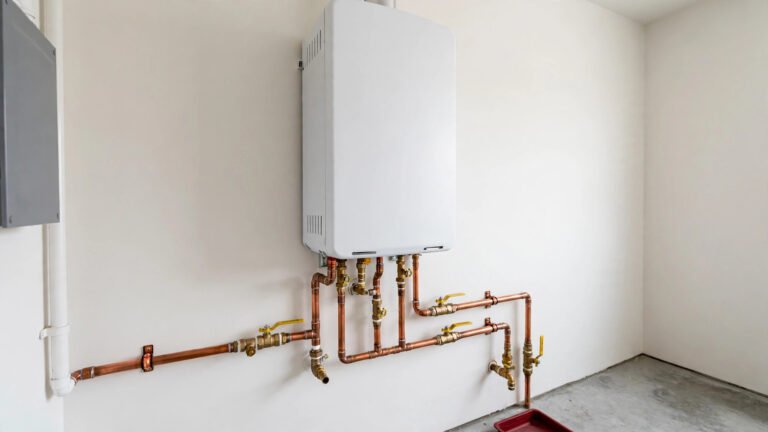
Installing one is a job for a competent DIYer or a plumber, and most systems are designed for under-sink installation. The work involves connecting the system to the cold water supply, fitting the dedicated tap through a hole in the sink or worktop, and connecting the drain line. If your sink has no spare hole for the tap, one may need to be drilled, which is a step many people prefer to leave to a professional. If you are planning other kitchen work at the same time, it is worth coordinating the plumbing: a new hot water system changes the pipework under the sink, and our guide to tankless water heater installation covers what that kind of job involves.
Maintenance is regular but simple. The pre-filters need replacing on a schedule, usually every few months to a year depending on your water and the manufacturer’s guidance. The membrane lasts longer, but it still needs replacing eventually. The post-filter is changed with the pre-filters or on its own schedule, and the whole system benefits from a periodic sanitise when filters are changed. None of this is difficult, but it does need to be done: a neglected system performs worse over time.
Reverse Osmosis vs Other Water Filters
The simplest alternative is a carbon filter, either in a jug or fitted to a tap. Carbon filters improve taste and remove chlorine, and they are cheap, simple, and waste no water. What they cannot do is remove dissolved solids, so if your water is high in minerals or has a strong taste that carbon does not fix, a carbon filter will not be enough. For many households, a carbon filter is all that is needed.
A water softener is a different tool for a different problem. It exchanges the minerals that cause hardness for sodium, which stops scale forming on kettles, pipes, and appliances throughout the house. It does not produce the very low-mineral water that a reverse osmosis system does, and it is not normally used for drinking water alone. The two systems can work together: a softener for the whole house, and a reverse osmosis system at the kitchen tap for drinking water.
Frequently Asked Questions About a Reverse Osmosis Water Filter
Does a reverse osmosis water filter remove chlorine?
Yes, the carbon pre-filter removes chlorine before the water reaches the membrane, and the post-filter polishes the taste further.
Why does a reverse osmosis water filter waste water?
It sends some water to the drain because the membrane needs a flow of water across its surface to carry away the dissolved solids it rejects. Without that flow, the solids would build up on the membrane and clog it.
How often do I need to change the filters?
The pre-filters and post-filter usually need replacing every few months to a year, depending on your water quality and the manufacturer’s guidance. The membrane lasts longer, but it still needs replacing eventually. Follow the schedule in the manual rather than waiting for the taste to change.
Can I install a reverse osmosis water filter myself?
Many people install one themselves, since most systems are designed for under-sink fitting with push-fit connections and clear instructions. You need to connect to the cold water supply, fit the dedicated tap, and connect the drain line. If your sink has no spare hole for the tap, or you are not comfortable working with plumbing, a plumber can complete the job in a single visit.
Does reverse osmosis water taste different?
Yes. The filtered water tastes soft and neutral, because most of the dissolved minerals that give tap water its character have been removed. Some people love the clean taste, while others find it flat. If the flat taste bothers you, look for a system with a remineralising stage.
Is a reverse osmosis water filter better than a jug filter?
It removes far more dissolved solids than a jug filter, which mainly uses carbon to improve taste and remove chlorine. It also delivers a continuous supply from a tap, rather than a jug you have to keep refilling. A jug filter is cheaper, simpler, and wastes no water, so it is the better choice if taste alone is your concern.
A reverse osmosis water filter is a thorough, reliable way to improve your drinking water, and for homes where taste, mineral content, or dissolved solids are a real problem, it is hard to beat. It is also more complex and more wasteful of water than simpler filters, and it only treats the water at one tap, so it is not the answer to every water problem. Know what is in your water, be honest about what bothers you about it, and choose the system that matches the problem.