How to Plant Potatoes: In a Garden Bed or a Container, Step by Step
Learning how to plant potatoes is one of the most satisfying gardening projects you can try at home. Potatoes are easy to plant, they grow well in a garden bed or a large container, and there is nothing quite like digging up your first home-grown crop. You do not need a large garden either. A few containers on a patio can produce a useful harvest.
This guide explains how to plant potatoes step by step, from choosing seed potatoes to hilling, watering, and harvesting. It covers both garden beds and containers, so you can choose the method that suits your space.
Choose the Right Potatoes
When you are learning how to plant potatoes, start with seed potatoes — small potatoes saved for planting, rather than from true seed. Buy certified seed potatoes from a garden centre or seed supplier, because potatoes from the supermarket may carry disease and may have been treated to stop them sprouting. The Royal Horticultural Society has a detailed guide to growing your own potatoes.
There are three main types, based on how long they take to mature. Early varieties are ready to harvest sooner and are a good choice if you want new potatoes in early summer. Maincrop varieties take longer but usually produce a larger harvest and store better. Choose a variety that suits your climate and how you plan to use the potatoes, and read the label for the expected harvest time and disease resistance.
When and Where to Plant
Potatoes need a sunny spot and loose, well-drained soil. Choose a place that gets at least six hours of sun a day. Avoid planting potatoes in the same spot year after year, because diseases can build up in the soil. If you can, rotate them to a different bed each year and avoid planting them where tomatoes or other related plants grew recently.
Wait until the soil has warmed up and the risk of a hard frost has passed before planting outdoors. Cold, wet soil can cause seed potatoes to rot before they sprout. In most temperate climates, planting in spring is the usual time, but the exact timing depends on your local conditions. If a late frost is forecast after the shoots appear, cover the plants overnight with fleece or straw to protect them.
Prepare the Soil
The first step in how to plant potatoes is preparing the soil: potatoes grow best in loose soil that lets the tubers expand easily. In a garden bed, dig the soil over and remove stones and weeds. Mix in well-rotted compost or manure to improve the structure and add nutrients, but avoid fresh manure, which can encourage disease.
The soil should be moist but not waterlogged. If your soil is heavy clay, adding compost and planting in a raised bed or container can help with drainage. If your soil is very sandy, compost will help it hold moisture.
For containers, fill the container about a third full with compost to start with. You will add more compost later as the plants grow, so do not fill it to the top yet.
How to Plant Potatoes Step by Step
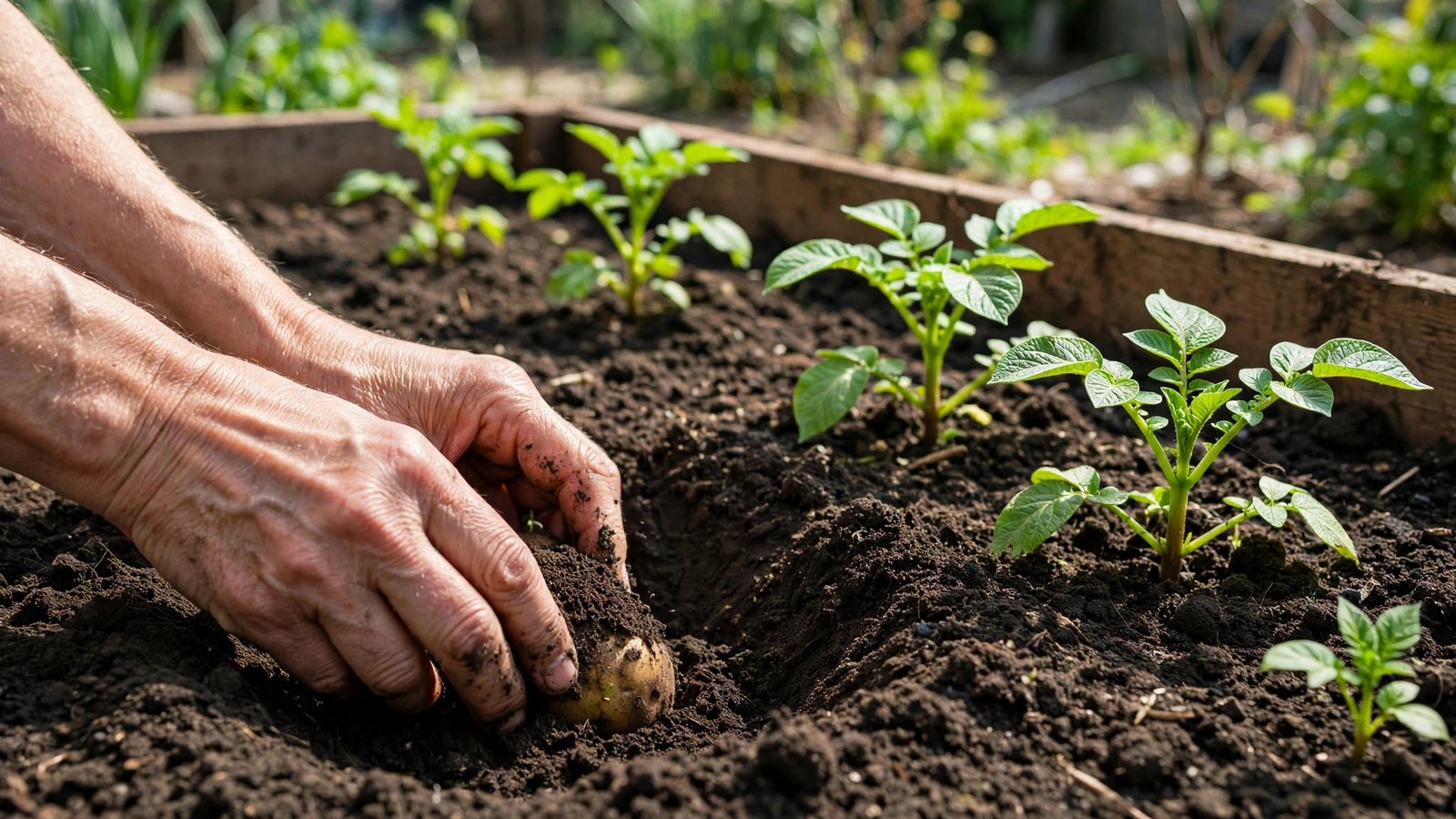
When learning how to plant potatoes in a garden bed, dig a shallow trench about as deep as a hand-span. Place the seed potatoes in the trench with the shoots facing upwards, spacing them about a foot apart. Leave a wider gap between rows so you have room to earth up the plants later. Cover the potatoes with soil and water gently.
For a container, place the seed potatoes on the surface of the compost, shoots facing up, and cover them with a few inches of compost. Use two or three seed potatoes in a large container, spacing them out so each plant has room. Water well after planting.
Hilling and Watering
Hilling, also called earthing up, is one of the most important steps in growing potatoes. As the plants grow, draw soil up around the stems, covering the lower leaves and leaving only the top of the plant showing. Repeat this every few weeks as the stems grow taller.
Hilling does two things. It encourages more tubers to form along the buried stems, which can increase your harvest, and it keeps the developing tubers covered. Potatoes that are exposed to light turn green, and green potatoes should not be eaten. Keeping them buried is the simplest way to prevent this.
In containers, hilling is done by adding more compost around the stems as they grow, until the container is nearly full. Water regularly, especially once the plants start flowering and the tubers are forming. Water at the base of the plants and try to keep the leaves dry.
When and How to Harvest
Early varieties are usually ready to harvest once the plants flower, while maincrop varieties are ready when the foliage starts to yellow and die back. You can check by gently digging at the edge of a plant to see the size of the tubers, without disturbing the whole plant.
For new potatoes, harvest when the tubers are still small and the skins are thin. For maincrop potatoes, wait until the foliage has died back, then cut the stems down and leave the tubers in the ground for a week or two so the skins can set.
Harvest on a dry day if you can. Use a fork to lift the plants, working from the side so you do not spear the tubers. Shake off the loose soil and let the potatoes dry in a cool, shaded place for a few hours. Store them in a cool, dark, well-ventilated place, in a paper sack or a box rather than a plastic bag. Do not eat green potatoes.
Conclusion
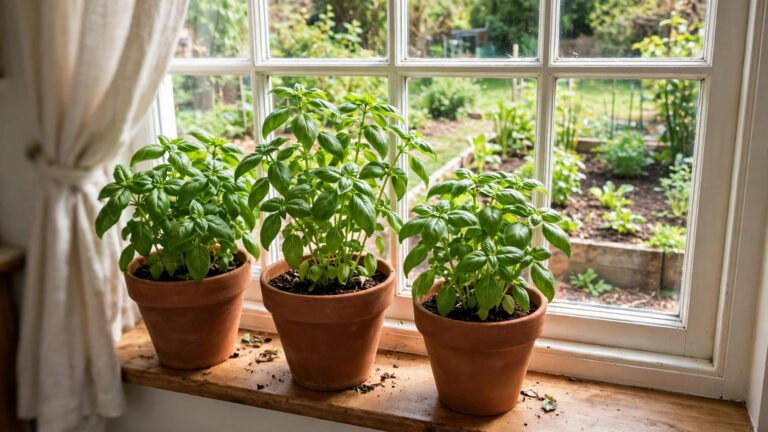
Learning how to plant potatoes is a simple and rewarding project, whether you have a garden bed or just a few containers. Choose certified seed potatoes, plant them in a sunny spot with loose, well-drained soil, and keep hilling up the stems as they grow. Water regularly while the tubers are forming, watch for pests and disease, and harvest on a dry day when the plants tell you the crop is ready. With a little care, you will be digging up fresh potatoes that taste far better than anything from a shop. Once you have the hang of it, growing basil in a pot is another easy crop to try.
Frequently Asked Questions
Can I plant potatoes from supermarket potatoes?
It is not recommended. Supermarket potatoes may carry disease and may have been treated to stop them sprouting. Buy certified seed potatoes from a garden centre or seed supplier for a healthier crop.
How deep should I plant potatoes?
In a garden bed, plant seed potatoes in a shallow trench about a hand-span deep. In a container, cover them with a few inches of compost, then add more compost around the stems as the plants grow.
Why do I need to hill potatoes?
Hilling encourages more tubers to form along the buried stems and keeps the developing potatoes covered. Potatoes exposed to light turn green and should not be eaten, so keeping them buried is important.
How do I know when potatoes are ready to harvest?
Early varieties are usually ready once the plants flower. Maincrop varieties are ready when the foliage yellows and dies back. You can also gently check the size of a few tubers by digging at the edge of a plant.