Tankless Water Heater Installation: What It Involves and When to Hire a Professional
Tankless water heater installation is a bigger job than many homeowners expect. A tankless water heater heats water only when you turn on a tap, rather than keeping a large tank of water hot all day. That can save space and reduce the energy used to keep stored water warm, which is why many homeowners consider one when an old tank heater needs replacing or during a larger renovation.
Installation, however, is not a simple swap. A tankless unit has different requirements for fuel, venting, water flow, and electrical supply, and getting any of those wrong can be unsafe or leave you with poor hot water performance. This guide explains what installation involves, what to plan for, and when to hire a licensed professional.
How a Tankless Water Heater Works
A tankless water heater, also called an on-demand water heater, has no storage tank. When you open a hot tap, cold water flows through the unit, a burner or heating element switches on, and the water is heated as it passes through. When you close the tap, the heater switches off.
Because there is no tank to refill and reheat, you do not run out of stored hot water in the usual way. The limit is instead the flow rate: the unit can only heat a certain amount of water per minute. If several showers, taps, and appliances run at the same time, the unit may not keep up, and the water may run cooler. Sizing the unit to your household’s peak demand is therefore one of the most important parts of the job.
Tankless units are available in gas and electric models. Gas models usually need a larger gas supply than a standard tank heater, while electric models may need a dedicated electrical circuit. Which type suits your home depends on your existing fuel supply, your electrical panel, and how much hot water your household uses. For examples of gas and electric models, see Rinnai tankless water heaters.
Is a Tankless Heater Right for Your Home?
Before you plan an installation, think about how your household uses hot water. A small household with one bathroom and modest hot water use may be well suited to a tankless unit. A large household where two showers, a dishwasher, and a washing machine often run at once will need a larger unit, and possibly more than one, to keep up.
Consider where the heater will go. Tankless units are much smaller than tank heaters and can be mounted on a wall, which frees up floor space. They can be installed indoors or outdoors, depending on the model and your climate, but they still need the right clearances, ventilation, and protection from freezing temperatures.
What Installation Involves
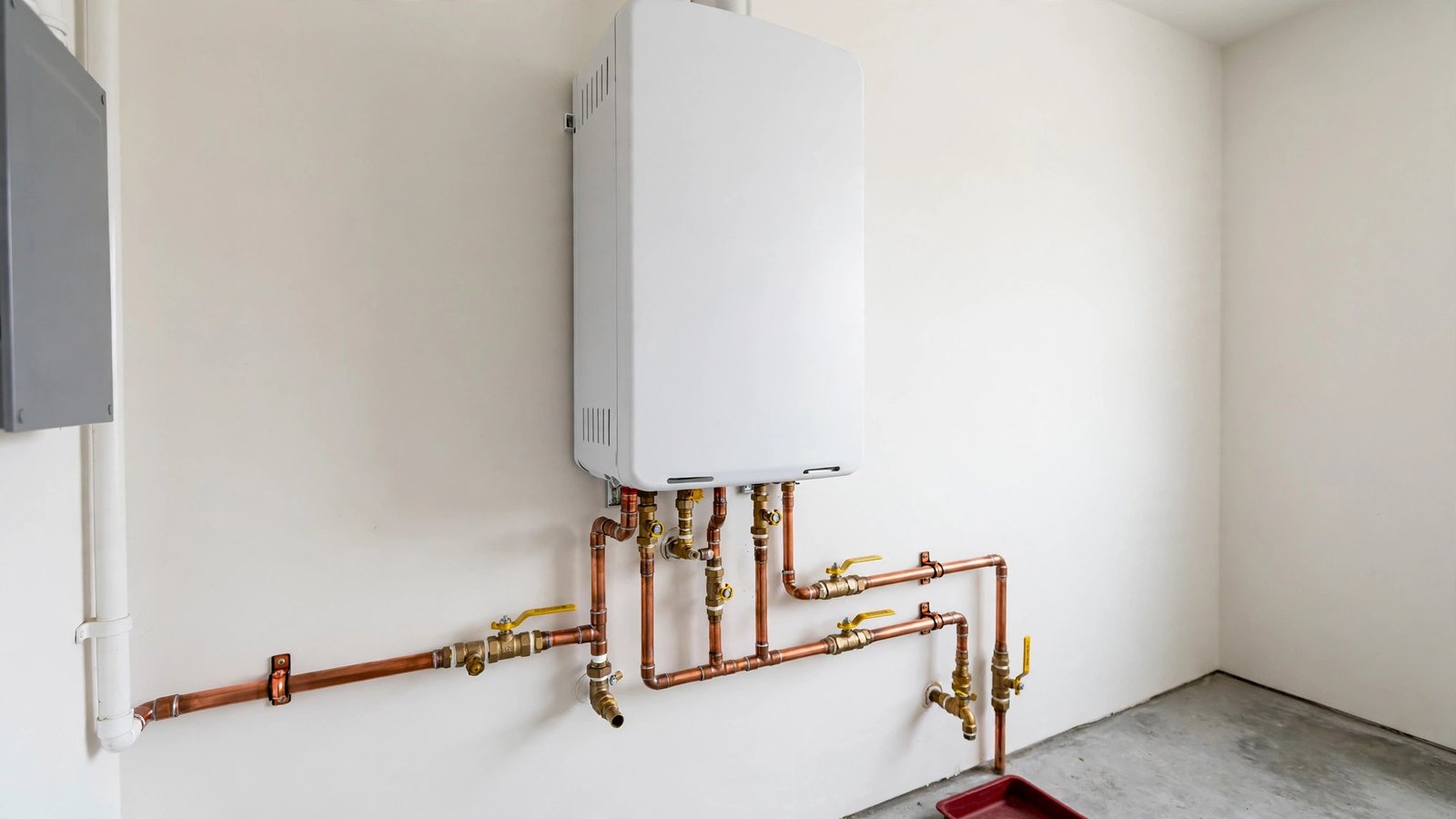
Tankless water heater installation typically starts with removing the old water heater, if there is one, and preparing the new location. The new unit is mounted securely on a wall, connected to the cold water inlet and hot water outlet, and connected to its fuel or power supply.
For a gas unit, the gas line often needs to be upgraded, because a tankless heater can demand much more gas at peak use than a tank heater. The venting also needs attention. Many modern gas tankless units use a sealed vent system that runs through an outside wall or the roof, and the vent material and route must match the manufacturer’s instructions and local building codes.
For an electric unit, the installer will check whether your electrical panel has enough capacity and whether a new dedicated circuit is needed. This work should be done by a qualified electrician. Plumbing work includes connecting the water lines and fitting isolation valves so the unit can be serviced.
Planning: Sizing, Location, and Permits
Sizing is the step that most affects how happy you will be with the result. A professional will usually calculate your peak hot water demand by looking at how many fixtures might run at once and how much the incoming water needs to be heated in your climate. A unit that is too small will leave you with lukewarm water at busy times, while a unit that is far too large costs more to buy and install than you need.
In many areas, installing a water heater requires a permit and an inspection. Rules vary by location, so check with your local building authority before work starts. A licensed installer will usually handle the permit and arrange the inspection as part of the job, and this is one of the reasons to use a professional rather than doing it yourself.
When to Hire a Professional
Tankless water heater installation involves gas, electricity, plumbing, and venting, and mistakes in any of these areas can be dangerous. A gas leak, a faulty vent, or an overloaded electrical circuit can put your household at risk, and poor installation can also void the manufacturer’s warranty.
For those reasons, this is a job for a licensed professional in most cases. Hire a licensed plumber or heating contractor who has experience with tankless systems, and a qualified electrician for any electrical work. Ask for proof of licensing and insurance, check references or reviews, and get more than one quote.
A good installer will visit your home, assess your existing systems, calculate the size you need, and give you a written quote that includes the permit and inspection. If an installer is unwilling to visit or pull a permit where one is required, consider that a warning sign.
Conclusion
A tankless water heater can be a good choice if it is sized correctly and installed properly, but the installation is more involved than swapping one tank heater for another. Pay attention to fuel type, the flow rate, and the place where the unit will be mounted. Whether the job is in a new build or replacing a tank system, getting the details right at the start is the best way to avoid problems later. In short, tankless water heater installation is a job for a licensed professional in most homes.
Frequently Asked Questions
Can I install a tankless water heater myself?
It is not recommended for most homeowners. Installation involves gas, electricity, plumbing, and venting, and mistakes can be dangerous or void the warranty. A licensed professional should handle the installation and any permit or inspection.
How do I know what size tankless water heater I need?
Sizing depends on how many hot water fixtures may run at once and how much the incoming water needs to be heated in your climate. A professional should calculate this for your household rather than guessing from the size of your old tank heater.
Does a tankless water heater need a permit?
In many areas, yes. Rules vary by location, so check with your local building authority. A licensed installer will usually handle the permit and arrange the inspection as part of the job.
How often does a tankless water heater need maintenance?
Maintenance needs vary by model and water hardness, but periodic descaling is common, especially in hard water areas. Your installer should be able to recommend a schedule for descaling based on the unit you have and the water in your area. Hard water also affects other home systems — see our guide to whole house water softener.