How to Grow Tomatoes: A Beginner’s Guide From Seed to Harvest
Learning how to grow tomatoes is one of the most rewarding projects a beginner gardener can take on. A tomato plant started from a tiny seed can grow taller than you, produce armfuls of fruit through the warm months, and taste noticeably better than anything from a shop shelf. Tomatoes are also forgiving: they tell you clearly when they need water and bounce back from small mistakes. A sunny spot, decent soil, regular water, and a little patience are enough to get started.
This guide walks you through how to grow tomatoes, from choosing a variety and starting seeds indoors to planting out, feeding, supporting, and finally picking ripe fruit. It is written for a complete beginner, so every step is explained plainly. Whether you have a garden bed, a balcony, or a few large pots, you can grow tomatoes, and by the end of the season you will know your plants well enough to do it even better next year.
Choosing the Right Tomato Variety
The first decision in how to grow tomatoes is which variety to plant, and it matters more than most beginners expect. Tomatoes come in two main growth habits. Determinate varieties, often called bush tomatoes, grow to a set height, produce most of their fruit over a short period, and then stop. They are compact and easy to manage, and a good choice for pots, small gardens, and anyone who wants a big batch of fruit at once.
Indeterminate varieties, often called vine or cordon tomatoes, keep growing and producing fruit all season until the cold stops them. They grow tall, need strong support, and give you a steady supply of tomatoes over many weeks rather than a single glut.
Fruit size is the other choice to make. Cherry and grape tomatoes are small, sweet, and quick to ripen, and a single plant can produce a remarkable number of fruit. They are the most forgiving variety for a beginner. Medium slicing tomatoes are the familiar round fruit for salads and sandwiches, while large beefsteak types produce impressive, heavy fruit that needs a little more care and support. If you are unsure, plant a cherry tomato and a slicing tomato: the cherry gives you early success while you learn how to grow tomatoes, and the slicer gives you the classic harvest to look forward to.
How to Grow Tomatoes From Seed
Starting tomatoes from seed indoors is the cheapest way to grow them and gives you the widest choice of varieties. Sow the seeds in small pots or trays of fine, free-draining seed compost, placing each seed just below the surface and watering gently. Keep the pots somewhere warm and bright, such as a sunny windowsill. A clear cover over the tray keeps the compost moist while the seeds germinate, but remove it as soon as the seedlings appear.
Before the plants go outside, they need hardening off, a key step in how to grow tomatoes: a gradual introduction to outdoor conditions over a week or so. Start by putting them outside for a few hours in a sheltered spot, then leave them out for longer each day, bringing them in at night. Skipping this step is one of the most common beginner mistakes, because a plant moved straight from a warm windowsill to a cold, windy garden can be badly checked by the shock. If starting from seed feels like too much for your first year, buying young plants from a nursery is a perfectly good alternative.
How to Grow Tomatoes Outdoors: Soil and Planting
Tomatoes need sun, and lots of it. Choose the sunniest spot you have, somewhere that gets direct sun for most of the day, and shelter from strong wind if you can. In the ground, dig in plenty of compost or well-rotted manure before planting. In pots, use a good-quality compost and a container large enough to hold plenty of soil, since a small pot dries out quickly and restricts the roots.
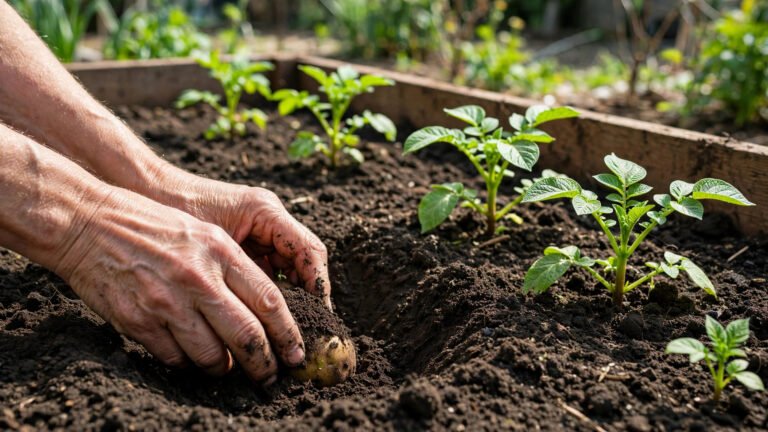
Plant your tomatoes out only when the cold weather has passed and the soil has warmed up: a late frost can kill them overnight, so patience is worth more than an early start. When you plant, bury the stem deeper than it was in its pot, up to the first set of leaves. Tomatoes grow roots all along a buried stem, so deep planting gives you a stronger root system. Space the plants generously so air can move between them, which keeps the leaves dry and reduces disease.
Water the plants well immediately after planting, and mulch around the base with compost, straw, or grass clippings. Mulch keeps the soil moist and suppresses weeds. Basil grows well alongside tomatoes and is a classic companion in the garden as well as the kitchen, and our guide on how to grow basil covers a herb that pairs naturally with a tomato patch.
Watering and Feeding Tomato Plants
When it comes to how to grow tomatoes well, watering is the skill that matters most. Aim for steady, even moisture: soil that is damp but never waterlogged, and never allowed to dry out completely and then be flooded. Uneven watering is the main cause of split fruit and of blossom end rot, the dark patch on the bottom of the fruit. Water at the base of the plant, not over the leaves, and water in the morning so any splashes dry during the day. A deep watering a few times a week beats a light sprinkle every day, because it encourages roots to grow down into the soil.
Tomatoes are hungry, and regular feeding makes a visible difference. Once the first flowers appear, feed the plants regularly with a liquid tomato feed, following the instructions on the bottle. A feed high in potassium supports flowering and fruiting. Too much nitrogen-rich feed produces lush green leaves at the expense of fruit, so switch to a tomato feed once flowering starts.
Supporting, Pruning, and Training
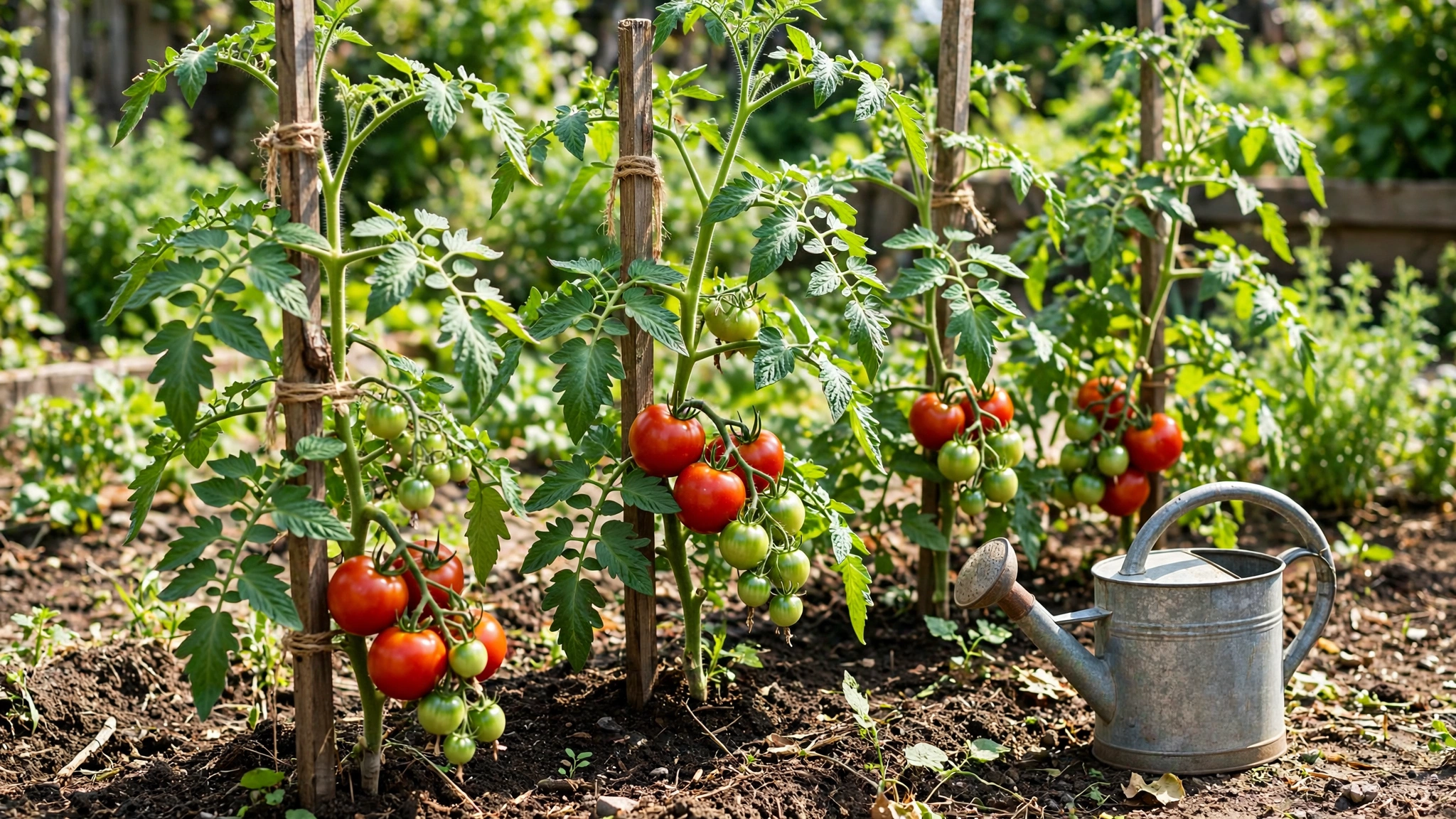
Tomato plants need support, and the time to provide it is at planting, not after the plant has already flopped over. A sturdy stake, a cage, or a trellis all work. Bush types are often happy with a short stake or a small cage, while tall indeterminate varieties need a tall, strong stake or a trellis they can be tied to as they grow. Tie the stem loosely with soft string or cloth, leaving room for the stem to thicken. Getting support right early is a basic part of how to grow tomatoes successfully.
Indeterminate varieties also benefit from pruning out the side shoots, the small shoots that appear between the main stem and a leaf. Left alone, these shoots grow into extra stems and the plant becomes a tangled mass of leaves with small fruit. Pinching them out when they are small keeps the plant to one or two main stems, lets light and air reach the fruit, and directs the plant’s energy into ripening. It is a small job, done once or twice a week.
Common Problems and How to Handle Them
Most problems in how to grow tomatoes are preventable with good watering, good air flow, and clean habits. Blossom end rot, the dark, sunken patch on the bottom of the fruit, is caused by uneven watering, and steady, even watering is the cure. Split fruit happens when a dry plant suddenly gets a lot of water, so keeping the soil evenly moist is the answer here too.
Leaf diseases usually start on the lower leaves, where soil splashes up in rain. Mulching, watering at the base, and removing the lowest leaves all help, and spacing plants generously so air moves freely is one of the best defences. Tomatoes belong to the same plant family as potatoes, so avoid planting them in the same spot year after year — our guide on how to plant potatoes explains a crop that shares the same rotation rules.
Harvesting and Storing Your Tomatoes
Picking a tomato at the right moment is one of the great pleasures of growing your own. A tomato is ready when it has coloured fully, feels slightly soft when gently squeezed, and comes away from the plant with a gentle twist. The colour depends on the variety: most turn red, but some ripen to yellow, orange, or pink, so check what your variety should look like. Fruit picked just before it is fully ripe will finish ripening indoors, but a tomato left to ripen on the vine in warm sunshine has the best flavour of all. Store ripe tomatoes at room temperature and eat them within a few days, since the fridge dulls their taste.
Frequently Asked Questions About How to Grow Tomatoes
How long does it take to grow tomatoes from seed?
Growing tomatoes from seed takes a full season, from sowing indoors before the last cold weather, through planting out once the soil has warmed, to picking ripe fruit in the warm months. Expect several months from sowing to your first ripe tomato.
Can I grow tomatoes in pots?
Yes, tomatoes grow well in pots, and learning how to grow tomatoes in a container is a good first project for a balcony, a patio, or a small garden. Use a large container with plenty of compost and a bush variety or a compact cherry type, and be ready to water more often than you would a plant in the ground, because pots dry out quickly. A stake or small cage gives the plant the support it needs.
Why are my tomato leaves turning yellow?
Yellow leaves can have several causes, including uneven watering, a lack of nutrients, or simply the lower leaves ageing. Check that the soil is evenly moist rather than swinging between dry and soaked, feed the plant regularly once it is flowering, and remove yellowed lower leaves.
Do tomato plants need full sun?
Yes. Part of how to grow tomatoes successfully is giving the plants as much sun as you can, ideally direct sun for most of the day. Plants in shade grow leggy, flower poorly, and produce little fruit. If you only have a partly sunny spot, choose a cherry variety, which is more forgiving than a large slicing tomato.
Should I prune my tomato plants?
Prune indeterminate, or vine, tomato varieties by pinching out the side shoots that grow between the main stem and the leaves, which keeps the plant to one or two stems and helps the fruit ripen. Determinate, or bush, varieties need little or no pruning, because their growth is naturally compact and pruning reduces the harvest.
When should I plant tomatoes outside?
Plant tomatoes outside only after the cold weather has passed and the soil has warmed up, because a late frost can kill them. Harden the plants off gradually over a week before planting, and plant them deeply, burying the stem up to the first set of leaves so it grows extra roots.
Learning how to grow tomatoes is really about learning to read a plant: it tells you when it is thirsty, when it is hungry, and when its fruit is ready. Give it sun, water it steadily, feed it once it flowers, and support it before it needs it, and it will repay you with weeks of fruit that no shop can match.