How to Store Potatoes So They Last Weeks Longer
Potatoes are one of the most forgiving foods in the kitchen, but only if you store them properly. Kept the right way, they stay firm and usable for weeks, sometimes months. Kept the wrong way — in a warm, bright, or damp spot — they sprout, turn green, go soft, and end up in the bin. Learning how to store potatoes is a small skill with a real payoff: less waste, better-tasting potatoes, and fewer last-minute trips to the shop.
The good news is that proper potato storage needs no special equipment. It needs a cool, dark, dry place, something that lets air move around the potatoes, and a little attention once a week. This guide explains exactly what that means, what to avoid, and how to tell when a potato has gone past saving.
The Three Rules: Cool, Dark, and Dry
Almost everything about how to store potatoes comes down to three conditions: cool, dark, and dry. Potatoes are living tubers, and they respond to their environment. Warmth encourages them to sprout. Light encourages them to turn green and produce solanine, a natural compound that tastes bitter and can cause stomach upset if eaten in quantity. Moisture encourages rot.
A cool place means somewhere noticeably cooler than a warm kitchen, ideally a pantry, a cellar, a cool cupboard, or an unheated utility room. A temperature in the range of a cool pantry is ideal; a hot kitchen cupboard above the stove is not. A dark place means out of direct light and away from bright kitchen lighting — inside a closed cupboard or a covered basket is usually enough. A dry place means low humidity and no damp: potatoes stored in a wet bag or in a humid corner will rot from the outside in.
If you do not have a cellar or a cool pantry, use the coolest, darkest cupboard you have, away from the oven and the dishwasher. A cupboard on an outside wall is often cooler than one on an inside wall. The goal is not perfection; it is to get as close to cool, dark, and dry as your home allows.
What to Store Them In
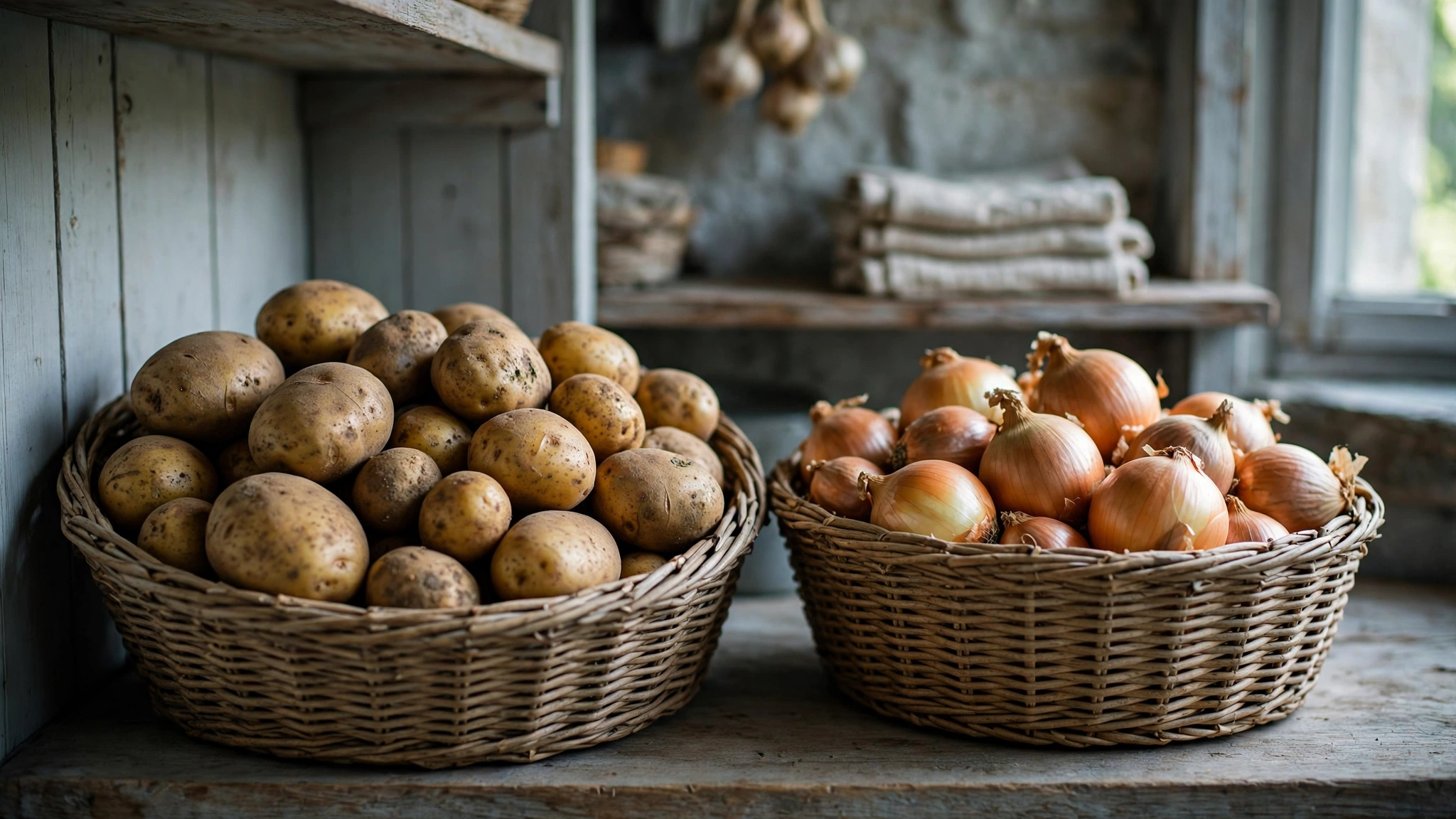
Airflow matters as much as temperature. Potatoes need to breathe, so never store them in a sealed plastic bag or an airtight container — trapped moisture is the fastest route to rot. A paper bag, a mesh bag, a woven basket, a cardboard box with holes, or a ventilated bin all work well. A basket is ideal because it lets air circulate and makes it easy to see what is happening inside. That airflow is a key part of how to store potatoes well.
Do not wash potatoes before storing them. The thin layer of soil on unwashed potatoes actually helps protect them, and washing adds moisture that encourages rot. Brush off loose dirt if you like, but leave the washing until just before you cook them. If a potato is wet when you bring it home, let it dry completely on a counter before putting it away.
Check the potatoes once a week. Remove any that are soft, sprouting heavily, or starting to smell, because one rotting potato can spread the problem to the rest of the bag. This weekly check takes a minute and is the single most effective habit in potato storage.
Keep Potatoes Away From Onions
One of the most common storage mistakes is keeping potatoes and onions together. They look natural side by side in a basket, but they make each other spoil faster. Onions release moisture and gases that encourage potatoes to sprout, and potatoes release moisture that can make onions rot. Store them in separate containers, in separate places if you can — different shelves in the same cupboard is usually enough, as long as they are not touching.
The same principle applies to other produce, and it is part of how to store potatoes well. Keep potatoes away from fruits that release ethylene gas as they ripen, such as bananas and apples, because ethylene speeds up sprouting. A little distance makes a real difference to how long your potatoes last.
The Fridge: Usually Not the Answer
Many people wonder whether the fridge is a good place for potatoes, and the short answer is usually no. The honest answer to how to store potatoes is that the fridge is a fallback, not the first choice. Fridge temperatures are colder than potatoes prefer, and cold storage changes the starches in the potato into sugars. That does not make the potato unsafe, but it can make it taste noticeably sweeter and can cause it to darken more when fried or roasted. For most households, a cool cupboard is a better choice than the fridge.
There are exceptions. If your home is very warm and you have no cool storage at all, the fridge is better than a hot cupboard — a potato that tastes slightly sweet is better than a potato that has rotted. In that case, keep the potatoes in a paper bag in the fridge and use them within a week or two. Cut potatoes are a different matter: once a potato is cut, it should go in the fridge in water or in a sealed container and be used within a day or two.
Sprouting, Green Skin, and When to Throw a Potato Away
Sprouting is the most common sign that potatoes are past their best. That is a practical part of how to store potatoes well: check often, remove the sprouted ones promptly, and use the oldest potatoes first. Small sprouts on an otherwise firm potato are not a disaster: break the sprouts off and use the potato promptly, as long as it is still firm and smells normal. But if a potato is covered in long sprouts, has gone soft or wrinkled, or smells unpleasant, throw it away. Long sprouts and softness mean the potato has used up its stored energy and is deteriorating.
Green skin is a separate warning sign. Potatoes turn green when they are exposed to light, and the green areas contain higher levels of solanine. A small green patch can be cut away generously, with the rest of the potato used if it is firm and normal-smelling. But if a potato is green over a large area, or tastes bitter, discard it. Do not feed green or sprouted potatoes to pets or compost them in large quantities.
The simplest test is your senses. A good potato is firm, dry, and smells like nothing much at all. A bad potato is soft, wrinkled, wet, or smelly. When in doubt, throw it out — a potato is cheap, and a stomach upset is not worth it.
Storing Different Types of Potatoes
Most potatoes store in the same way, but there are small differences worth knowing. Floury potatoes, the kind that go fluffy when baked or mashed, tend to store a little less well than waxy potatoes, which hold their shape when boiled. New potatoes, with their thin skins, do not store for long at all — use them within a week or two and keep them in the fridge if your kitchen is warm. Floury and waxy potatoes differ slightly, but how to store potatoes is the same for most types: cool, dark, dry, and ventilated.
Sweet potatoes are a different plant altogether, and they prefer slightly warmer and more humid storage than regular potatoes. They do well in a cool pantry rather than a cold cellar, and they should not go in the fridge, where cold temperatures can damage their texture and flavour. Keep them in a ventilated basket or box, in the dark, and check them weekly like regular potatoes.
Frequently Asked Questions About How to Store Potatoes
How to store potatoes so they last the longest? Keep them in a cool, dark, dry place with good airflow — a paper bag, mesh bag, or basket in a pantry or cool cupboard. Do not wash them before storing, keep them away from onions, and check them weekly, removing any that are soft or sprouting.
How to store potatoes in a small kitchen with no pantry? Use the coolest, darkest cupboard you have, away from the oven and dishwasher. A paper bag or a small basket inside the cupboard works well. If your kitchen is very warm, the fridge is a fallback, though it can make potatoes taste slightly sweeter.
How to store potatoes in summer? In summer, use the coolest, darkest cupboard you have, and buy smaller quantities more often. How to store potatoes in summer comes down to the same rules — cool, dark, dry, and ventilated — but the heat makes the weekly check more important, because sprouting and rot happen faster.
How to store potatoes after buying in bulk? Spread them out in a basket or a ventilated box rather than leaving them in a deep sack, where the ones at the bottom stay damp. Check them weekly and use the oldest first. Learning how to store potatoes in bulk is mostly about airflow and the weekly check: a deep pile hides problems until they spread.
Can I store potatoes in the fridge? You can, but it is usually not ideal. Cold temperatures convert some of the potato’s starch into sugar, which can affect flavour and cause extra darkening when fried. A cool cupboard is better. Use the fridge only if you have no cool storage, and use the potatoes within a week or two.
Should potatoes and onions be stored together? No. Onions release moisture and gases that make potatoes sprout faster, and potatoes release moisture that can make onions rot. Store them in separate containers, on different shelves if possible.
Are sprouted potatoes safe to eat? A firm potato with small sprouts is usually fine if you break the sprouts off and use it promptly. But a potato that is soft, wrinkled, heavily sprouted, or green over a large area should be thrown away. When in doubt, discard it.
Learning how to store potatoes properly takes five minutes and saves you money and waste for months. Keep them cool, dark, and dry, give them air, keep them away from onions, and check them once a week. Do that, and the bag of potatoes you bought this week will still be firm and ready to cook when you reach for it next month. That routine is how to store potatoes so they last weeks longer, without special equipment.