Roaring 20s Mens Fashion: The Looks That Defined the Decade
Roaring 20s mens fashion is one of the most recognisable styles in history, and it still shapes how men dress for formal occasions today. Picture the decade and the image is immediate: a sharp three-piece suit, a crisp white shirt, a bow tie, polished leather shoes, and a flat cap or fedora on top. It was a decade when men paid close attention to tailoring, texture, and the small details that separated a good outfit from a great one. The look was confident without being loud, and that balance is exactly why it has never really gone away.
What made the style work was not any single item. It was the way the pieces came together. Suits were cut to flatter the body, shirts carried bold stripes and strong collars, and accessories were chosen with care rather than thrown on as an afterthought. A man could dress for the office, for an evening out, or for a day at the races, and each outfit followed the same logic: clean lines, quality cloth, and everything in its place. This guide breaks down the key looks of the decade, piece by piece, and shows how to borrow from them now without looking like you are wearing a costume.
The Suit: The Centrepiece of Roaring 20s Mens Fashion
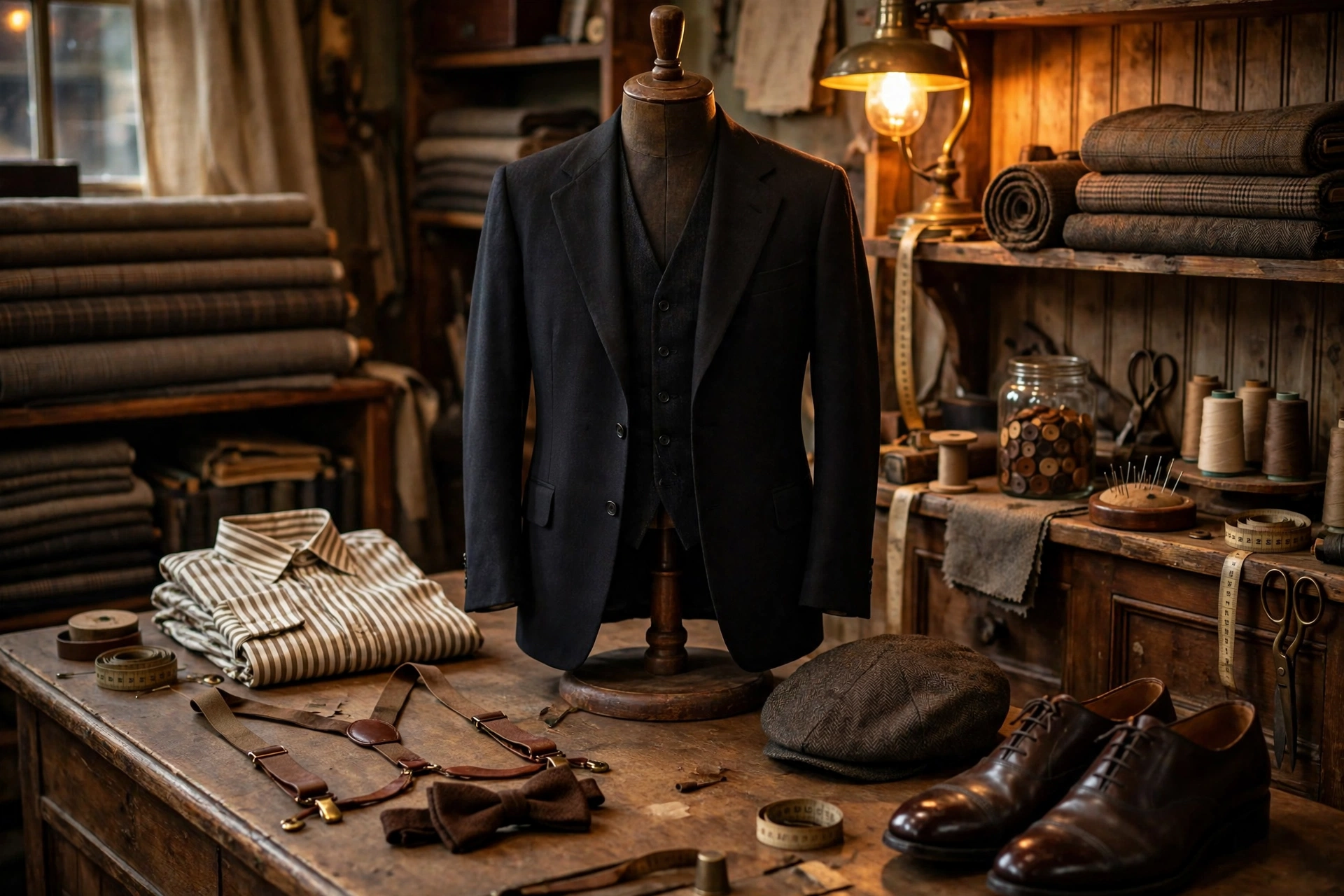
The suit was the foundation of everything. Most men wore a three-piece suit — jacket, waistcoat, and trousers cut from the same cloth — and it was the standard outfit for work, for social occasions, and for formal events. Jackets in this period were typically single-breasted with a fairly high button stance, and the shoulders were natural rather than heavily padded. The overall shape was slimmer and longer than the boxy suits of earlier decades, which gave the look its clean, upright silhouette.
Fabric choice mattered as much as the cut. Wool was the everyday workhorse, and tweed was popular for country wear and colder weather. For evenings, a dark wool or a fine barathea cloth gave the suit a smooth, formal finish. Patterns were part of the look too: pinstripes, chalk stripes, and subtle checks all appeared. If you are building a 1920s-inspired outfit today, start with the suit and get the fit right before worrying about anything else — a well-fitted plain suit reads more period-correct than a flashy one that does not fit.
Colour was more adventurous than many people expect. Navy and charcoal were the safe choices, but brown, grey, and even lighter tones appeared in daytime dress, especially in summer. The key was that colours stayed in a fairly muted, earthy range. Bright, saturated colours were rare in suiting, and the contrast in an outfit usually came from the shirt, the tie, or a pocket square rather than from the suit itself. For a closer look at how the decade’s suiting evolved, see our guide to 1920s mens fashion.
Shirts, Collars, and Ties
The shirt was where a man could show some flair. White shirts were the formal standard, but striped shirts were a signature of roaring 20s mens fashion, and the stripes could be bold. Collars were a defining feature of the era: detachable collars were still common, and they came in several shapes, from the pointed collar to the rounded club collar and the tall wing collar worn with evening dress. A strong collar framed the tie and gave the whole outfit its structure, so it is worth paying attention to collar shape if you are recreating the look.
Ties were narrower than the wide ties of later decades, and bow ties were a normal everyday choice rather than something reserved for black tie. A bow tie with a three-piece suit was a classic daytime combination, and it is one of the easiest ways to signal the decade without overdoing it. Knitted ties and silk ties in small patterns, dots, and stripes were also common.
Waistcoats, Braces, and Layering
The waistcoat was not optional decoration; it was part of the suit. A matching waistcoat gave the outfit its finished, layered look and added warmth in an era before central heating was universal. Waistcoats were usually cut with a low opening so that the shirt and tie showed above them, and they were worn buttoned up with the bottom button left undone, a habit that continues today.
Braces, or suspenders, were the standard way to hold trousers up in roaring 20s mens fashion. Belts existed, but braces were more common with a suit, partly because they kept the trouser line smooth under a waistcoat. They were usually hidden, so they were a practical choice rather than a fashion statement, but a pair of button-fastening braces is still the most period-accurate option. Trousers were cut high on the waist with a fairly straight leg, and wide-legged trousers, sometimes called Oxford bags, became a fashionable choice for younger men.
Hats and Outerwear
No outfit was complete without a hat in roaring 20s mens fashion. The flat cap was the everyday choice for working men and for casual dress, while the fedora and the homburg were the smarter options for town and for formal occasions. A straw boater was the summer hat, worn with lighter suits for daytime events. Hats were worn outdoors as a matter of course, and taking one off indoors was part of the etiquette of the time.
Outerwear followed the same tailored logic. A long wool overcoat was the standard for cold weather, usually in navy, charcoal, or camel, and it was cut to sit over a suit without crushing it. Shorter coats and tweed jackets served for country wear and for more casual days. A scarf in wool or silk finished a winter outfit, and the lesson holds today: a good coat makes everything underneath it look better.
Shoes That Finish the Look
Shoes in the 1920s were leather, polished, and built to last. The Oxford shoe was the standard smart shoe, usually in black for formal occasions and in brown for daytime wear. Two-tone shoes, with a light body and a dark cap or heel, were a fashionable and slightly daring choice, and they remain one of the most recognisable details of the decade. Brogues, with their decorative perforations, were worn for country and casual occasions rather than with formal dress.
Socks were an opportunity for a flash of colour or pattern, and patterned socks in argyle or stripes were popular. The practical takeaway is simple: the shoes should be leather, they should be polished, and they should match the formality of the rest of the outfit. A beautiful suit loses its effect when it is paired with scuffed or casual shoes.
Daywear vs Eveningwear
Daywear and eveningwear followed different rules, and knowing the difference is what makes an outfit look right rather than merely old-fashioned. Daywear in roaring 20s mens fashion was built around the three-piece suit in tweed, flannel, or worsted wool, with a striped or coloured shirt, a tie or bow tie, and a flat cap or fedora. It was practical, comfortable, and smart enough for work and social occasions alike. Patterns and textures could be bolder during the day because natural light showed them off.
Eveningwear was stricter and darker. A black or very dark dinner suit, a white shirt with a wing collar, a black bow tie, and black Oxford shoes formed the classic evening combination. The waistcoat or cummerbund was part of the outfit, and the shirt front was usually pleated or starched. The contrast between day and evening is a useful guide for modern dressing too: the darker and plainer the outfit, the more formal it reads, and the more pattern and colour it carries, the more casual it feels.
How to Wear It Today Without Looking Like a Costume
The trick to borrowing from this decade is to take one or two elements rather than the whole outfit at once. A well-fitted three-piece suit in navy or charcoal is the easiest way into roaring 20s mens fashion, and it works perfectly well in a modern office or at a wedding, especially with a plain white shirt and a simple tie. Add a pocket square or a pair of braces, and the 1920s influence is clear without being theatrical.
Fit is what separates a stylish nod from a costume. The decade’s suits were slimmer than what came before, but they were not skin-tight, and the trousers sat at the natural waist. If you buy a modern suit and have it tailored properly, you will be closer to the period look than if you buy a cheap fancy-dress version. Choose quality fabrics, keep the colours muted, and let one accessory do the talking. A bow tie or a pair of two-tone shoes is enough; wearing all of them together is what tips an outfit into costume territory.
Frequently Asked Questions About Roaring 20s Mens Fashion
What did men wear in the Roaring Twenties?
The standard outfit in roaring 20s mens fashion was a three-piece suit — jacket, waistcoat, and trousers in matching cloth — worn with a shirt, tie or bow tie, leather shoes, and a hat. Daywear favoured tweed and flannel suits with striped shirts, while eveningwear was darker and more formal, built around a black dinner suit and a white shirt.
What is the most iconic piece of roaring 20s mens fashion?
The three-piece suit is the most iconic piece, because it defines the whole silhouette of the decade. The flat cap and the bow tie are the most recognisable accessories, and a pair of two-tone Oxford shoes is the detail most people associate with the era.
Can I wear roaring 20s mens fashion to a wedding?
Yes, a well-fitted three-piece suit in navy or charcoal is entirely appropriate for a wedding, and it reads as classic rather than costumey. Keep the shirt white or pale, choose a simple tie or bow tie, and add one period detail such as a pocket square or braces rather than the full set.
What hats were popular in 1920s mens fashion?
The flat cap was the everyday hat in roaring 20s mens fashion, the fedora and homburg were the smarter choices for town, and the straw boater was the summer option. Hats were worn outdoors as a matter of course, and the style of hat signalled how formal the occasion was.
What colours suit a 1920s-inspired outfit?
Muted, earthy tones work best for roaring 20s mens fashion: navy, charcoal, brown, grey, and camel for the suit, with white or pale striped shirts. Colour and pattern usually came from the shirt, tie, or pocket square rather than from the suit itself, so keep the suit sober and let the accessories add interest.
Roaring 20s mens fashion endures because it was built on principles that still work: a well-fitted suit, quality cloth, and accessories chosen with care. You do not need a full period wardrobe to borrow from it. Start with the suit, get the fit right, add one or two details such as a waistcoat or a bow tie, and keep everything polished. Done that way, the look reads as timeless rather than theatrical, and that is exactly why it has lasted for a hundred years.