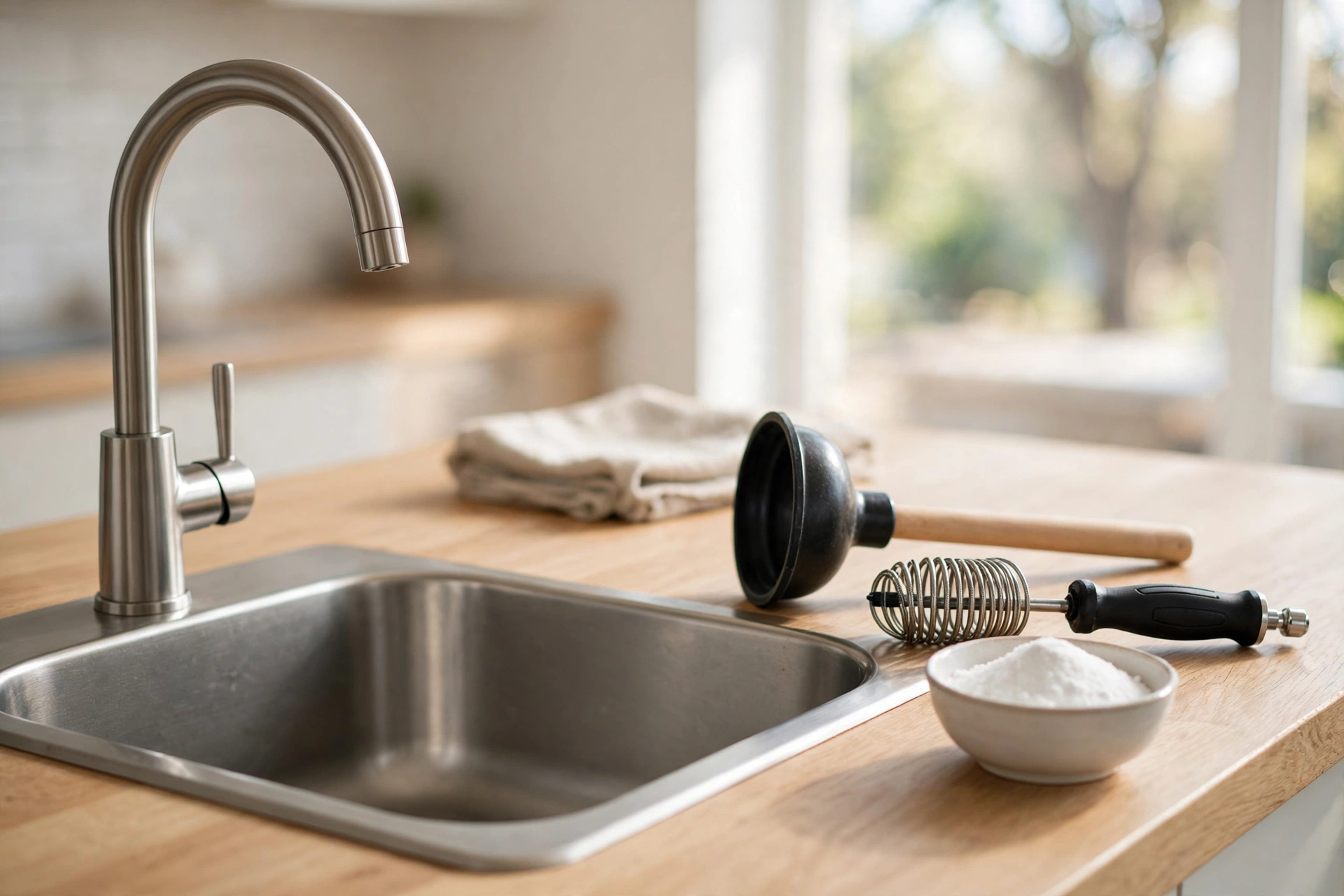
How to Unclog a Drain Without Chemicals: 7 Methods That Work
A slow or blocked drain is one of the most common household annoyances, and the first instinct for many people is to reach for a bottle of chemical drain cleaner. But caustic cleaners can damage older pipes, harm septic systems, and pose a risk to children, pets, and the waterways they eventually reach. The good news is that most clogs do not need them. Learning how to unclog a drain without chemicals is mostly about matching the method to the clog: hair and soap in the bathroom, grease and food in the kitchen, and a little patience with each one. The seven methods below start with the gentlest options and move toward stronger mechanical fixes, so try them in order and stop as soon as the water runs freely.
Before you begin, a few ground rules apply to every method. Never mix cleaning products, and never pour a chemical cleaner into a drain after trying a natural method — the combination can create dangerous fumes. Wear rubber gloves, keep a bucket and old towels nearby, and be ready for the smell when a clog finally breaks loose. If water is backing up in more than one fixture at the same time, or if sewage is coming up through a drain, that usually points to a problem in the main line, and it is time to call a plumber rather than keep trying home methods.
1. Remove the Visible Clog by Hand
The simplest answer to how to unclog a drain without chemicals is also the least glamorous: pull the clog out. In bathroom sinks and showers, most slow drains are caused by a mat of hair and soap sitting just below the drain cover. Unscrew or lift the drain cover, shine a flashlight into the opening, and use needle-nose pliers or a gloved hand to pull out whatever you can reach. In many cases the drain will run freely again in under a minute. A drain strainer fitted afterwards catches hair before it goes down, and emptying it once a week prevents the problem from coming back. This step costs nothing, takes minutes, and should always be the first thing you try.
2. Pour Boiling Water Down the Drain
Boiling water is surprisingly effective on kitchen sink clogs, because the most common culprit there is grease that has cooled and hardened inside the pipe. Heat softens it and lets it wash away. Bring a kettle or a large pot of water to a rolling boil, then pour it down the drain slowly, in two or three stages, waiting a few seconds between each pour. Let the water sit for a few minutes, then run the hot tap and see whether the drain has improved. Repeat the process once more if the water is still draining slowly. One caution: do not use boiling water on a toilet, and use care with older PVC pipes — very hot water is generally fine for a brief pour, but if your pipes are old or you are unsure what they are made of, use very hot tap water instead of a full rolling boil.
3. Use Baking Soda and Vinegar
Baking soda and vinegar are the classic natural pairing for a slow drain, and they work best as a maintenance clean or on a mild clog rather than a fully blocked pipe. Pour about half a cup of baking soda down the drain, followed by half a cup of white vinegar. The mixture will fizz — that is the reaction doing its work on soap scum and light grease. Cover the drain with a plug or a damp cloth to keep the fizzing action in the pipe, wait fifteen to thirty minutes, and then flush with a kettle of hot water. This method will not dissolve a solid mass of hair, but it is a good follow-up after you have removed the physical clog, and it leaves the drain smelling fresh. For a drain that is completely blocked and standing full of water, skip this method and go straight to plunging or a drain snake.
4. Plunge the Drain Correctly
A plunger is the most underrated tool in the house, and most people use it wrong. The key is creating a tight seal and using steady pressure rather than frantic splashing. For a sink, use a cup plunger — the simple rubber cup on a stick — and block the overflow hole with a wet cloth so the pressure goes down the drain instead of out of the overflow. Add enough water to the sink to cover the cup of the plunger, press the cup firmly over the drain, and pump up and down fifteen to twenty times, keeping the seal. Then lift the plunger sharply and see whether the water drains. Repeat two or three times if needed. For a shower drain, the same technique works, though you may need to remove the drain cover first. Plunging works by pushing and pulling the clog until it breaks apart or moves along, and it is often the method that finally clears a stubborn blockage.
5. Try a Drain Snake or Zip Tool
When a clog sits deeper than your fingers can reach, a drain snake — also called a hand auger — is the next step. A simple plastic zip tool, a thin strip with barbs along its sides, costs very little and is ideal for hair clogs in bathroom drains: push it down, twist it gently, and pull it back out with the hair wrapped around it. For kitchen sinks, a metal hand-crank snake reaches further and can break up compacted grease and food. Feed the cable slowly into the drain, turning the crank as you go, and when you feel resistance, keep turning to work through the clog rather than forcing the cable. Pull the snake out slowly and clean it off before storing it. This is the most hands-on method on the list, but it clears clogs that every gentler method leaves behind, and it does so without a drop of chemicals.
6. Clean the Trap Under the Sink
If the clog is in a bathroom or kitchen sink and nothing above has worked, the blockage is often sitting in the U-shaped trap directly under the sink — the curved pipe that holds a little water to block sewer smells. This sounds like a big job, but it is a straightforward one with a bucket and a pair of slip-joint pliers. Place the bucket under the trap, loosen the slip nuts by hand or with pliers, and let the water drain into the bucket. Remove the trap, empty it, and clear out the gunk inside with an old brush. Reassemble it the same way it came apart, tightening the nuts firmly but not so hard that you crack the plastic. Run the tap and check for leaks at the joints. Cleaning the trap is one of the most satisfying fixes in how to unclog a drain without chemicals, because you can see exactly what was blocking the pipe — and it is usually a lot of hair, soap, and grease.
7. Flush With Hot Water and Dish Soap
Once the drain is flowing again, a hot water and dish soap flush keeps it that way. Squirt a generous amount of ordinary dish soap down the drain, then follow it with a kettle of hot water. The soap helps dissolve the thin film of grease that coats the inside of kitchen pipes, and the hot water carries it away. Doing this once a week in the kitchen is good prevention, especially if your household cooks with a lot of oil. Never pour cooking grease down the drain in the first place — let it cool, pour it into a container, and throw it away. Prevention is the cheapest method of all, and it keeps you from needing the other six.
How to Unclog a Drain Without Chemicals: Prevention Habits That Work
The best drain fix is the one you never have to do. Fit strainers on every sink and shower drain, and clean them weekly. In the kitchen, scrape plates into the trash before rinsing, and wipe greasy pans with a paper towel before washing them. In the bathroom, brush hair before showering so less of it goes down the drain, and run hot water for thirty seconds after each shower to help soap residue wash through. A monthly baking soda and vinegar flush keeps light buildup from becoming a blockage. These habits take seconds and save you from standing over a slow drain with a plunger on a Sunday evening.
If you have tried every method above and the drain is still slow, or if several drains are backing up at once, the problem is likely deeper in the system — a vent blockage, a damaged pipe, or a main line issue — and a plumber with a camera inspection can find it in minutes. The same goes for recurring clogs in the same drain: a pipe may be sagging or damaged, and no amount of plunging will fix that permanently. Knowing when to stop and call a professional is part of good home care, just like knowing when a bigger project is beyond a weekend fix. If your home projects are growing, you may also want to look at our guide to how to reseal windows for another easy win, or our piece on whole-house water softener systems if hard water is adding scale to your pipes. Learning how to unclog a drain without chemicals is a skill that pays off every time a sink runs slow — and once you have done it, the chemical bottle can stay on the shelf for good.
Frequently Asked Questions About How to Unclog a Drain Without Chemicals
Does baking soda and vinegar work, and is that how to unclog a drain without chemicals?
Baking soda and vinegar help with mild clogs and regular maintenance, and they are a gentle part of how to unclog a drain without chemicals. For a solid blockage of hair or compacted grease, plunging or a drain snake works better.
How to unclog a drain without chemicals using boiling water?
Pouring boiling water down a kitchen drain is a simple part of how to unclog a drain without chemicals, because heat softens the grease that causes most kitchen clogs. Use care with older pipes, and never pour boiling water into a toilet.
How to unclog a drain without chemicals when the clog is deep in the pipe?
For a deep clog, how to unclog a drain without chemicals means reaching for a drain snake or cleaning the trap under the sink. A hand auger breaks up compacted grease and food that gentler methods cannot reach.
When should you call a plumber instead of learning how to unclog a drain without chemicals?
Call a plumber if water backs up in more than one fixture at once, if sewage comes up through a drain, or if the same drain keeps clogging. Those signs point to a problem deeper in the system that home methods cannot fix.