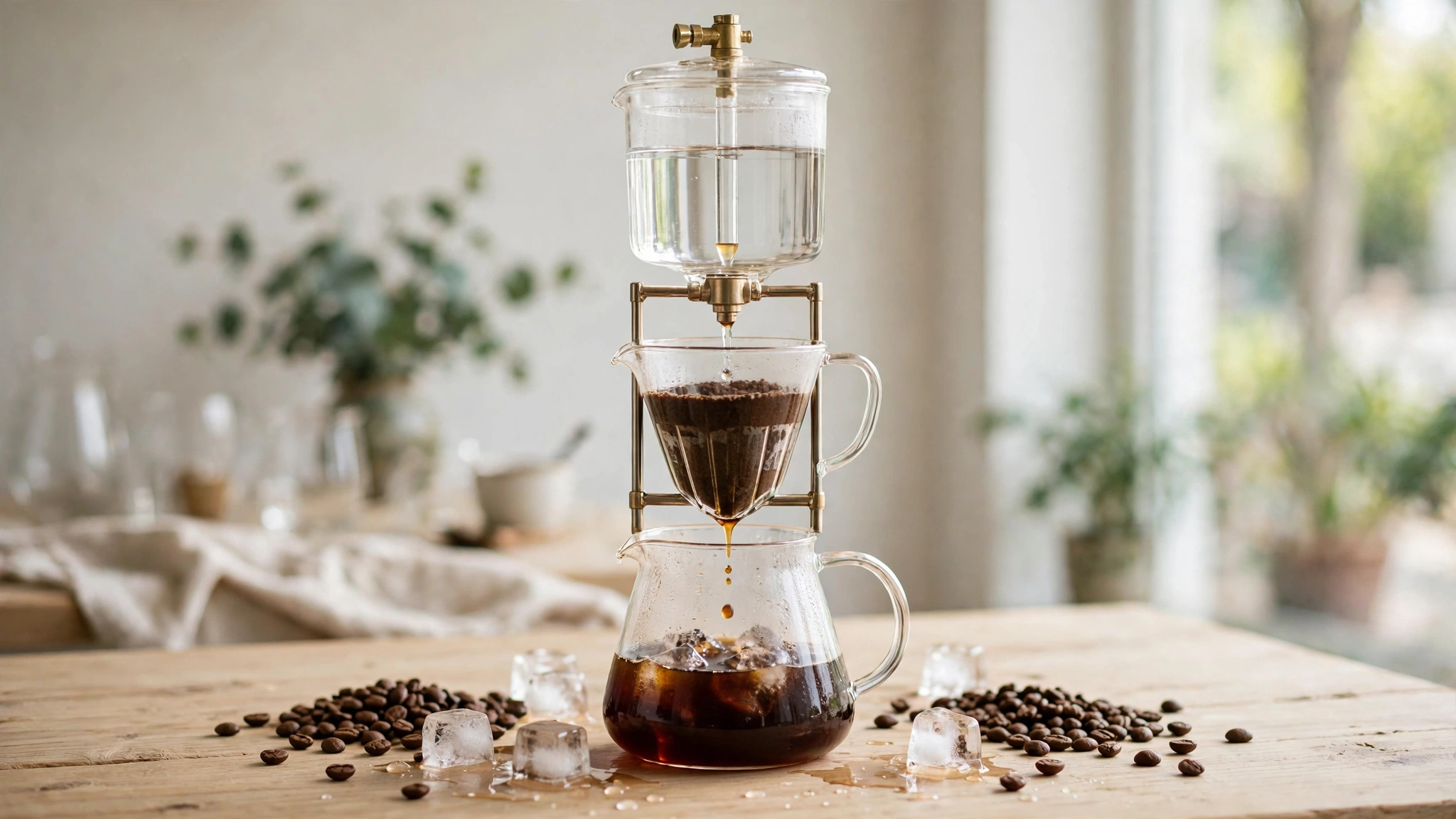
Cold Brew Coffee Maker: How to Choose the Right One
A cold brew coffee maker turns coarse coffee grounds and cold water into a smooth, naturally sweet coffee concentrate — no heat, no bitterness, and no expensive café visits. If you drink iced coffee regularly, making it at home pays for itself quickly.
But not all cold brew makers work the same way. Some are simple jars with a filter, others are slow-drip towers, and a few are just a filter bag in a mason jar. This guide explains the types, what to look for when buying, and the recipe that works with any of them.
What Is Cold Brew Coffee?
Cold brew is coffee steeped in cold or room-temperature water for 12 to 24 hours, instead of brewed with hot water in minutes. The slow, cold extraction pulls out fewer bitter compounds, so the result tastes smoother and less acidic than regular iced coffee — which is just hot coffee poured over ice.
A cold brew coffee maker is simply a container designed for this process: it holds the grounds and water, filters the grounds out when the steep is done, and often doubles as the storage pitcher.
Types of Cold Brew Coffee Maker
1. Immersion Brewers (Jar With a Filter)
The most common type. A glass jar or pitcher with a fine mesh filter basket inside. You add coarse grounds and water, wait, then lift out the filter. Simple, affordable, and easy to clean. Best for beginners.
2. Slow-Drip Towers
A tall glass tower where water drips slowly, drop by drop, through a bed of coffee grounds. They look impressive and produce a very clean cup, but they are expensive, fragile, and slow to set up. Best for enthusiasts.
3. Filter Bags and Mason Jars
The budget option: a reusable filter bag filled with grounds, steeped in any large jar. It works, but the bag can be messy to clean, and the coffee may have more sediment. Best if you want to try cold brew before buying a dedicated maker.
How to Choose a Cold Brew Coffee Maker
When comparing models, check these five things:
- Size. Most makers produce between 1 and 2 liters of concentrate. A 1-liter model is enough for one or two people; a larger one suits a household of coffee drinkers. Remember that concentrate is diluted before drinking, so a little goes a long way.
- Filter type. A fine stainless-steel mesh filter gives a clean cup and lasts for years. Paper filters make the cleanest coffee but add ongoing cost. Avoid makers with flimsy filters — sediment is the most common complaint.
- Material. Glass is the standard and does not affect flavor, but it can break. Plastic is lighter and cheaper, but make sure it is BPA-free. Stainless steel is the most durable option.
- Ease of cleaning. You will use this every few days, so the filter and jar should come apart easily and fit in the sink. Dishwasher-safe parts are a bonus.
- Lid and pouring. A good lid keeps the coffee fresh in the fridge for up to two weeks, and a comfortable spout makes serving easy.
The Basic Cold Brew Recipe (Works With Any Maker)
You do not need a special recipe — this ratio works with any cold brew coffee maker:
- Grind coarse. Use a coarse grind, like raw sugar. Fine grounds over-extract and clog the filter.
- Use a 1:8 ratio. About 1 part coffee to 8 parts water by weight — for example, 100 g of coffee to 800 ml of water. This makes a concentrate.
- Steep 12 to 24 hours. Room temperature is fine; 16 hours is a good starting point. Longer steeps make stronger, slightly more bitter coffee.
- Filter and dilute. Remove the grounds, then dilute the concentrate with equal parts water or milk when serving. Serve over ice.
Store the concentrate in the fridge for up to two weeks. If it tastes sour, the steep was too short; if it tastes harsh, it was too long or the grind was too fine.
Cold Brew vs Iced Coffee
People often mix these up. Iced coffee is hot coffee cooled down — it keeps the bright, acidic character of hot brewing. Cold brew is never heated, so it tastes smoother and sweeter, with less acidity. Cold brew is also stronger, which is why it is served diluted. If you find regular coffee too bitter or acidic, cold brew is worth trying.
The Bottom Line
The best cold brew coffee maker for most people is a simple glass immersion brewer: affordable, easy to clean, and it makes great coffee. Choose the size that fits your household, check the filter quality before you buy, and use a coarse grind with a 1:8 ratio and a 12 to 24 hour steep. Once you get the routine down, you will have smooth iced coffee ready every morning — and if you enjoy slow, hands-on brewing, the same patient approach works for other drinks too, like a proper cup of tea.