How to Cook Perfect Rice Every Time (Stovetop, Rice Cooker, Instant Pot)
Rice seems simple — it is just rice and water — yet it goes wrong in so many kitchens: mushy, sticky, burnt on the bottom, or crunchy in the middle. The truth is that learning how to cook perfect rice is less about talent and more about three things: rinsing, the right water ratio, and leaving the pot alone while it cooks. Once those three are right, the method barely matters, and this guide covers all three of the common ones: the stovetop, the rice cooker, and the Instant Pot. The ratios and timings below are for plain long-grain white rice unless stated otherwise, and they assume a standard measuring cup.
Before we get to the methods, a quick word on rice types, because they behave differently. Long-grain white rice, such as basmati or jasmine, cooks up fluffy with separate grains. Short-grain rice, such as sushi rice, is meant to be stickier. Brown rice has the bran layer intact, so it needs more water and a much longer cooking time. The methods below focus on white rice, with notes on brown rice at the end — and if you follow one rule for all of them, it is this: measure the water. Eyeballing it is the most common reason rice turns out wrong.
Step 1: Rinse the Rice
Rinsing is the step most people skip and the one that makes the biggest difference to texture. Uncooked rice is coated in surface starch, and if that starch goes into the pot, it turns into a gluey paste as it cooks. Put the rice in a bowl, cover it with cold water, swish it with your hand, and pour the cloudy water off. Repeat three or four times until the water runs mostly clear. You do not need to rinse until the water is crystal clear — mostly clear is enough. Drain the rice well before cooking. One exception: if you are making a dish where you want the starch, such as risotto or rice pudding, skip the rinse. For everyday steamed rice, always rinse.
Step 2: Use the Right Water Ratio
The classic ratio for long-grain white rice on the stovetop is one part rice to one and a half parts water by volume — for example, one cup of rice to one and a half cups of water. This ratio works well for most white rice in a pot with a tight-fitting lid. Jasmine rice often does well with slightly less water, closer to one to one and a quarter, because it is a softer grain. Basmati usually suits the one to one and a half ratio. A rice cooker is more forgiving, and most have fill lines marked inside the bowl — follow those, since they are calibrated for the machine. In an Instant Pot or pressure cooker, use a one-to-one ratio, because almost no water escapes as steam. If you are unsure, start with the ratio given for your method below and adjust by a tablespoon or two next time based on the result. Keep notes for a couple of cooks and you will find your exact ratio quickly.
Method 1: How to Cook Perfect Rice on the Stovetop
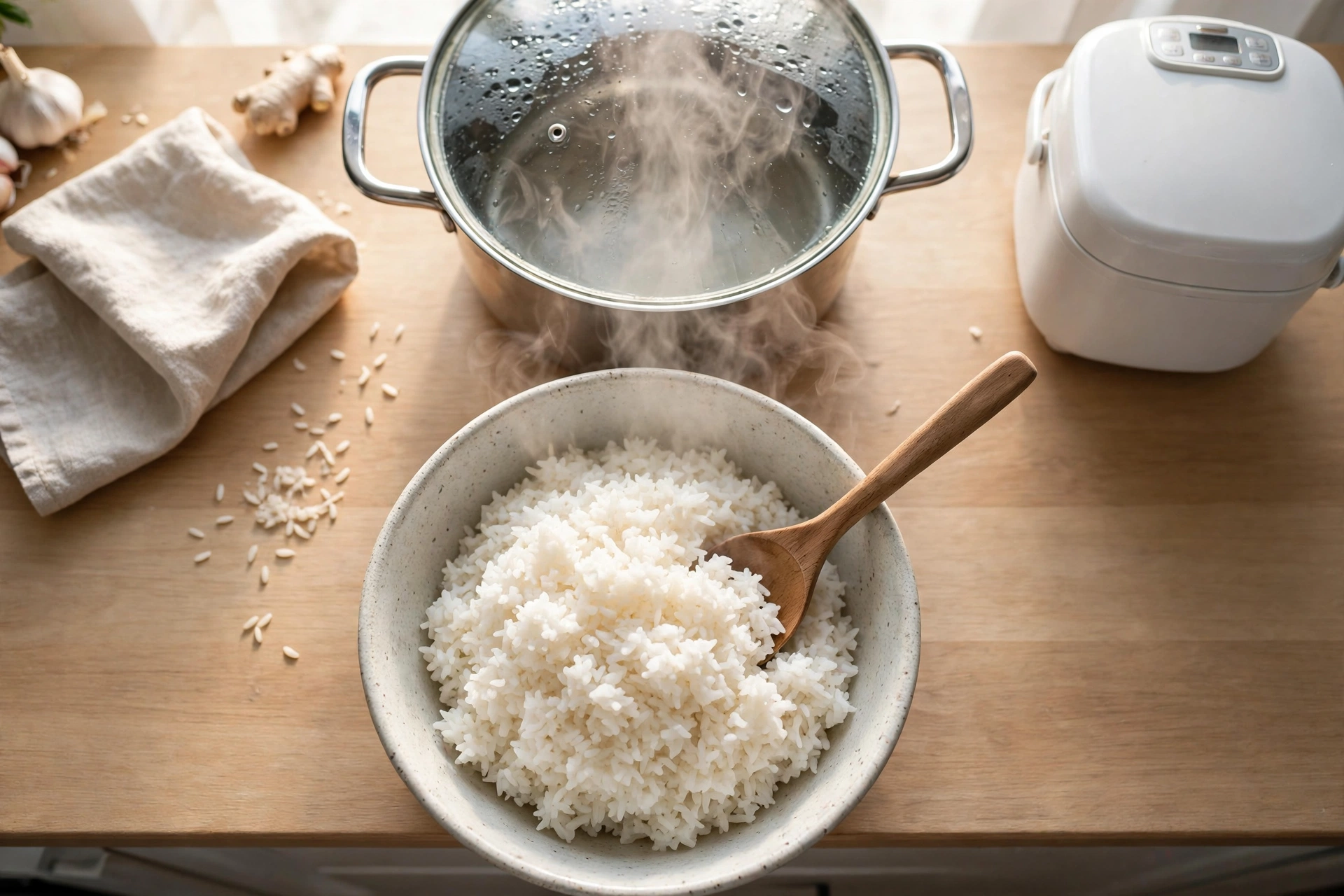
Put the rinsed rice and measured water in a saucepan with a tight-fitting lid, and add a pinch of salt if you like. Bring it to a boil over medium-high heat, then immediately turn the heat down to the lowest setting and put the lid on. Let it simmer gently for fifteen minutes for long-grain white rice, or about eighteen minutes for jasmine. Then — and this is the hard part — turn off the heat and leave the lid on for ten more minutes without peeking. The rice finishes cooking in its own steam during this rest, and lifting the lid lets the steam out and leaves the top grains undercooked. After the rest, fluff the rice gently with a fork, not a spoon, which crushes the grains. Serve straight away. If the bottom is slightly stuck, that usually means the heat was a little too high; a lower simmer and a heavier-bottomed pan fix it next time.
Method 2: How to Cook Perfect Rice in a Rice Cooker
The rice cooker is the easiest way to learn how to cook perfect rice, because it manages heat and timing for you. Rinse the rice, add it to the cooker bowl, and add water to the marked line for the number of cups you used — or use the one to one and a half ratio if your cooker has no lines. Close the lid, press the white rice or cook button, and walk away. The cooker will switch to its keep-warm setting when the rice is done. Let the rice sit on keep-warm for ten minutes before opening the lid, then fluff with a fork. The keep-warm function is handy if dinner is not quite ready, but rice left on keep-warm for hours dries out and can develop an off smell, so try to serve it within an hour. Clean the inner lid and steam vent after each use, since dried starch there can affect the seal.
Method 3: How to Cook Perfect Rice in an Instant Pot
Pressure cooking makes fast, consistent rice, and it is ideal when you want rice ready in a hurry. Rinse the rice, add it to the inner pot with an equal volume of water, and add a pinch of salt. For white rice, cook on high pressure for three minutes, then let the pressure release naturally for ten minutes before opening the valve for any remaining steam. The natural release is important — it is the pressure cooker’s version of the stovetop rest, and skipping it leaves the rice uneven. Fluff with a fork and serve. One advantage of the Instant Pot is consistency: once you find the ratio that works for your rice, it repeats perfectly every time, which makes it a good choice for meal prep.
Brown Rice: More Water, More Time
Brown rice needs a different approach because the bran layer slows water absorption. On the stovetop, use one part rice to two parts water and simmer for forty to forty-five minutes, then rest for ten minutes. In a rice cooker, use the brown rice setting if yours has one, with water to the brown rice line. In an Instant Pot, use a one-to-one-and-a-quarter ratio and cook on high pressure for about twenty minutes, with a ten-minute natural release. Brown rice has a chewier texture and a nuttier flavour, and it is done when the grains are tender but still hold their shape. If your brown rice is still crunchy, it usually needs more water or more time — not a higher heat.
Common Rice Mistakes and How to Fix Them
Even with the right method, rice sometimes goes wrong, and each failure has a clear cause. Mushy rice usually means too much water, or stirring during cooking, which releases starch and breaks the grains — never stir rice while it simmers. Crunchy rice usually means too little water or a lid that let steam escape; sprinkle a tablespoon or two of water over the top, replace the lid, and cook on the lowest heat for five more minutes. Burnt rice on the bottom usually means the heat was too high or the pot is thin; a heavier pan and a lower flame fix it. A layer of rice stuck to the bottom can sometimes be saved by putting a damp cloth under the pot for a few minutes, which loosens it. And if the rice smells slightly stale the next day, that is normal for refrigerated rice — reheat it with a sprinkle of water, covered, so the steam revives it.
How to Cook Perfect Rice: Storing and Using Leftovers
Cooked rice keeps in the fridge for three to four days in a sealed container, and it freezes well for a few months — spread it on a tray to cool quickly, then pack it into portions. The key safety habit is to cool rice quickly and refrigerate it promptly rather than leaving it at room temperature for hours. Leftover rice is ideal for fried rice, because day-old, chilled grains fry up separate and crisp instead of clumping. It also works well in soups, grain bowls, and stuffed vegetables. If you are cooking chicken to serve with your rice, our guide to how to boil chicken pairs well with this one, and if you have leftovers of both, our guide to reheat pizza — while it is about pizza — covers the same reheat-to-temperature principles that keep leftovers safe. Learning how to cook perfect rice is a small skill with an outsized payoff: it turns up in almost every cuisine, it costs very little, and once you can do it, you can do it for life.
Frequently Asked Questions About How to Cook Perfect Rice
What is the best rice-to-water ratio, and is it the key to how to cook perfect rice?
For long-grain white rice on the stovetop, use one part rice to one and a half parts water. Measuring the water is the key step in how to cook perfect rice, because eyeballing it is the most common reason rice turns out wrong.
Should you rinse rice before cooking?
Yes. Rinsing removes surface starch that would otherwise turn into a gluey paste, and it is the single biggest difference in learning how to cook perfect rice. Rinse three or four times until the water runs mostly clear.
Why is my rice mushy, and what does that say about how to cook perfect rice?
Mushy rice usually means too much water, or stirring during cooking, which releases starch and breaks the grains. If you want to master how to cook perfect rice, measure the water carefully and never stir rice while it simmers.
How long should rice rest after cooking?
Let rice rest for ten minutes with the lid on after the heat is off. The rice finishes cooking in its own steam during this rest, and it is an essential step in how to cook perfect rice.