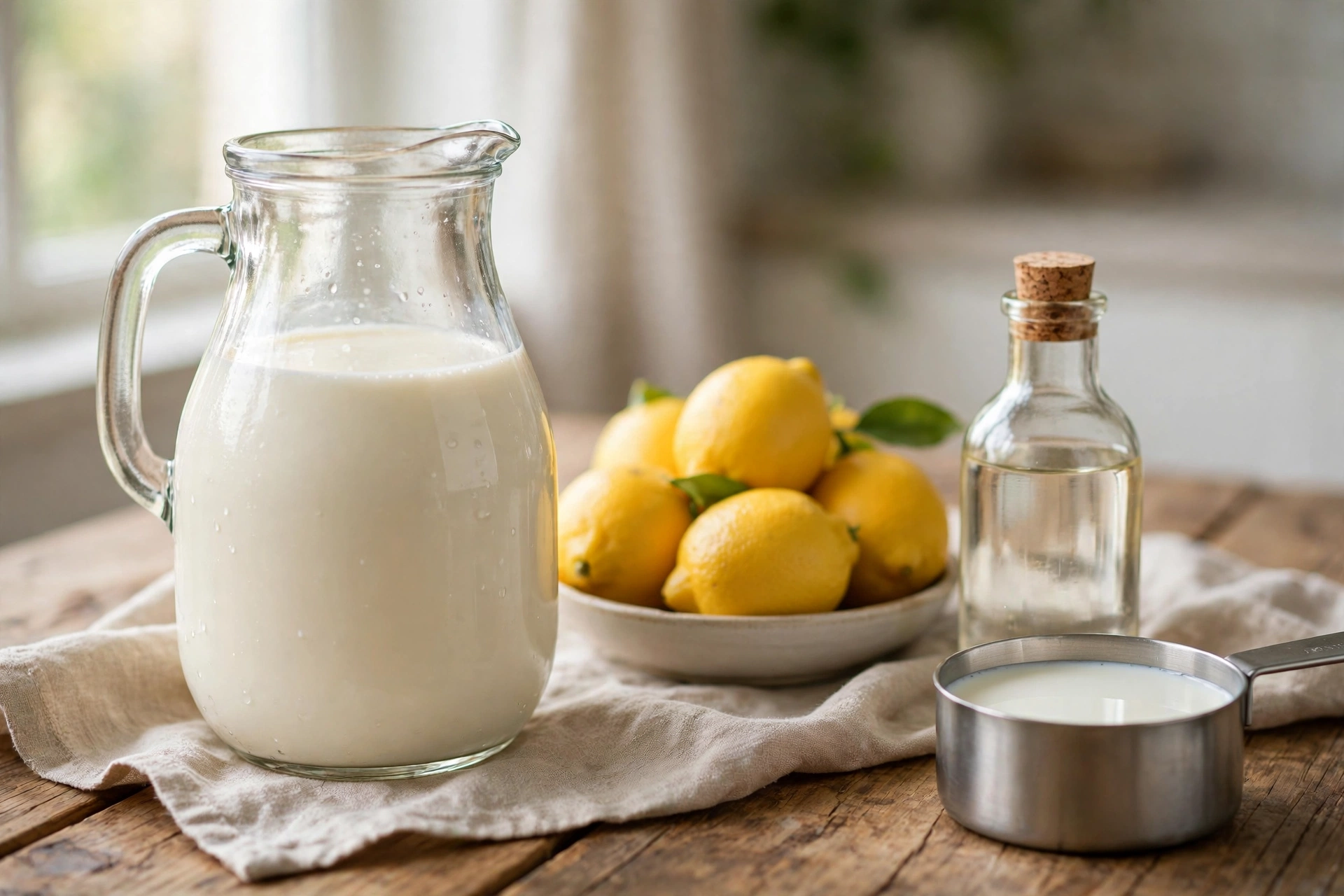
How to Make Buttermilk at Home in 10 Minutes: Easy Method
Learning how to make buttermilk at home is one of the handiest kitchen skills you can pick up, because buttermilk turns up in recipes far more often than most of us keep it in the fridge. Pancakes, biscuits, fried chicken, salad dressings, and soda bread all call for it, and the usual story is the same: the recipe needs a cup, the fridge has none, and nobody wants to make a special trip to the shop. The good news is that you can make a perfectly good buttermilk substitute in about ten minutes with milk and a spoonful of lemon juice or vinegar, using things you probably already have.
This guide explains how to make buttermilk the quick way, how real cultured buttermilk is different, and how to use, store, and troubleshoot it so your baking turns out right the first time.
What Is Buttermilk, Really?
Before we get to the method, it helps to know what buttermilk actually is, because the name is a little misleading. Traditional buttermilk was the thin, slightly tangy liquid left over after churning butter from cream. The cultured buttermilk sold in shops today is different: it is made by adding friendly bacteria cultures to low-fat or skimmed milk and letting it ferment, a little like yoghurt. Those cultures give it its characteristic tang and slightly thick texture, and they are also what makes it so useful in baking. The acid in buttermilk reacts with baking soda to create tiny bubbles of gas, which lift batters and doughs and make them tender. That is why recipes that use buttermilk usually call for baking soda rather than baking powder, and why swapping in plain milk often gives a flatter, tougher result. When you learn how to make buttermilk at home, you are really learning two things: how to make the quick acidified substitute, which works in most recipes, and what real cultured buttermilk is, so you know when the substitute is good enough and when the real thing is worth buying.
How to Make Buttermilk With Lemon Juice
The lemon juice method is the most popular way to make a quick buttermilk substitute, and it takes about ten minutes from start to finish. You need one cup of milk and one tablespoon of fresh lemon juice. Whole milk gives the richest result, because its fat helps the mixture thicken, but low-fat milk works too. Pour the milk into a measuring jug, stir in the tablespoon of lemon juice, and leave the jug on the counter for five to ten minutes. During that time the acid will cause the milk to thicken slightly and develop small curds, which is exactly what you want to see. Give it a gentle stir and it is ready to use. The most important detail in how to make buttermilk with lemon juice is the ratio: one tablespoon of acid for every cup of milk. If you need half a cup, use half a tablespoon of lemon juice; if you need two cups, use two tablespoons. The lemon flavour is very faint in the finished dish, so it will not make your pancakes taste like lemonade. For another clear walk-through of the same method, see Cups & Temps’ guide to making buttermilk with milk and lemon juice or vinegar. This version works best in recipes where buttermilk is one ingredient among several, such as pancake batter, biscuit dough, muffin batter, or cake batter, where its job is to add tang and tenderness rather than to be the star of the show.
How to Make Buttermilk With Vinegar
If you have no lemons in the house, white vinegar does the same job just as well, and the method is identical. For every cup of milk, stir in one tablespoon of white vinegar, then let the mixture stand for five to ten minutes until it thickens slightly and looks a little curdled. White vinegar is the best choice because it is clear and neutral in flavour; apple cider vinegar also works and adds a very mild fruity note, but it can tint pale batters slightly, so white vinegar is the safer option for light-coloured cakes and biscuits. One thing to watch with the vinegar method is the smell: the jug will smell faintly of vinegar while it sits, but that smell disappears completely once the buttermilk is mixed into a batter and cooked. When people ask how to make buttermilk with vinegar, the other question that usually follows is whether the result is as good as the lemon version, and the honest answer is that the two are interchangeable. Choose whichever acid you have on hand. The result will not be as thick as cultured buttermilk from a carton, and it will not have quite the same complex tang, but for baking it performs the same job: it adds acid, moisture, and tenderness.
How to Make Buttermilk From Yoghurt or Sour Cream
There is a third shortcut that works well when you have yoghurt or sour cream in the fridge but no lemon or vinegar. Thin plain yoghurt with a little milk until it reaches the consistency of buttermilk: roughly three parts yoghurt to one part milk, stirred until smooth. Sour cream works the same way, thinned with a splash of milk or water. This version is thicker and richer than the lemon or vinegar method, and it has a pleasant tang of its own, so it is a good choice for dressings, dips, and creamy sauces. It is less ideal for delicate baking, where the extra thickness can change the texture of a batter, but for a ranch-style dressing or a marinade it is excellent. If you are learning how to make buttermilk because you want it for a savoury recipe rather than baking, the yoghurt method is often the best shortcut of all. Whatever shortcut you choose, remember the golden rule: the substitute should be made fresh and used straight away, because it is at its best in the first hour or so after mixing.
Cultured Buttermilk vs. the Quick Substitute
It is worth being honest about the difference between the quick substitute and real cultured buttermilk, because they are not identical. Real cultured buttermilk is thicker, tangier, and more complex in flavour, because it has been fermented by live cultures over hours rather than acidified in minutes. In recipes where buttermilk is the main flavour — a buttermilk dressing, a glass of buttermilk with dinner, or a buttermilk panna cotta — the real thing is noticeably better, and the substitute will taste thin and one-dimensional by comparison. In baking, though, the difference is much smaller. Pancakes, waffles, biscuits, scones, muffins, and quick breads all turn out very well with the quick substitute, because the acid does the important chemical work either way. The other difference is practical: cultured buttermilk keeps for a couple of weeks in the fridge once opened, while the quick substitute is best used immediately. So the sensible approach is to keep a carton of cultured buttermilk on hand when you bake often, and to use the quick method whenever a recipe catches you by surprise. If your main question is how to make buttermilk for baking, the quick substitute will serve you well in almost every recipe. Knowing how to make buttermilk both ways means you are never stuck.
How to Use Buttermilk in Baking and Cooking
Buttermilk earns its place in the kitchen because it does three jobs at once: it adds moisture, it adds a gentle tang, and its acid makes batters rise and stay tender, and that is why learning how to make buttermilk is worth the ten minutes it takes. In pancakes and waffles, it produces a softer crumb and a lightly golden colour. In biscuits and scones, it keeps the dough tender and helps the layers separate. In cakes, especially chocolate cake, it deepens the flavour and keeps the crumb moist for longer. It is also a wonderful marinade: soaking chicken in buttermilk before frying is a classic technique, because the acid gently tenderises the meat and helps coatings stick and crisp. In dressings and dips, buttermilk gives a creamy tang without the heaviness of mayonnaise alone, and it is the base of a classic ranch dressing. When you are deciding how to make buttermilk work in a recipe, the main rule is to use it exactly as the recipe states: if a recipe calls for a cup of buttermilk, use a cup of your substitute, and do not add extra baking soda to compensate, because the acid level is already right. One more tip: buttermilk curdles when it is heated too fast, so when you add it to a hot pan or a sauce, keep the heat gentle and stir as you go.
How to Store Buttermilk and How Long It Keeps
Storage is one of the most common questions after people learn how to make buttermilk, and the answer depends on which kind you have. The quick lemon or vinegar substitute should be used straight away, within an hour or two of mixing, because it does not improve with sitting and its texture can become uneven. Real cultured buttermilk is much hardier: an unopened carton keeps in the fridge until the date printed on it, and an opened carton usually stays good for about two weeks if it is kept cold and sealed. Buttermilk that has gone off will smell sharply sour in an unpleasant way and may develop mould, and if you see either, throw it away. You can also freeze buttermilk, which is useful if you buy a large carton and only need a cup at a time. Pour it into ice cube trays or small containers, freeze it, and thaw only as much as you need, stirring well after thawing because it may separate a little. Frozen buttermilk is best used for baking rather than drinking or dressings, since freezing changes its texture slightly. Labelling the container with the date is a small habit that saves a lot of guesswork later.
Common Mistakes When You Make Buttermilk at Home
Most buttermilk mistakes are small and easy to avoid once you know them. The most common mistake when people first try how to make buttermilk at home is using too much acid: more lemon juice does not make a better substitute, it makes a sour one, so stick to one tablespoon per cup. The second is not waiting long enough: if you use the mixture the moment you stir it, the milk has not had time to thicken, so give it the full five to ten minutes. The third is using the wrong milk: skimmed milk will work, but the result is thinner, and plant milks behave differently — oat milk thickens a little, almond milk barely thickens at all, and soya milk usually works best among the dairy-free options, though the result will taste different. The fourth mistake is expecting the substitute to look exactly like cultured buttermilk: it will be thinner and paler, and that is normal, not a sign that something went wrong. Finally, do not try to “fix” a recipe by adding extra baking soda when you use a substitute; the acid in your homemade buttermilk is already enough, and extra soda can leave a soapy taste. If you keep these points in mind, the question of how to make buttermilk stops being a worry and becomes a two-minute habit.
Frequently Asked Questions
Can I make buttermilk with skimmed milk? Yes, you can, and the method is the same: one tablespoon of lemon juice or vinegar per cup of milk, left to stand for five to ten minutes. The result will be thinner than a whole-milk version, but it still works well in baking.
Can I make buttermilk without lemon or vinegar? Yes. Thin plain yoghurt or sour cream with a little milk until it has the consistency of buttermilk. This is a good option for dressings and marinades.
Does the quick substitute taste the same as real buttermilk? Not exactly. The quick version is milder and thinner, while cultured buttermilk is thicker and tangier. In baking, the difference is hard to notice; in dressings and drinks, the real thing is better.
Can I use buttermilk that has passed its date? Check it first. If it smells pleasantly tangy and looks normal, it is usually fine for baking a day or two past the printed date. If it smells sharply sour, has mould, or looks slimy, throw it away.
Can I freeze buttermilk? Yes. Freeze it in small portions and thaw it in the fridge, stirring well after thawing. Frozen buttermilk is best for baking rather than for dressings.
What is the fastest way to learn how to make buttermilk? Make the lemon juice version once, following the one-tablespoon-per-cup ratio. After one try, the method is easy to remember, and you will not need a recipe again.
A Simple Skill Worth Having
Knowing how to make buttermilk at home is a small skill with an outsized payoff. It saves a trip to the shop, rescues recipes that would otherwise stall, and gives you better pancakes, biscuits, and cakes with ingredients you already own. Start with the quick lemon or vinegar method, keep the one-tablespoon-per-cup ratio in mind, and use the substitute the same day you make it. Once you have done it a couple of times, it becomes automatic — and the next time a recipe calls for buttermilk, you will not even have to think about whether there is any in the fridge.