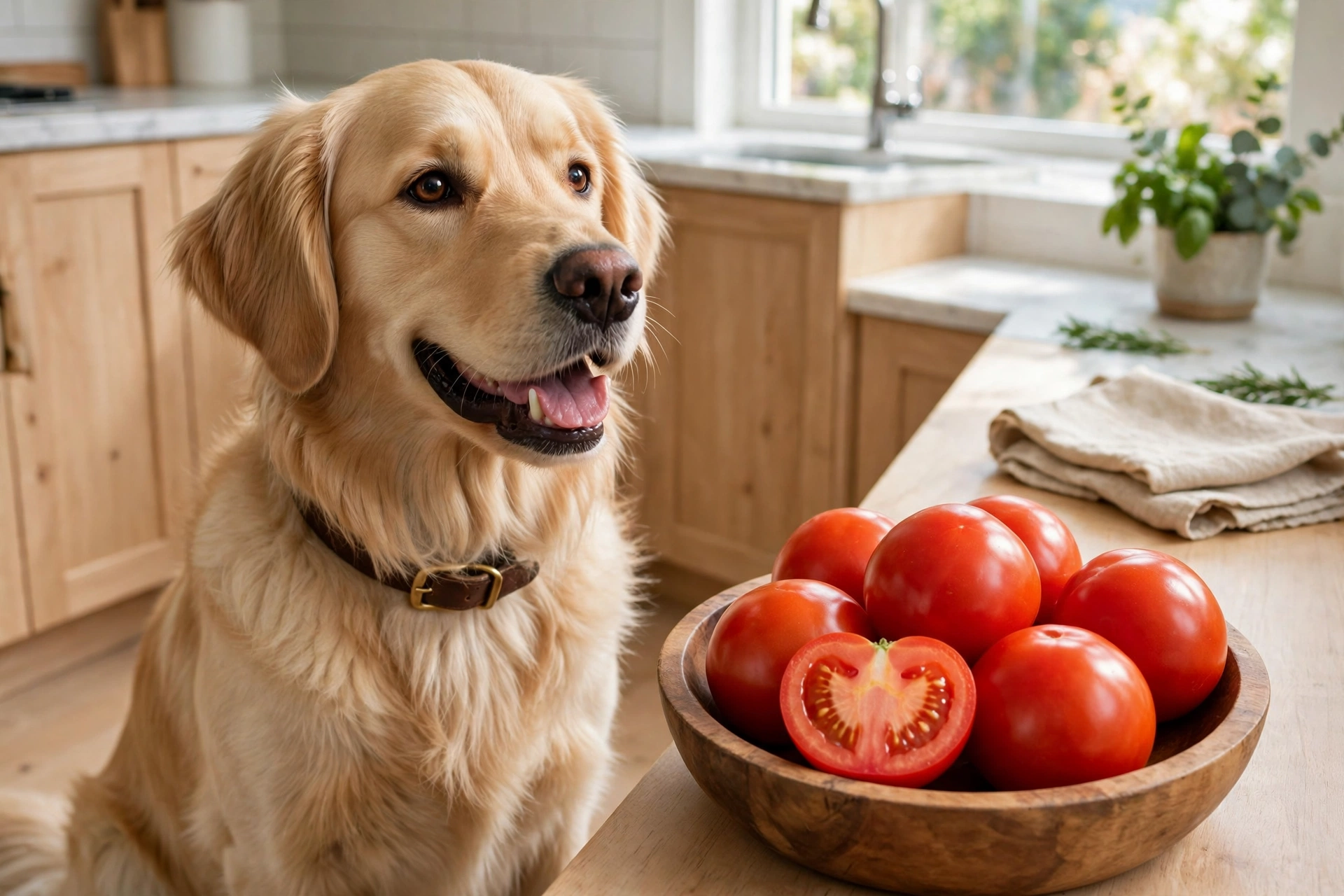
Can Dogs Eat Tomatoes? What Is Safe and What to Avoid
If you have ever chopped tomatoes for a salad while your dog watched every move, you have probably wondered: can dogs eat tomatoes? The answer is a careful yes — with an important condition. Ripe, red tomatoes are generally considered safe for dogs in small amounts as an occasional treat, but the green parts of the tomato plant, including the leaves, stems, and unripe green tomatoes, contain natural toxins that can make a dog sick. That split answer is why so many owners get confused, and why it is worth understanding exactly which parts are fine, how much is too much, and what to do if your dog gets into the wrong part. This guide answers the can dogs eat tomatoes question in plain terms, so you can share a tomato safely or keep your dog away from the plant with confidence.
The Short Answer: Can Dogs Eat Tomatoes?
So, can dogs eat tomatoes? Yes, in moderation, provided the tomato is fully ripe and red, served plain, and given only as a small occasional treat. A few small pieces of ripe tomato flesh are fine for most healthy adult dogs. What dogs should never eat are green, unripe tomatoes and any green part of the tomato plant — the leaves, stems, and vines. Those parts contain solanine and a related compound called tomatine, natural chemicals the plant produces to protect itself from pests. In large amounts, these compounds can cause stomach upset and more serious symptoms, especially in small dogs and puppies, whose smaller body size means a smaller amount can affect them more. Tomato-based foods are a separate question: sauces, salsa, ketchup, and pizza toppings often contain onion, garlic, salt, and sugar, which are not good for dogs even when the tomato itself would be fine. The short answer, then, is that the fruit is fine and the plant is not, and the rest of this guide explains how to draw that line in practice.
Why Ripe Tomatoes Are Usually Fine
Ripe tomatoes are a common ingredient in commercial dog food, and there is a good reason for that. A ripe tomato is mostly water, with fibre, vitamin C, vitamin K, folate, and potassium, plus antioxidants such as lycopene, which gives tomatoes their red colour. These nutrients support digestion and general health, and the fibre can help keep things moving. Because a ripe tomato is low in calories and mostly water, a few small pieces make a light, hydrating treat, which is useful for dogs that need to watch their weight. So when owners ask can dogs eat tomatoes, the answer for ripe fruit is yes, in small amounts. The key word is ripe: as a tomato ripens from green to red, the levels of solanine and tomatine drop sharply, which is why a fully red tomato is treated differently from a green one — and why the can dogs eat tomatoes answer is yes only for ripe fruit. Cherry tomatoes are fine too, provided they are ripe and cut into small pieces so they are not a choking risk. None of this makes tomatoes a health food your dog needs — a good dog food already covers their nutrition — but it does mean you can share a little ripe tomato without worry when you do it properly.
The Parts of the Tomato Plant That Are Not Safe
The danger in tomatoes is not the red fruit but the plant around it. Tomato plants belong to the nightshade family, and their leaves, stems, and vines contain solanine and tomatine. Unripe green tomatoes also contain much higher levels of these compounds than ripe ones. Dogs that eat green tomatoes or plant material are the reason the can dogs eat tomatoes question needs a careful answer. If a dog eats a large amount of green tomato or plant material, it can develop tomatine poisoning, with symptoms that may include vomiting, diarrhoea, loss of appetite, weakness, confusion, dilated pupils, tremors, and, in severe cases, seizures or heart rhythm problems. That sounds alarming, and it is worth taking seriously, but it is also worth keeping in proportion: serious poisoning is rare, because a dog would usually need to eat a large amount of plant material, and most dogs that nibble a leaf or a green tomato show only mild stomach upset, if anything. Small breeds and puppies are the exception to watch, because their size means a smaller amount can cause more trouble. If you grow tomatoes, fence the plants off or keep pots out of reach, and pick up any fallen green fruit before your dog finds it. And if your dog does eat a large amount of tomato plant material, contact your vet straight away rather than waiting to see what happens.
Can Dogs Eat Tomatoes Every Day?
A question that follows naturally is whether dogs can eat tomatoes every day, and the honest answer is that they should not, even though a small piece now and then is fine. Tomatoes are acidic, and a daily serving can irritate a sensitive stomach and cause loose stools or mild reflux, especially in dogs that already have digestive issues. Treats of any kind should make up only a small part of a dog’s daily food, and tomatoes should be a small part of that small part. A good rhythm is a few small pieces once or twice a week at most, as an occasional snack rather than a daily habit. That is the simplest way to answer can dogs eat tomatoes for your own dog: sometimes, not every day. If your dog has never had tomato before, start with a single small piece and watch for any reaction over the next day — soft stools, gas, or a lack of interest in food are signs to stop. Dogs with kidney problems, stomach sensitivities, or a known allergy should not be given tomatoes at all without a vet’s advice. The question of can dogs eat tomatoes every day is really a question about moderation, and moderation is the whole answer: yes, sometimes; no, not daily.
How to Serve Tomatoes to Your Dog
Serving tomatoes safely is simple once you know the rules, and it is the practical side of the can dogs eat tomatoes question. Choose a tomato that is fully ripe and red, with no green patches, and wash it well. Remove the stem and any leaves, cut the flesh into small, bite-sized pieces, and offer just a few. For a small dog, one or two small pieces is plenty; for a large dog, a few pieces are enough. Cherry tomatoes should always be cut in half or quarters, because a whole cherry tomato is the right size to be a choking risk. Serve the pieces plain, with nothing added: no salt, no dressing, no oil, no seasoning. Do not give your dog the tomato from your plate if it has been cooked in a sauce or seasoned, and do not let your dog chew on the vine or the plant. If your dog enjoys the taste and has no reaction, you can offer it again another day, but there is no need to make it a regular part of their diet. And if your dog turns its nose up at tomato, that is fine too — plenty of dogs are not interested, and there are many other safe treats to try instead.
Tomato Sauces, Salsa, and Other Tomato Foods to Skip
It is important to be clear that a tomato being safe does not make every tomato food safe, which is why the can dogs eat tomatoes question has a different answer for sauces than for plain fruit. Tomato sauce, salsa, ketchup, sun-dried tomatoes in oil, and the tomato topping on a pizza are all foods to keep away from your dog. The problem is not the tomato but everything that travels with it: onion and garlic, which are toxic to dogs; salt, which dogs do not need in those amounts; sugar, which is common in ketchup; and chilli, vinegar, and spices, which can irritate a dog’s stomach. Sun-dried tomatoes are also much more concentrated than fresh ones, and they are often packed in oil with salt and herbs. Soup is another one to skip, because tomato soup is usually made with onion, garlic, cream, and salt. If your dog manages to steal a lick of sauce from a plate, a tiny amount is unlikely to cause serious harm, but it is not something to offer deliberately, and if your dog eats a large amount of sauce or salsa, watch for stomach upset and call your vet if you are worried. The rule is simple: plain, ripe, raw tomato is fine in small amounts, and everything else tomato-flavoured is best avoided.
Signs Your Dog Ate Too Much Tomato
Most dogs that eat a little ripe tomato will be completely fine, but it helps to know what trouble looks like so you can act quickly if it appears. That is the practical side of the can dogs eat tomatoes question: know the signs, and you can act fast. After eating too much tomato, or after eating green tomato or plant material, a dog may develop vomiting, diarrhoea, drooling, stomach pain, or a loss of appetite. More serious signs, which suggest a larger amount of toxin, include weakness, confusion, loss of coordination, dilated pupils, tremors, or seizures. These serious signs are uncommon, but they are the reason to take green plant material seriously. If you see any of these signs, or if you know your dog has eaten a large amount of green tomatoes, leaves, or stems, contact your vet or an emergency vet clinic right away, and tell them what your dog ate, how much, and when. Do not try to treat it at home or make your dog vomit unless a vet tells you to. In most mild cases, a vet will advise monitoring at home and offering water, but that decision should come from a professional who knows your dog’s size and health, not from a guess.
Safer Fruits to Offer Instead
If you would rather skip the can dogs eat tomatoes question altogether, or if your dog does not enjoy them, there are several safer fruits that most dogs love. Apples are a good example: crisp, sweet, and widely enjoyed, provided you remove the seeds and core first — our guide on can dogs eat apples explains exactly how to serve them. Blueberries are another easy choice, small, soft, and simple to offer a few at a time. Banana slices, watermelon without seeds or rind, and strawberries are also popular with dogs and easy to prepare. Carrot sticks and green beans are good non-fruit options that give a satisfying crunch. Whatever you choose, the same rules apply: introduce one new food at a time, start with a small amount, watch for any reaction, and keep treats to a small part of the daily diet. The American Kennel Club has a helpful overview of feeding tomatoes to dogs, including when to call a vet, at akc.org. Variety is good, but no single treat is essential, so there is never a reason to push a food your dog does not enjoy.
Frequently Asked Questions
Can dogs eat cherry tomatoes? Yes, if they are fully ripe and red, and cut into small pieces first. A whole cherry tomato can be a choking risk, so always halve or quarter them.
Can dogs eat raw tomatoes? Yes, raw ripe tomatoes are the safest way to serve them. Cooked plain tomato is also fine in small amounts, but avoid sauces and seasoned dishes.
What happens if my dog eats a green tomato? A small amount may cause only mild stomach upset, but a large amount can cause vomiting, weakness, or tremors. Contact your vet if your dog eats a green tomato, especially if it is a small dog or a puppy.
Can dogs eat tomato sauce or ketchup? No. Sauces and ketchup usually contain onion, garlic, salt, and sugar, which are not safe for dogs.
How much tomato can I give my dog? Only a few small pieces as an occasional treat, once or twice a week at most. Start with one small piece the first time and watch for any reaction.
Can dogs eat tomatoes from the garden? Only the ripe fruit, served plain. Keep your dog away from the plants themselves, and pick up fallen green fruit.
Can dogs eat tomatoes cooked? Yes, plain cooked tomato in small amounts is fine, provided nothing has been added to it. Avoid sauces, soups, and seasoned dishes.
Can dogs eat tomatoes if they are small dogs? Yes, but the portion should be smaller. One or two tiny pieces is plenty for a small dog, and puppies should not be given tomato without a vet’s advice.
The Bottom Line
Can dogs eat tomatoes? Yes — ripe, red, plain, and in small amounts, as an occasional treat. The green parts of the plant and unripe green tomatoes are the parts to avoid, and tomato sauces and seasoned dishes are not suitable. Serve a few small pieces, watch for any reaction the first time, and keep tomatoes as a small, occasional part of your dog’s diet rather than a daily habit. This guide is general information, not veterinary advice: if your dog has a health condition, is a puppy, or you are unsure about any new food, ask your vet first. A little care is all it takes to share a tomato safely.