Machine Learning in Finance: How Banks and Traders Use AI
Machine learning in finance is no longer a futuristic idea — it is already running behind the scenes of everyday banking. When your bank blocks a suspicious transaction seconds after it happens, or a trading firm reacts to market news in milliseconds, machine learning is usually involved.
At its core, machine learning means training software on large amounts of historical data so it can spot patterns and make predictions. In finance, those patterns might be the signs of a fraudulent payment, the risk that a borrower will miss a payment, or the early signals of a market move. This guide explains where it is actually used, how it works in plain language, and where its limits are.
Fraud Detection: The Most Visible Use
Fraud detection is the most common use of machine learning in finance. Every time you pay by card, a model checks the transaction against what it knows about your normal behavior — where you usually shop, how much you usually spend, and what time of day you are active. A purchase that breaks the pattern, like a large electronics order from another country at 3 a.m., gets flagged or blocked in seconds.
These systems learn continuously. When a new type of scam appears, the model is retrained on the new examples, which is why fraud detection has improved so much over the last decade. No system catches everything, but machine learning catches far more fraud, far faster, than manual review ever could.
Credit Scoring and Lending
Banks and lenders use machine learning to judge credit risk. Traditional credit scores rely on a small set of factors, like payment history and outstanding debt. Machine learning models can weigh many more signals — spending patterns, account behavior, and application data — to build a fuller picture of risk.
This has two sides. On one hand, it can help people with thin credit files get approved, since the model sees more than a single score. On the other hand, regulators worry about fairness: if the training data reflects past bias, the model can repeat it. That is why lending models face strict rules, and why banks must be able to explain their decisions.
If you want to see how your own credit picture looks, a credit score app is a practical starting point.
Algorithmic Trading
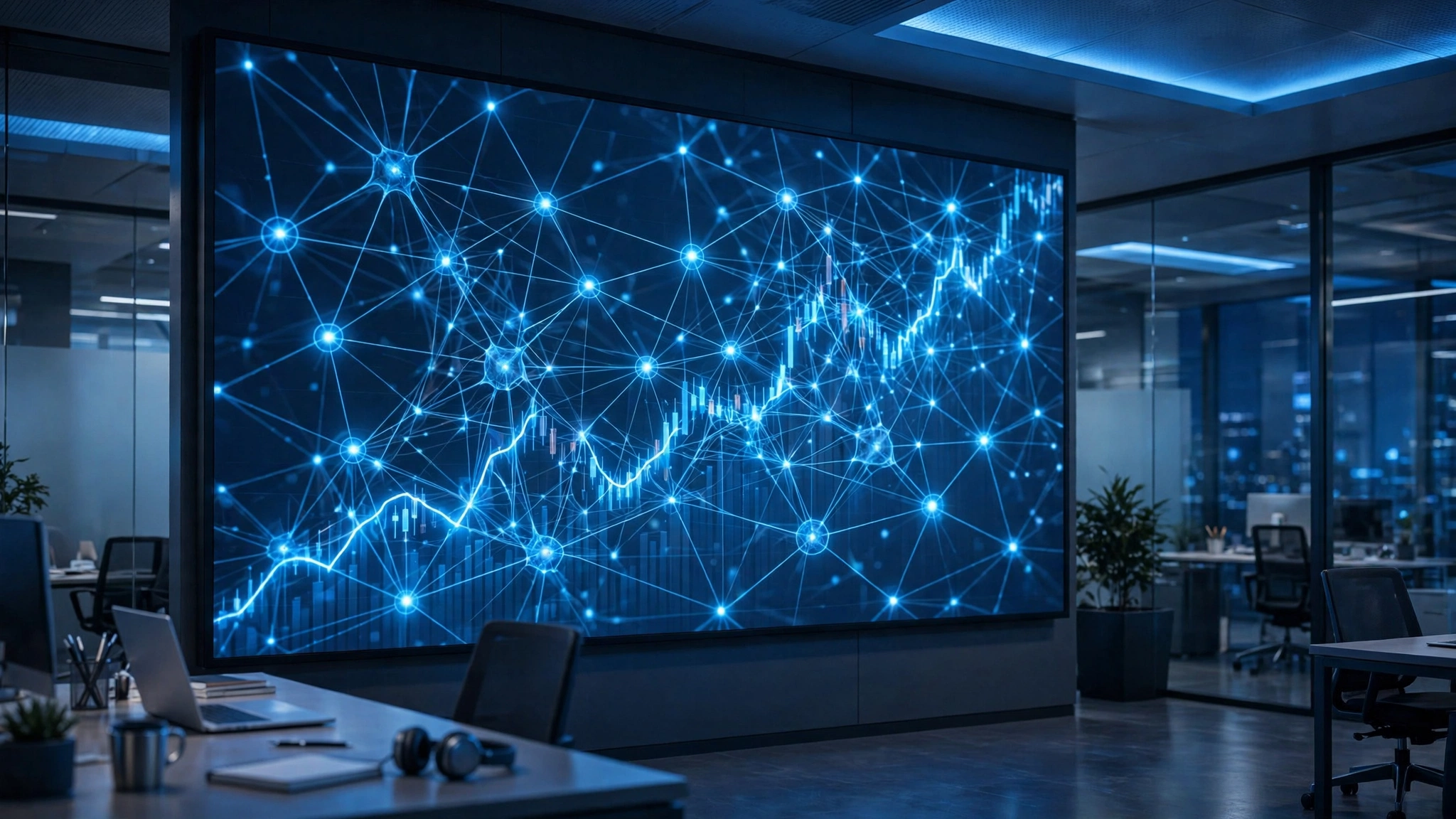
Trading firms use machine learning to find short-lived patterns in market data and execute trades in milliseconds. These models scan prices, news, and order books far faster than any human could, looking for small edges that add up over thousands of trades.
But markets are noisy, and a pattern that worked last month can stop working tomorrow. The best trading firms treat machine learning as one tool among many, combined with risk limits and human oversight. No model can predict the market reliably — anyone who promises that is selling something.
Robo-Advisors and Personal Finance
Robo-advisors use machine learning and simple rules to build and rebalance investment portfolios. You answer questions about your goals and risk tolerance, and the service picks a mix of funds and adjusts it over time. The technology is not magic — it is mostly automated diversification and rebalancing — but it makes professional-style portfolio management available at a low cost.
Banks also use machine learning for chatbots, customer service routing, and personalizing offers, like suggesting a savings product based on your spending habits.
The Real Limits of Machine Learning in Finance
Machine learning in finance has honest limits that matter:
- It learns from the past. If the future behaves differently — a crisis, a new regulation, a market shock — past patterns can mislead.
- It can be a black box. Some models make decisions that are hard to explain, which is a problem when regulators or customers ask why.
- Bad data means bad decisions. A model trained on incomplete or biased data will repeat those flaws at scale.
- It needs oversight. The best financial firms pair models with human experts and hard risk limits, rather than letting software run unsupervised.
The Bottom Line
Machine learning in finance already powers fraud detection, credit scoring, algorithmic trading, and robo-advisors — and it will keep spreading. Its strength is finding patterns in huge amounts of data faster than people can. Its weakness is that it can only learn from the past, and it needs careful oversight to stay fair and safe. For everyday consumers, the practical takeaway is simple: the same technology that protects your card from fraud is also quietly shaping the financial products offered to you, so it pays to understand how it works.