Can You Freeze Cheese? What Freezes Well and What Doesn’t
Can you freeze cheese? Yes — most cheese freezes safely, and it is a practical way to stop a large block from going to waste. But not all cheese freezes equally well. Hard and semi-hard cheeses come out of the freezer in good shape, while soft, creamy cheeses often turn grainy or watery.
The trick is knowing which cheeses to freeze, how to wrap them, and how to use them after thawing. Get those three things right and frozen cheese is nearly as good as fresh — for cooking, at least.
Which Cheeses Freeze Well?
These cheeses freeze best:
- Hard cheeses: cheddar, Parmesan, Pecorino, Gruyère, and Swiss. They keep their flavor well and are ideal for grating or cooking after thawing.
- Semi-hard cheeses: mozzarella, Gouda, Edam, and Monterey Jack. They freeze well, especially when shredded first.
- Processed cheese: sliced processed cheese freezes fine, though it is already a long-life product.
These cheeses freeze poorly:
- Soft cheeses: cream cheese, ricotta, cottage cheese, and fresh goat cheese tend to separate and turn grainy.
- Bloomy-rind cheeses: Brie and Camembert lose their creamy texture and can become watery.
- Blue cheese: it survives freezing, but the texture suffers, so freeze it only if you plan to cook with it.
How to Freeze Cheese Properly
Freezing cheese is simple if you follow a few steps:
- Shred or grate it first. Shredded cheese thaws faster, and you can take out exactly what you need. This is the best method for cheddar and mozzarella.
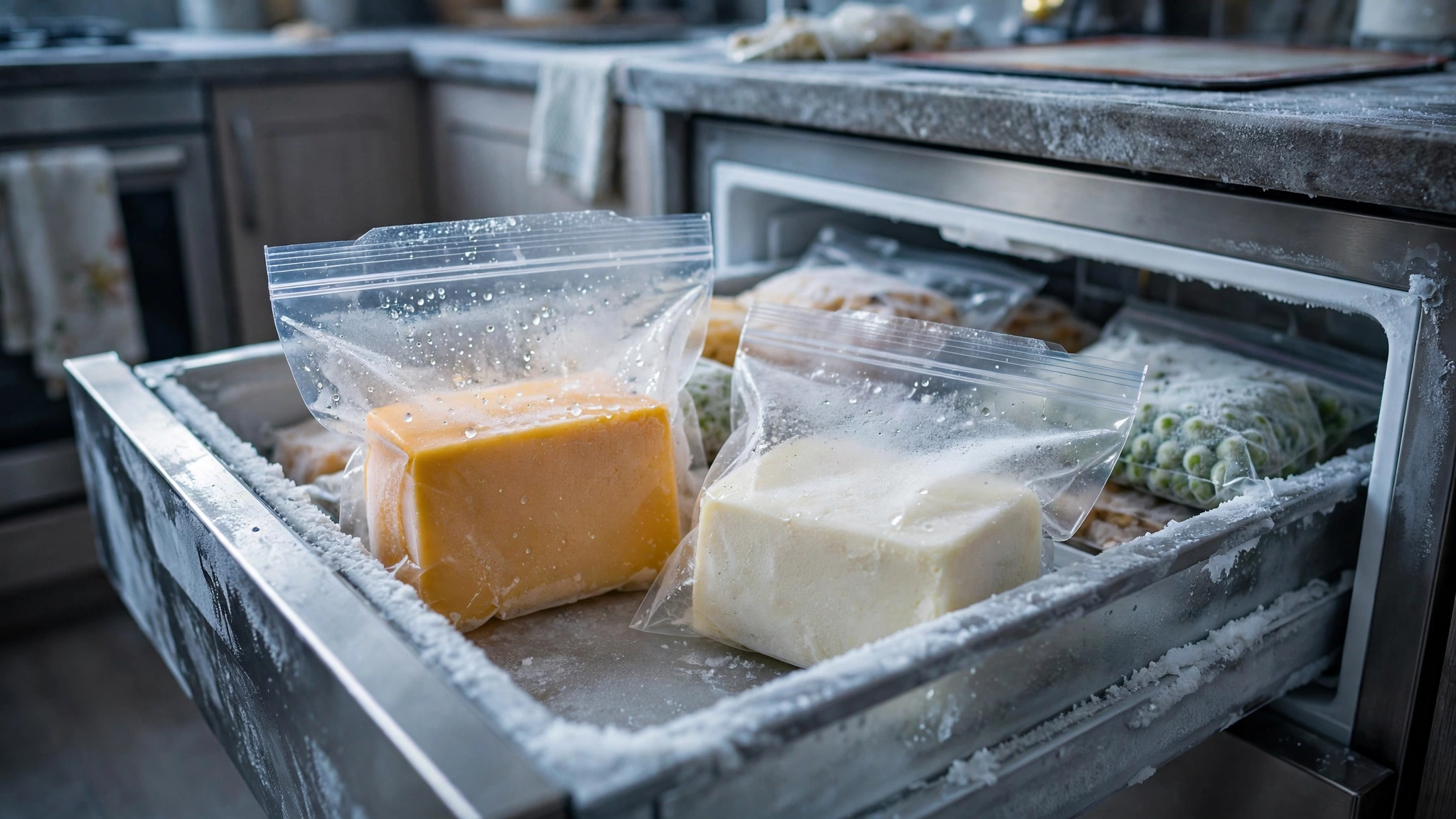
- Wrap it airtight. Wrap blocks tightly in plastic wrap, then place them in a freezer bag. Squeeze out as much air as possible — air causes freezer burn.
- Portion it. Freeze cheese in the amounts you normally use, so you never have to thaw a whole block for a small recipe.
- Label it. Write the cheese type and the date on the bag. Most cheese keeps well for 2 to 3 months in the freezer, and up to 6 months at most.
- Don’t refreeze. Once thawed, use the cheese within a few days and do not put it back in the freezer.
How to Thaw Frozen Cheese
Thaw cheese slowly in the fridge, not on the counter. A block needs several hours or overnight; shredded cheese thaws in an hour or two. You can also add frozen shredded cheese directly to a hot dish — it melts straight into sauces, soups, and pasta bakes.
Expect a texture change. Thawed cheese is usually more crumbly than fresh cheese, which is why frozen cheese works best in cooking rather than on a cheese board. The flavor stays almost the same, so for melting and baking, the difference is hard to notice.
How Long Does Frozen Cheese Last?
For the best quality, use frozen cheese within 2 to 3 months. It stays safe to eat for longer — up to 6 months — but the texture and flavor slowly decline. If you find a bag that has been in the freezer for a year, it is safe if it stayed frozen, but it may taste flat and feel dry. When in doubt, smell it after thawing: sour or off odors mean it is time to throw it away.
Can You Freeze Cheese? Quick Answers
- Can you freeze shredded cheese? Yes — it is the easiest type to freeze, and you can use it straight from frozen in cooking.
- Can you freeze cheese slices? Yes. Place parchment paper between slices so they don’t stick together.
- Can you freeze cream cheese? Technically yes, but the texture turns grainy. It works in cooked dishes, not as a spread.
- Can you freeze grated Parmesan? Yes, it freezes very well and is handy to keep on hand.
The Bottom Line
Can you freeze cheese? Yes — hard and semi-hard cheeses freeze well for 2 to 3 months, especially when shredded and wrapped airtight. Soft cheeses are the exception and are better used fresh. Thaw in the fridge, use thawed cheese for cooking rather than serving plain, and never refreeze. It is one of the easiest ways to cut food waste in the kitchen, right alongside saving other dairy staples — if you cook with dairy often, learning how to make buttermilk at home is another handy kitchen skill.