Best Vitamin C Serum: How to Choose the Right One
Walk into any skincare aisle or scroll through any beauty feed and you will meet the same advice again and again: if you want brighter, healthier-looking skin, find the best vitamin C serum for your skin type. But vitamin C is one of the few skincare ingredients with a genuinely strong reputation among dermatologists, and a well-chosen serum is one of the simplest ways to add it to your routine.
The hard part is choosing. Shelves are crowded with bottles that promise the same thing in different words, at wildly different prices, and the label rarely tells you what actually matters. This guide explains what the best vitamin C serum does, which form and strength to look for, and how to use it without irritating your skin.
What the Best Vitamin C Serum Actually Does for Your Skin
Vitamin C is an antioxidant, which means it helps protect your skin from damage caused by unstable molecules called free radicals. Free radicals come from everyday sources: sunlight, air pollution, cigarette smoke, and the normal ageing process itself. Over time, that damage shows up as dullness, uneven tone, and fine lines. A good serum delivers vitamin C directly to the skin, where it can do this protective work. Eating vitamin C helps your body, but little of it reaches your skin, which is why applying it directly has become so popular.
The best vitamin C serum is also known for supporting collagen, the protein that keeps skin firm and springy. As we age, our skin makes less collagen, and that is one of the reasons skin starts to sag and wrinkle. Vitamin C plays a role in collagen production, so regular use can help skin look firmer over time. This is not an overnight effect: dermatologists generally advise it takes around three months of steady use to see real results.
Another reason the best vitamin C serum has such a loyal following is its effect on uneven skin tone. Vitamin C can help fade dark spots and patches caused by sun exposure, and it can make the overall tone of your skin look more even. It is also used under the eyes, where it may help dark circles. None of this makes vitamin C a miracle cure, but for brightening and evening out skin tone, it is one of the most reliable ingredients available.
Finally, vitamin C works well alongside sunscreen. It is not a replacement for sunscreen, and it does not block UV rays on its own, but research suggests that combining vitamin C with sunscreen gives better protection than sunscreen alone. For a fuller explanation of how vitamin C works on skin, the Cleveland Clinic has a clear, dermatologist-reviewed overview of vitamin C serum benefits and how to apply it.
How to Choose the Best Vitamin C Serum
Choosing the best vitamin C serum starts with the label, and the first thing to check is which form of vitamin C it contains. The most studied form is L-ascorbic acid, which is pure vitamin C formulated for skin. Many products list it simply as ascorbic acid. If a bottle does not mention ascorbic acid at all, it may use a derivative instead. Derivatives are gentler and more stable, which can suit sensitive skin, but they are generally less potent than L-ascorbic acid. Neither is automatically better: sturdy skin usually suits L-ascorbic acid, while reactive skin may prefer a derivative.
Concentration: Stronger Is Not Always Better
Concentration is the next thing to look at, and this is where many shoppers go wrong by assuming that a higher number means a better product. Dermatologists often suggest looking for a serum with around 10% to 20% ascorbic acid. Below about 10%, the product may be too weak to deliver the benefits you are looking for. Above about 20%, the risk of irritation rises sharply without a matching increase in benefit. If you are new to vitamin C, starting at the lower end of that range and letting your skin adjust is the sensible approach.
Packaging Matters More Than You Think
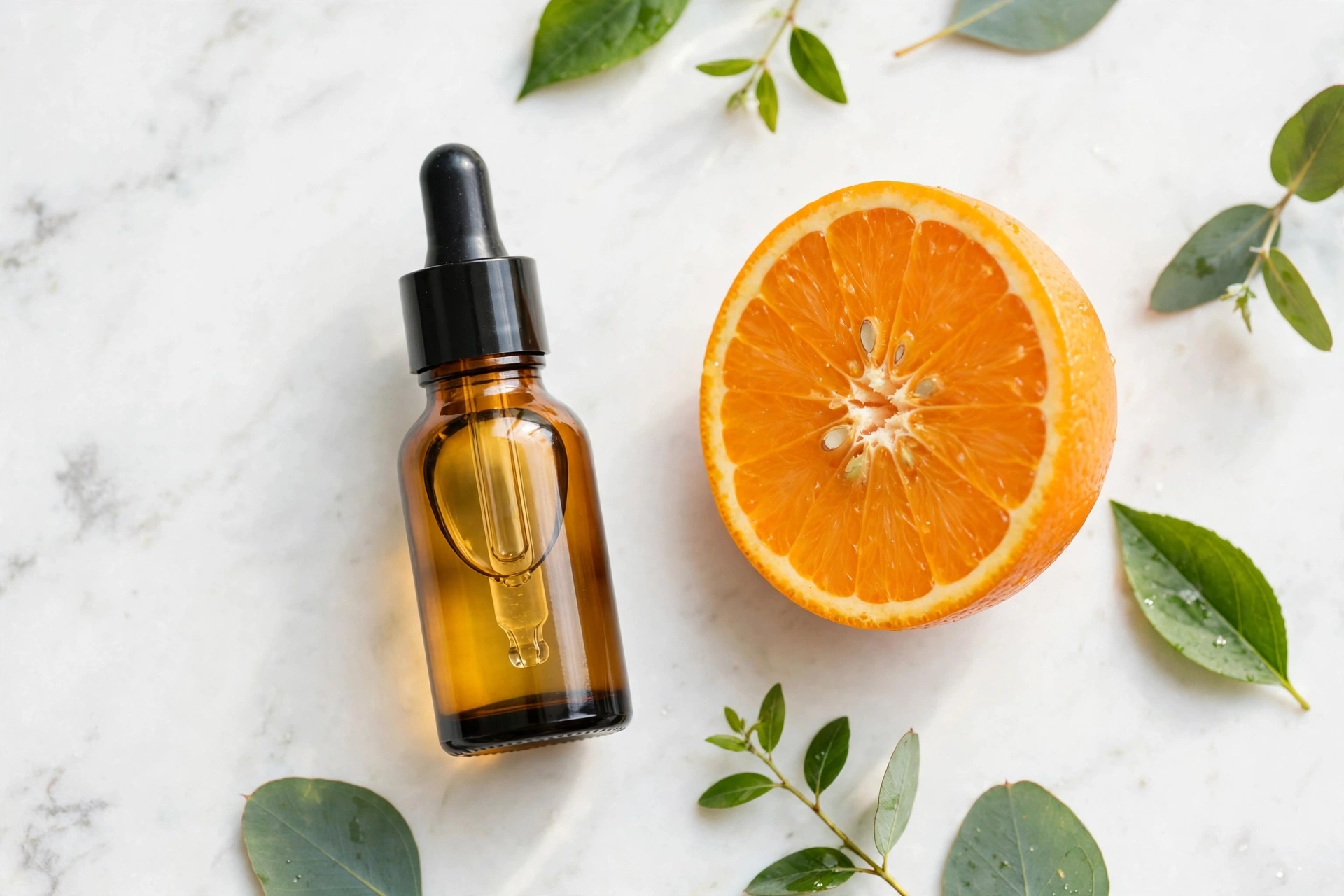
Vitamin C is unstable. It breaks down when it is exposed to light, heat, and air, which means the bottle it comes in matters almost as much as what is inside it. The best vitamin C serum usually comes in a dark or tinted glass bottle, often amber or opaque, and often with a dropper or a pump that limits air exposure. A clear bottle sitting on a bright bathroom shelf is a warning sign: the serum inside may already be losing strength. Also check the colour of the liquid. A fresh vitamin C serum is usually clear or very pale yellow. If it has turned dark yellow, brown, or orange, it has likely oxidised and will not work as well.
Matching the Serum to Your Skin Type
Skin type should shape your choice. If your skin is oily, a light, water-based serum usually feels best and layers well under moisturiser. Our guide on moisturizer for oily skin covers how to keep shine under control while you add active ingredients like vitamin C. If your skin is dry, look for a serum that also contains hydrating ingredients, and plan to follow it with a good moisturiser. If your skin is sensitive, choose a lower concentration or a gentler derivative, and introduce it slowly — a few times a week at first, building up as your skin allows.
How to Use the Best Vitamin C Serum
Using the best vitamin C serum correctly is simple, but the order matters. Apply it after cleansing, when your skin is clean and slightly damp, and before your moisturiser. A few drops are enough for the whole face — more product does not mean more benefit, it just means more waste and a higher chance of irritation. Pat it gently into the skin rather than rubbing hard, and give it a minute to absorb before you apply the next product.
Most dermatologists recommend using vitamin C in the morning, because that is when its partnership with sunscreen matters most. Apply your serum, then your moisturiser, then your sunscreen, and you have a routine that protects as well as treats. You can use vitamin C at night instead if that suits you better, and daily use is fine for most people, but consistency matters more than timing.
One more practical point: do not expect instant change. The best vitamin C serum works gradually, and the visible effects on brightness and tone usually take around three months. Taking a photo of your bare face when you start, and then once a month, is a good way to judge whether it is working, because slow change is hard to notice day by day.
Pairing Vitamin C With Moisturizer and Sunscreen
Vitamin C does not work alone, and the products you pair it with shape the result. Moisturiser is the most important partner, because it seals in the serum and keeps your skin barrier healthy while the active ingredient does its work. If your skin tends to be oily, a light gel moisturiser is usually enough. If it is dry, a richer cream helps.
Sunscreen is the other essential partner, and this is non-negotiable. Vitamin C can make your skin slightly more sensitive to the sun, and sun exposure is the very damage you are trying to repair. A broad-spectrum sunscreen used every morning, over the top of your serum and moisturiser, protects the progress you are making.
If you also use retinol, the two ingredients need some thought. Both are powerful, and using them at the same time can irritate many people’s skin. A common approach is to use vitamin C in the morning and retinol at night, so they never sit on your skin together. Our guide on retinol for sensitive skin explains how to introduce retinol gently, which is worth reading before you combine the two.
Who Should Be Cautious With Vitamin C Serum
Most people can use vitamin C serum without trouble, but some should take extra care. If you have very sensitive skin, rosacea, or eczema, start with the gentlest option you can find — a low concentration or a derivative form — and patch-test first. Put a small amount on the inside of your wrist or behind your ear, wait a day, and only use it on your face if there is no reaction.
People who are pregnant or breastfeeding often ask whether vitamin C serum is safe. Topical vitamin C is generally considered one of the gentler skincare actives, but this is a question for your own doctor or dermatologist, not for a blog post.
Common Mistakes With the Best Vitamin C Serum
Even a good product can disappoint if it is used badly, and the same mistakes come up again and again. The first is buying on price alone. An expensive serum is not automatically the best vitamin C serum, and a cheap one is not automatically useless. What matters is the form of vitamin C, the concentration, and the packaging. Read the label before you read the price tag.
The second mistake is using too much, too often, too soon. Start slowly, watch how your skin responds, and build up. The third mistake is poor storage: a bottle left open on a sunny shelf will oxidise, and oxidised vitamin C not only works less well, it can also irritate. Keep it cool, dark, and closed.
The fourth mistake is expecting too much, too fast. Vitamin C is not a filter and it will not erase deep wrinkles or scars. What it can do, over weeks and months, is make skin look brighter, more even, and a little firmer.
Frequently Asked Questions About the Best Vitamin C Serum
Can I use the best vitamin C serum every day?
Yes, most people can use vitamin C serum daily, and morning use is usually recommended so it can work alongside your sunscreen. If your skin is sensitive, start with a few times a week and increase gradually.
Should vitamin C serum go on before or after moisturizer?
Before. Apply the serum to clean skin, let it absorb for a minute, and then apply moisturizer over the top. Moisturizer seals the serum in and supports your skin barrier.
Can I use vitamin C serum with retinol?
You can, but not usually at the same time. A common routine is vitamin C in the morning and retinol at night. Introduce one at a time and watch for irritation.
How long does a bottle of vitamin C serum last?
That depends on the size and how much you use, but check the colour as you go. If the liquid turns dark yellow or brown, it has oxidised and it is time to replace it, even if the bottle is not empty.
Does the best vitamin C serum work for all skin types?
Most skin types can benefit, but the right form and strength depend on your skin. Oily skin usually suits a light, water-based serum, dry skin benefits from a hydrating formula, and sensitive skin should start low and slow.
The Bottom Line
The best vitamin C serum is not the most expensive bottle or the one with the highest percentage on the label. It is the one that matches your skin: the right form of vitamin C, a sensible concentration, packaging that protects it from light and air, and a formula your skin tolerates happily. Used consistently, in the morning under moisturizer and sunscreen, it is one of the most reliable ways to brighten your skin, even out its tone, and support its firmness over time.
Start with a gentle strength, give it around three months, and judge it by photos rather than by daily mirror checks. If your skin is very sensitive, or you use prescription treatments, check with a dermatologist first. Chosen well and used patiently, a vitamin C serum earns its place in a routine.