Smith Machine Bar Weight: How Much Does It Weigh?
Introduction
If you have ever loaded plates onto a smith machine and wondered how much you were actually lifting, you are not alone. The smith machine bar weight is one of the most common questions in the gym, and the answer is not a single number. Unlike a standard barbell, which has a fixed weight, a smith machine bar can feel very different from one machine to another. Some bars feel almost weightless before you add plates, while others feel noticeably heavy on their own. This guide explains the typical range, why it varies, and how to check the bar on the machine you use.
What Is a Smith Machine?
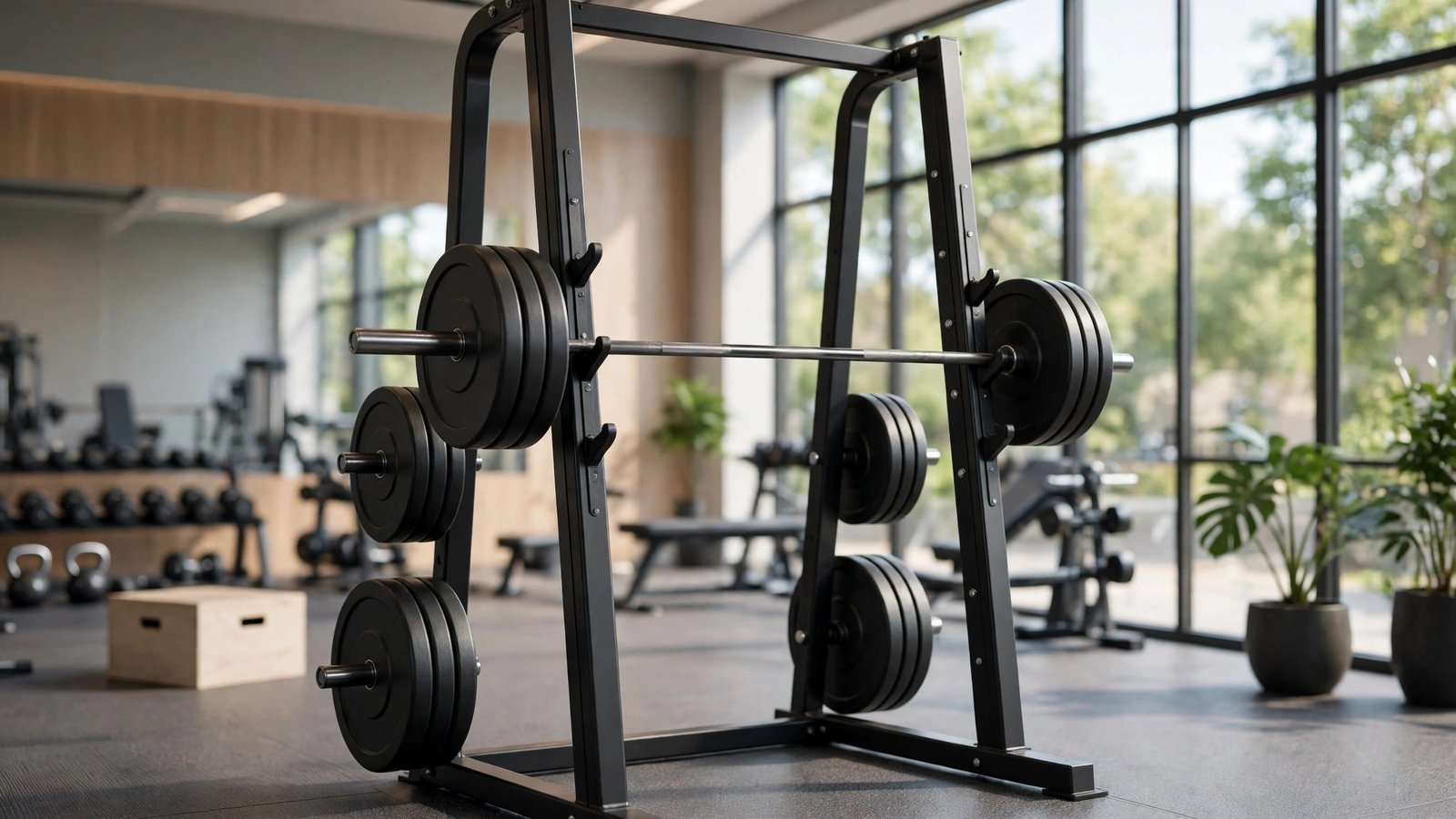
A smith machine is a piece of strength training equipment in which a barbell is fixed to vertical rails. The bar moves up and down along a guided path, and it can be locked into place at any height by rotating it to catch the safety hooks. This lets you train movements such as squats, bench presses, and shoulder presses without a spotter and without balancing the bar yourself. Because the bar is attached to the machine, the machine supports part of its weight. That is the main reason a smith machine bar feels different from a free barbell.
Smith Machine Bar Weight: How Much Does It Typically Weigh?
The smith machine bar weight is usually about 15 to 25 pounds, or roughly 7 to 11 kilograms, before plates are added. Some machines are at the lighter end of that range, and some are heavier. A small number have bars that feel close to zero because of a counterbalance system, while older or heavier-duty commercial machines may have bars that feel closer to 30 pounds or more. The weight you actually feel can also be less than the weight of the bar itself, because the rails, bearings, and counterbalance support part of it. For bar weights at popular gyms and by manufacturer, see SET FOR SET’s guide to how much a smith machine bar weighs.
Why the Weight Varies So Much
Several factors explain the variation. First, the bar itself differs: some machines use a lighter bar made from thinner steel, while others use a thicker, heavier bar built for commercial gyms. Second, many machines include a counterbalance system, often weights or springs inside the frame, designed to offset some of the bar’s weight and make it easier to move. Third, the condition of the machine matters: clean, well-lubricated rails let the bar glide smoothly, while a worn machine can add friction that makes the bar feel heavier. Finally, some smith machines have angled rails rather than vertical ones. On an angled machine, part of the bar’s weight is carried by the rails, so the bar feels lighter.
The Difference Between Bar Weight and What You Feel
It helps to separate two ideas: how much the bar weighs, and how much resistance you feel when you lift it. On a free barbell, those two are nearly the same. On a smith machine, they are not. Friction, the angle of the rails, and any counterbalance all reduce the effort needed to move the bar. A squat with 100 pounds on a smith machine may feel easier than the same squat with a free barbell, partly because the machine stabilises the bar and partly because it carries some of the load. That does not make the smith machine useless. It simply means you should judge your progress on the same machine over time, rather than comparing numbers directly with free weights.
How to Check the Weight of Your Smith Machine Bar
The most reliable way to find out is to ask. Many gyms keep the equipment manual or the manufacturer’s specifications on file, and staff may know the figure for the machines on the floor. If the machine has a label on its frame, check it for the bar weight or counterbalance details. If no information is available, you can estimate the feel by lifting the unloaded bar and comparing it with a known weight, such as a dumbbell of a similar size, but this is only a rough guide. For tracking your own progress, record the plates you add and the machine you used, so you can compare like with like. Whether you count the bar in your total is up to you, as long as you stay consistent.
Using a Smith Machine Safely
The guided path of a smith machine can make training feel safer, but good form still matters. Always test the safety hooks before you start, and set them at a height that will catch the bar if you cannot complete a repetition. Start with a light load to learn how the bar moves on that particular machine. Keep your body in a natural position for the exercise, and avoid forcing joints into uncomfortable angles because the bar path is fixed. If you feel pain, stop and reassess. If you are new to strength training or have an injury, consider speaking to a qualified fitness professional or your doctor before starting a new routine.
Conclusion
There is no single answer to the smith machine bar weight, but a typical range is about 15 to 25 pounds before plates, with lighter counterbalanced bars and heavier commercial bars on either side. The weight varies because of the bar itself, the counterbalance system, the condition of the rails, and whether the rails are vertical or angled. What you feel when you lift the bar is often less than the bar’s actual weight, so smith machine numbers are best compared on the same machine over time. Ask your gym for the manufacturer’s figure, record your plates consistently, and focus on steady progress and good form. Gym supplements come up a lot too — does creatine cause acne?
FAQ
How much does a smith machine bar weigh?
The smith machine bar weight is roughly 15 to 25 pounds for most machines, before plates are added. Counterbalanced bars can feel close to zero, while some commercial bars can be heavier. Ask your gym for the manufacturer’s figure for the machine you use.
Does the smith machine bar weight count toward my total?
That is up to you, as long as you are consistent. Many people count the bar as stated by the manufacturer or as a rough estimate. Just remember that smith machine totals are not directly comparable to free barbell totals, because the machine carries some of the load.
Why does the bar feel lighter than a regular barbell?
The machine supports part of the bar’s weight through its rails and bearings, and many machines add a counterbalance system. Angled rails also carry some of the load. This makes the bar feel lighter even before you add any plates.
Is a smith machine bar the same weight as an Olympic barbell?
No. A standard Olympic barbell usually weighs 45 pounds, while a smith machine bar is typically lighter and its felt weight is reduced further by the machine. They are different pieces of equipment, so their numbers are not interchangeable.
Disclaimer: This article is for general information only and is not medical advice. If you have an injury, a health condition, or questions about whether strength training is right for you, please speak to a doctor or qualified professional.