What Is Gothic Fashion? A Guide to the Style and Its Roots
What is gothic fashion? At its simplest, it is a style built around dark colours, dramatic silhouettes, and romantic details — black clothing, lace, velvet, leather, and silver jewellery, worn with intention rather than by accident. It is one of the most recognisable subculture styles in the world, and it has been evolving for decades without ever disappearing. To an outsider it can look like a single uniform, but anyone inside the scene will tell you it is a broad family of styles, each with its own mood, references, and rules.
The style is often misunderstood. It is not a costume, it is not only for Halloween, and it is not about being unhappy. For most people who wear it, gothic fashion is a way of dressing that values drama, craftsmanship, and individuality over following the latest trend. This guide explains what the style is, where it came from, what its key pieces are, and how to start wearing it without looking like you are in fancy dress.
What Is Gothic Fashion? The Definition
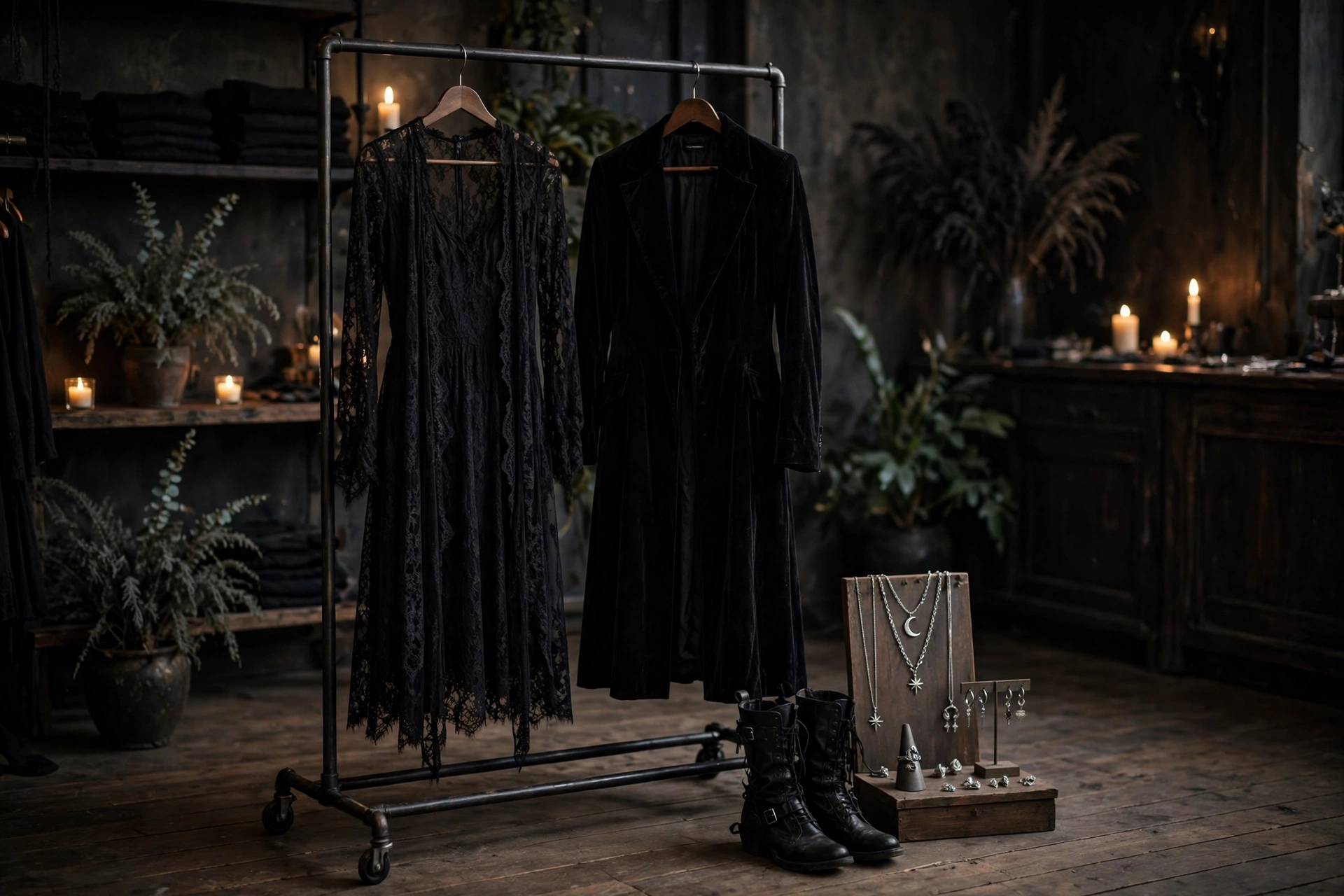
What is gothic fashion in practice? It is a clothing style that takes its visual language from darkness and romance: a palette dominated by black, fabrics with a rich texture such as velvet, lace, leather, and brocade, and silhouettes that are dramatic rather than minimal. Long coats, flowing skirts, corsets, high collars, and platform boots are all part of the vocabulary. Silver jewellery, often with crosses, moons, bats, or skulls, completes the picture, and makeup tends to be bold — dark lips, pale skin, and heavy eyeliner are classic choices.
What holds all of this together is a mood. Gothic fashion is theatrical, but it is not random. The pieces are chosen to create a particular atmosphere, one that feels elegant and a little mysterious rather than merely dark.
The Roots of the Style
The roots of the style reach back further than the subculture itself. Victorian mourning dress, with its black crepe, high collars, and veils, is one of the most obvious influences, and it is still visible in the romantic side of the style today. Gothic literature and horror films supplied the imagery, while medieval architecture, with its pointed arches and dark stone, gave the style its name.
The modern form of the style grew out of the post-punk music scene, when bands and their audiences began dressing in black as a deliberate contrast to the bright colours of mainstream pop. From there it spread through clubs, magazines, and eventually the internet, picking up influences from punk, metal, and Victorian revival along the way. Each generation has added something new, which is why the style now contains so many different looks under one umbrella.
The Core Elements: Colour, Fabric, and Silhouette
Colour is the first thing anyone notices. Black is the foundation, and most outfits are built on it, but it is rarely the only colour. Deep red, purple, and emerald appear as accents, and white is sometimes used for contrast, particularly in Victorian-inspired outfits. The rule is not that everything must be black, but that the overall effect should be dark and moody.
Fabric does much of the work. Velvet, lace, leather, satin, mesh, and brocade are the classic choices, and the reason is texture: these fabrics catch the light differently and give an outfit depth even when the colour palette is limited. A plain black outfit in cotton can look flat, while the same outfit in velvet and lace looks deliberate and rich. Layering different textures is one of the most reliable techniques in the style — a lace top under a velvet jacket, for instance, or a leather skirt with a sheer mesh layer.
Silhouette is the third element, and it is what gives the style its drama. Long lines are common: floor-length skirts, long coats, and flowing sleeves. Corsets and fitted bodices create a sharp waist, while wide-legged trousers and platform boots add height and presence. The overall shape is rarely casual or relaxed. If you are learning what is gothic fashion, silhouette is the place to start, because a strong shape will carry the look even with simple pieces.
The Main Substyles
One of the most useful things to know is that there is no single gothic look. Romantic goth is the most elegant branch, drawing on Victorian and Edwardian dress: long skirts, lace blouses, corsets, and cameo jewellery, with a soft, literary feel. It is the branch most influenced by historical costume, and it is often the easiest entry point because the pieces are widely available. For a related dark, bookish look that shares some of the same influences, see our guide to dark academia fashion.
Punk goth is louder and harder-edged. It mixes the dark palette with punk details: ripped fishnets, studded belts, band shirts, heavy boots, and spiked jewellery. The attitude is more rebellious and the outfits are more practical for concerts and everyday wear. Casual goth sits between the two, and for anyone asking what is gothic fashion in everyday wear, it is the easiest entry point, taking the dark palette and a few signature pieces — a black dress, a pair of platform boots, silver jewellery — and wearing them with everyday clothes such as jeans and simple tops.
Other branches include Victorian goth, which leans heavily into historical dress. Each substyle has its own community and its own reference points, and it is worth exploring a few before deciding which one fits you.
Accessories, Hair, and Makeup
Accessories are where a gothic outfit becomes personal. Silver is the standard metal in what is gothic fashion, and jewellery often features crosses, ankhs, moons, stars, bats, or skulls. Chokers are a classic piece, from simple velvet bands to elaborate lace and chain designs. Hats, gloves, and parasols appear in the more romantic branches, while studded belts and chains belong to the punk-influenced side. A single well-chosen accessory can change the whole feel of an outfit, so it is worth investing in pieces you genuinely like rather than buying a lot of cheap ones.
Hair and makeup are part of the look, not an afterthought. The style works with any hair colour, and many people use hair dye, wigs, or extensions to get the shape they want. Makeup tends to be bold: pale foundation, dark eyeliner, smoky eyes, and dark lips in shades of burgundy, plum, or black. The key is that the makeup should feel deliberate. A simple outfit with strong makeup can look more striking than an elaborate outfit with no makeup at all.
Footwear deserves its own mention. Platform boots are the signature shoe of the style, and they add height and drama to almost any outfit. Mary Jane shoes work well with romantic and Victorian-inspired looks, while heavy combat boots suit the punk-influenced branches.
Gothic Fashion vs Streetwear and Other Dark Styles
People often confuse gothic fashion with other dark styles, and the differences are worth knowing. Streetwear is built around casual, oversized pieces, trainers, and logos, while gothic fashion is built around drama, texture, and historical references. The two can be mixed — a long black coat over streetwear pieces is a common combination — but they start from different places. If you want to explore that overlap, our guide to what is streetwear fashion explains the streetwear side in detail.
How to Start Wearing It
Starting out is simpler than it looks. Begin with a base of black clothes you already own — a black dress, black trousers, or a black top — and add one or two signature pieces, such as a lace top, a long coat, or a pair of platform boots. A single strong piece will do more for the look than a whole wardrobe of mediocre ones, so buy slowly and choose pieces you will actually wear.
Layering is your best tool. A mesh top under a dress, a corset over a blouse, or a long coat over everything will add the depth and drama the style needs. Pay attention to texture: mix velvet with lace, leather with mesh, and the outfit will look rich even in a limited palette. Add silver jewellery and dark makeup, and the look will come together.
It also helps to find your branch early. Spend some time looking at the different substyles and notice which one you keep coming back to — that is your answer to what is gothic fashion for your own wardrobe.
Common Misconceptions
The biggest misconception is that the style is only for Halloween or for teenagers. In reality, people of all ages wear it, and it has a thriving adult community with its own events, markets, and designers. Another misconception is that it is expensive. It can be, if you buy handmade corsets and custom pieces, but it can also be built slowly from second-hand shops, sales, and a few key pieces bought new.
Frequently Asked Questions About What Is Gothic Fashion
What is gothic fashion in simple terms?
What is gothic fashion in simple terms? It is a dark, romantic clothing style built on black garments, rich fabrics such as velvet and lace, dramatic silhouettes, and silver jewellery. It grew out of the post-punk music scene and draws on Victorian dress, gothic literature, and horror imagery.
Is gothic fashion only black clothing?
Black is the foundation, but it is not the only colour. Deep red, purple, and emerald are common accents, and white is sometimes used for contrast. The point is the overall dark, moody effect rather than a strict rule that every item must be black.
What are the key pieces of gothic fashion?
The key pieces of what is gothic fashion include long coats, lace tops, velvet dresses, corsets, platform boots, chokers, and silver jewellery. Layering different textures is one of the most important techniques, and a strong silhouette matters more than any single item.
Can I wear gothic fashion every day?
Yes. Casual goth is the everyday branch of what is gothic fashion, and it works by taking the dark palette and a few signature pieces — a black dress, platform boots, silver jewellery — and combining them with ordinary clothes such as jeans and simple tops.
How is gothic fashion different from emo fashion?
The two styles share a dark palette, but what is gothic fashion draws on Victorian dress, literature, and horror, with a romantic and dramatic feel. Emo fashion is more closely tied to a specific music scene and tends toward skinny jeans, band shirts, and a more casual, youthful look.
What is gothic fashion, in the end, is a question with many answers, because the style contains many different looks. What they share is a love of darkness as something beautiful: rich fabrics, dramatic shapes, and details chosen with care. You do not need a full wardrobe or a deep knowledge of the subculture to start. Begin with black, add texture, find the branch that speaks to you, and let the style grow from there. Done well, it is one of the most personal and creative ways to dress.