1920s Mens Fashion: A Guide to the Roaring Twenties Look
The 1920s — the Roaring Twenties, the Jazz Age — was one of the most stylish decades in menswear history. It was a time of jazz clubs, dance halls, silent films and new freedoms, and men’s fashion reflected that energy. Suits became softer and more relaxed, colours grew bolder, and accessories became a form of self-expression. A century later, the look still turns heads at weddings, themed parties and vintage events — and its best pieces have never really gone away. That is why 1920s mens fashion still inspires designers and dressers today.
This guide explains what defined 1920s mens fashion, which pieces mattered most, and how to wear the look today, whether for a special occasion or as inspiration for a classic modern wardrobe.
The Spirit of 1920s Mens Fashion
The decade began in the shadow of the First World War and ended on the edge of the Great Depression. In between, there was a burst of optimism and change. Young men returned from war wanting comfort and freedom, and fashion followed. The stiff, formal clothing of the Edwardian era gave way to something looser, lighter and more expressive. Understanding 1920s mens fashion starts with that shift from stiff formality to relaxed confidence. For a broader overview of the decade, see the history of 1920s Western fashion.
The result was a decade where a man could be sharply tailored and boldly individual at the same time.
The Three-Piece Suit
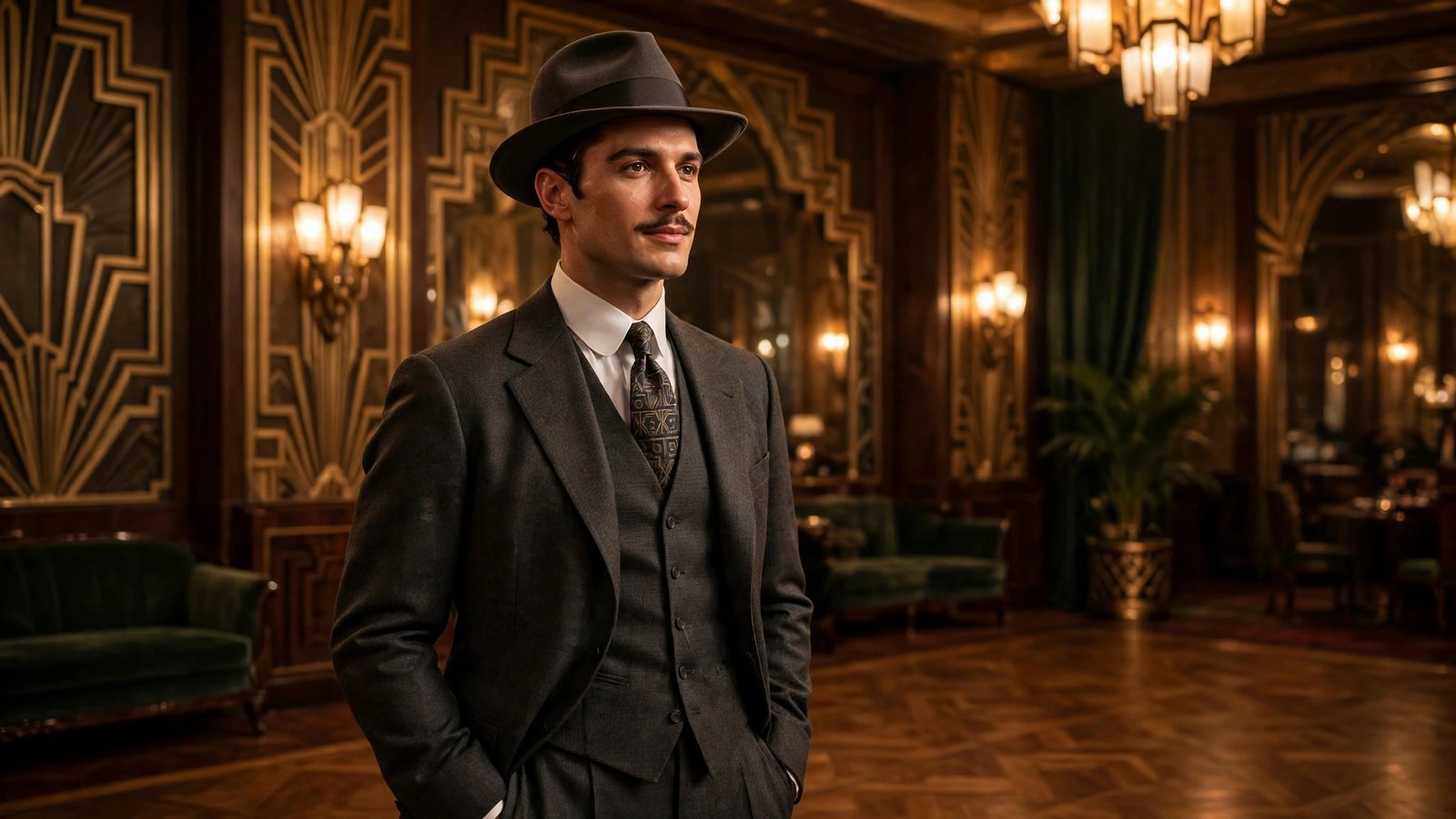
The foundation of 1920s menswear was the three-piece suit: jacket, waistcoat and trousers, cut from matching cloth. Early in the decade, jackets were long and straight with narrow lapels. By the mid-1920s, they became slightly shorter, with wider lapels and a softer, more natural shoulder. A well-cut suit is the centrepiece of 1920s mens fashion.
The waistcoat was essential — a suit without one looked unfinished. Single-breasted waistcoats with five or six buttons were the most common, often in a contrasting colour or pattern. Trousers were high-waisted, with a flat front or single pleats, and worn with braces rather than belts.
Fabrics were rich and varied: wool, tweed, flannel and serge for everyday wear, and finer worsted wool for formal occasions. Popular colours included charcoal, navy, brown, grey and, for the bold, light cream or checked patterns. Stripes, checks and herringbone all appeared, and the confident mixing of patterns was part of the decade’s charm.
Shirts, Collars and Ties
Shirts in the 1920s were usually white or pale-coloured, with detachable collars in the early years giving way to attached soft collars later in the decade. The collar was often worn with a tie in a bold colour or pattern — stripes, dots and Art Deco geometric designs were all popular.
Bow ties were worn with evening dress, while the long tie dominated daytime wear. The tie was typically wider than the slim ties of later decades, and the knot was a simple four-in-hand. A tie pin or tie bar added a polished finishing touch. Pocket squares, usually white linen or silk, were tucked into the breast pocket — a small detail that made a suit look complete.
Oxford Bags and Casual Trousers
One of the decade’s most famous innovations was the “Oxford bag” — extremely wide-legged trousers, sometimes measuring over twenty inches around the ankle, worn by Oxford University students and soon adopted everywhere. They were a reaction against the narrow trousers of the war years, and they became a symbol of youthful rebellion.
For more casual wear, men turned to plus-fours — baggy knickerbockers that ended below the knee, worn with long socks — for golf and country pursuits. Knit sweaters, cardigans and Fair Isle patterns were also popular, especially in the countryside and at universities. These casual pieces showed that 1920s fashion was not only about suits; comfort and leisure mattered too.
Shoes, Hats and Accessories
Footwear in the 1920s was a statement in itself. The most iconic style was the two-tone shoe — black and white or brown and white spectator shoes, with a contrasting toe cap and heel. They were bold, eye-catching and unmistakably of the decade. Oxford shoes in black or brown leather remained the standard for formal and business wear. Two-tone shoes remain one of the most recognisable details of 1920s mens fashion.
No 1920s outfit was complete without a hat. The fedora, with its pinched crown and wide brim, was the most popular choice, worn tilted at a slight angle. The flat cap was common for casual wear, while the boater — a flat-topped straw hat — was the summer favourite. The bowler and the top hat survived for formal occasions, but the fedora was the hat of the modern man.
Other accessories included leather gloves, walking canes, cufflinks, watches on leather straps, and round or rectangular spectacles. A well-dressed man paid attention to the details, and the details were what separated a good outfit from a great one.
Evening Wear and Formal Dress
Evening wear in the 1920s was governed by strict rules — and by the pleasure of breaking them. The dinner jacket, or tuxedo, became the standard for evening events, usually in black or midnight blue, worn with a white dress shirt, a bow tie and a waistcoat or cummerbund. Patent leather shoes completed the look.
How to Wear 1920s Mens Fashion Today
The full 1920s look is perfect for themed parties, weddings, Gatsby-style events and vintage gatherings. Start with a three-piece suit in charcoal or navy, add a white shirt, a patterned tie, a pocket square and a fedora, and finish with polished oxford shoes. For extra authenticity, choose two-tone shoes and a waistcoat in a contrasting pattern.
For everyday wear, you do not need the full costume. Take the best ideas from the decade: a well-fitted three-piece suit, a soft-collared shirt, a bold tie, or a flat cap with a tweed jacket. The 1920s understood tailoring, proportion and personality — and those lessons work just as well in a modern wardrobe. You do not need a full outfit to borrow from 1920s mens fashion — one or two pieces are enough.
FAQ
What did men wear in the 1920s?
Men in the 1920s wore three-piece suits with waistcoats, high-waisted trousers, white or pale shirts, wide ties, fedoras or flat caps, and leather oxford shoes — often two-tone spectator shoes.
What are Oxford bags?
Oxford bags were very wide-legged trousers popularised by Oxford University students in the 1920s. They were a bold, youthful style and became one of the decade’s most recognisable fashion statements.
Can I wear 1920s mens fashion to a wedding?
Yes. A three-piece suit with a waistcoat, pocket square and polished shoes is an excellent wedding outfit, and a fedora or bow tie can add a period touch for a themed celebration.
What is the difference between 1920s and 1930s mens fashion?
The 1920s were bolder and more experimental, with wide trousers, bright patterns and the new dinner jacket. The 1930s were more restrained and elegant, with broader shoulders, longer jackets and a more conservative palette.
Conclusion
1920s mens fashion was a celebration of confidence, craftsmanship and joy. The three-piece suit, the fedora, the two-tone shoe and the bold tie were not just clothes — they were a statement about a generation that wanted to live well after hard years. A century on, the look still works, because good tailoring never goes out of style. Whether you wear the full Roaring Twenties outfit to a party or borrow a waistcoat and a pocket square for your everyday wardrobe, the 1920s have something to teach every modern man: dress with intention, and enjoy it. If you enjoy period style, our guide to dark academia fashion explores another classic, tailored look.