Are Acai Bowls Healthy? What Is Actually in the Bowl
Disclaimer: This article is for general information only. It is not medical advice, and it is not a substitute for guidance from a qualified health professional. If you have a health condition, dietary restriction, or allergy, talk to a doctor or a registered dietitian before changing what you eat.
Acai bowls look like the picture of healthy eating. A thick purple smoothie base, neat rows of sliced fruit, a sprinkle of granola, maybe a drizzle of honey or nut butter — it photographs beautifully, and it sits on the menu of almost every juice bar and health cafe. But a bowl that looks healthy is not automatically a healthy choice, and the same dish can be a light, fruit-packed breakfast in one cafe and a dessert in disguise in another. So are acai bowls healthy, or is the hype doing most of the work? The honest answer is that it depends on what is actually in the bowl, and once you know how to read one, you can tell the difference in seconds.
What Is in an Acai Bowl?
An acai bowl starts with acai, a small dark purple berry from the acai palm, which grows in South America. The berries are usually sold as frozen puree or powder, because fresh acai spoils quickly and rarely travels far. To make a bowl, the puree is blended with a liquid and other fruit until it is thick enough to eat with a spoon, then poured into a bowl and topped with whatever the maker chooses.
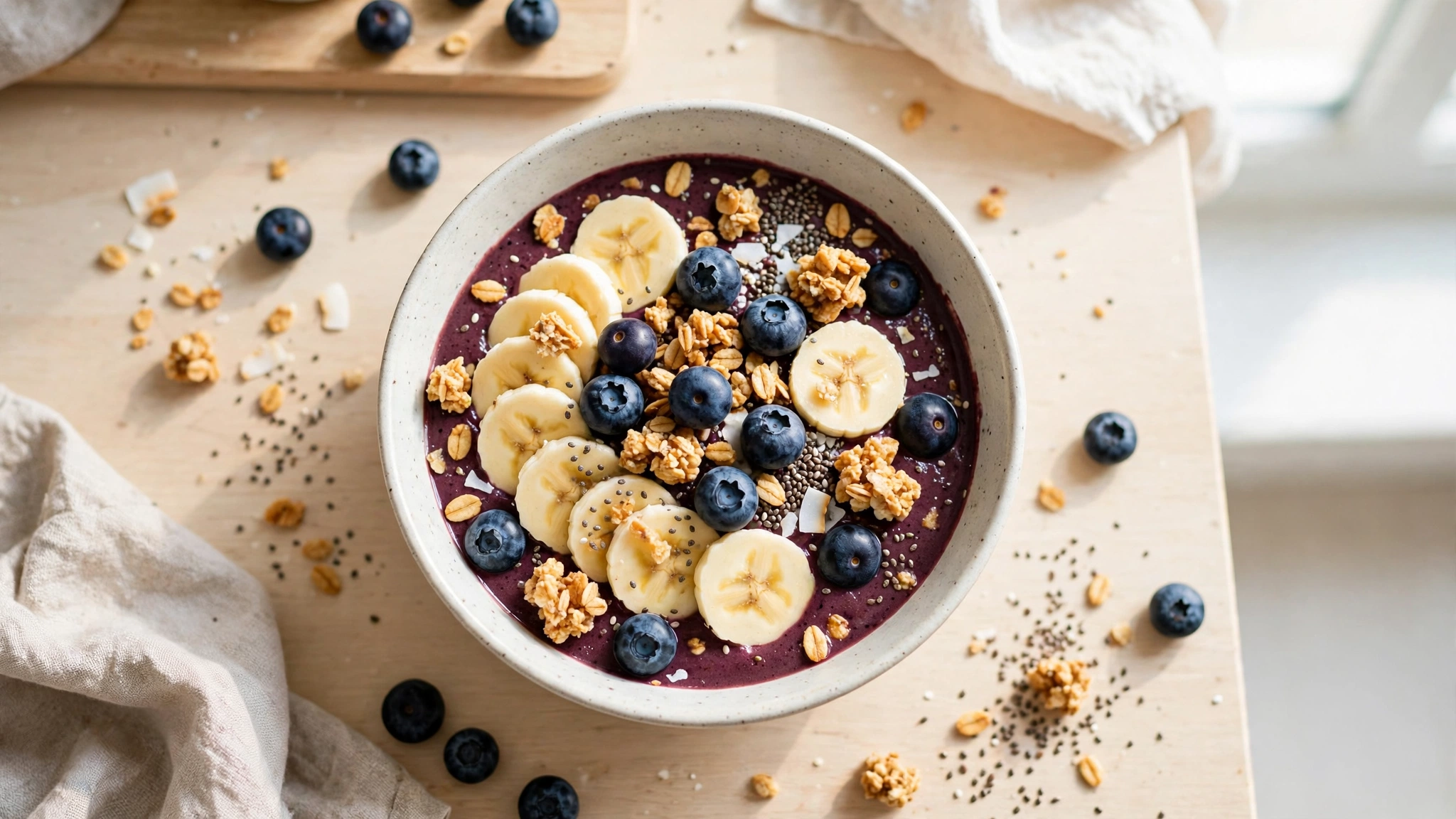
The base is usually the simplest part. A typical base blends acai puree with banana, berries, and a splash of milk or juice. The toppings are where bowls start to differ from one another. Common toppings include sliced banana, strawberries, blueberries, granola, shredded coconut, chia seeds, flaxseed, sliced almonds, peanut butter or almond butter, and honey. Each topping adds its own flavour and texture, and each one changes the bowl as a whole. A bowl topped with fresh fruit and a spoonful of seeds is a very different meal from one topped with sweetened granola, chocolate chips, and a thick ribbon of honey.
Are Acai Bowls Healthy? The Short Answer
The honest answer to are acai bowls healthy is that it depends on the recipe, not on the berry alone. Acai itself is a fruit, and fruit is a useful part of most eating patterns. The bowl around it, though, is built from many ingredients, and the toppings and sweeteners do most of the work in deciding whether the finished bowl is light and balanced or heavy and sweet.
When people ask are acai bowls healthy, they are usually asking whether the bowl in front of them is a good choice, and that question has no single answer. A bowl made from unsweetened acai, blended with banana and berries and topped with fresh fruit, seeds, and a small amount of nut butter is a reasonable breakfast. A bowl made from a sweetened acai blend, topped with sugary granola, sweetened coconut, and honey, is closer to a dessert, even though it wears the same purple colour and the same healthy-looking toppings.
The berry is not the problem, and the bowl is not a villain either. What matters is the combination, the sweetness of the base, the size of the serving, and how often you eat one. A bowl is a single meal, not a health verdict, and judging it means looking at the whole recipe rather than the name on the menu.
What Makes a Bowl Healthier — or Less Healthy
The single biggest factor is sweetness. Acai puree on its own is not very sweet, so many cafes and frozen blends add sugar, sweetened juice, or sweetened milk to make the base taste more like a treat. A sweetened base changes the whole bowl, because everything that goes on top of it adds to what is already there. If you can, ask whether the base is sweetened, or make your own at home where you control the ingredients.
The second factor is the toppings. Fresh fruit adds flavour, texture, and variety without much heaviness. Seeds such as chia and flax add crunch. Nuts and nut butter add richness and can help a bowl feel more filling. Sweetened granola, sweetened coconut flakes, chocolate, and honey are the toppings that push a bowl toward dessert territory, especially when they are used in large amounts. None of these is forbidden, but the amount matters, and a heavy hand with the sweet toppings is what turns a fruit bowl into something much richer.
A Closer Look at Common Toppings
Granola is the topping people argue about most, and the argument is really about which granola. Some granolas are mostly oats and nuts with a little sweetness, while others are heavily sweetened and closer to a breakfast cereal with a health halo. If you love granola, a small handful gives you the crunch without taking over the bowl.
Nut butter is a similar story. A spoonful of peanut butter or almond butter adds richness and helps the bowl feel like a real meal. Two or three spoonfuls, especially of a sweetened spread, add a lot of richness quickly. Spreading it thinly, or choosing a version without added sugar, keeps the flavour while keeping the bowl lighter.
Fresh fruit is the easiest topping to feel good about. Berries, banana, mango, and kiwi add colour, flavour, and variety, and they are the reason the bowl looks so good in the first place. Seeds are a quiet addition that adds crunch and texture without sweetness. Coconut flakes add flavour, but sweetened coconut is much sweeter than plain coconut, so it is worth checking which kind is on offer.
Acai Bowls Compared With Other Breakfasts
It helps to compare an acai bowl with the breakfasts it usually replaces. Against a pastry or a sweetened cereal, a fruit-based acai bowl with modest toppings compares well, because it is built on whole fruit rather than refined flour and sugar. Against a bowl of plain oats with fruit and nuts, or eggs with wholegrain toast, the comparison is closer, and the acai bowl does not automatically win — it depends on the toppings, just as it always does.
If you eat out a lot, it is worth remembering that restaurant and cafe dishes often carry more sweetness than a homemade version. The same idea applies to other dishes with a healthy reputation — our guide to whether pad thai is healthy makes a similar point about looking past the reputation and checking what is actually in the dish. Is pad thai healthy?
How to Build a Better Acai Bowl
If you want to tilt the answer to are acai bowls healthy in your favour, start with the base. Use unsweetened acai puree if you can find it, blend it with banana and berries, and add milk or water rather than sweetened juice. Taste the base before you add toppings, and only sweeten it if it genuinely needs it — the fruit often does the job on its own.
Next, choose your toppings with a plan. Pick two or three fresh fruits, add one crunchy topping such as granola or seeds, and one richer topping such as nut butter or sliced almonds. Keep the sweet extras — honey, sweetened coconut, chocolate — to a small amount, or skip them and let the fruit carry the sweetness. A bowl built this way still looks and tastes like a treat, but it stays much closer to the fruit it started from.
Finally, treat the bowl as one meal among many. No single breakfast decides how you eat overall, and a richly topped bowl on a weekend is not a problem if the rest of your eating is varied. The goal is not a perfect bowl; it is knowing what is in the one you are eating. And if you are choosing something lighter to eat between meals, our guide to healthy snacks for work has ideas that travel better than a bowl and need no spoon. Healthy snacks for work
When to Ask a Professional
General articles can explain what is usually in a bowl, but they cannot tell you what is right for you. If you have diabetes, a food allergy, a digestive condition, or any other health concern, or if you are following a specific eating plan, a doctor or a registered dietitian can give advice that fits your situation. That is especially worth doing before you make a big change to how you eat, or before you rely on any single food as a health strategy.
Frequently Asked Questions About Are Acai Bowls Healthy
Are acai bowls healthy for breakfast every day?
Are acai bowls healthy for breakfast every day? They can be, if the bowl is built on unsweetened acai and fruit with modest toppings. A bowl loaded with sweetened granola, honey, and sweet toppings every morning is a very sweet way to start the day. Variety helps — rotating an acai bowl with other breakfasts is a simple way to keep things balanced.
Are acai bowls healthy without the toppings?
Are acai bowls healthy without the toppings? A plain acai base blended with banana and berries is a simple fruit dish, and it is lighter than most fully topped bowls. The toppings are what usually add sweetness and richness, so a lightly topped bowl is generally the lighter option. That said, a completely plain base can feel thin and unsatisfying, so a small amount of crunch or nut butter often makes it a better meal.
Are acai bowls healthy for children?
Are acai bowls healthy for children? A bowl made from fruit with modest toppings can be a fun way for children to eat fruit, but sweetened bases and heavy toppings make it much sweeter. If your child has allergies, a health condition, or dietary needs, ask a doctor or a registered dietitian first. Always check for nuts and other allergens before serving a cafe-made bowl to a child.
Are acai bowls healthy if they are made at home?
Are acai bowls healthy if they are made at home? Home-made bowls are usually the easiest to keep light, because you choose the base, the sweetness, and every topping. Using unsweetened acai puree, blending with fruit, and keeping sweet toppings small gives you the most control. A home-made bowl is also usually cheaper than a cafe bowl, and you can make it exactly the size you want.
What is the healthiest topping for an acai bowl?
There is no single healthiest topping, because it depends on the rest of the bowl. Fresh berries and other fruit are a reliable choice, and seeds add crunch without sweetness. A small amount of nuts or nut butter can help the bowl feel more filling. The toppings to use sparingly are the sweet ones — honey, sweetened granola, and sweetened coconut.
So, are acai bowls healthy? They can be — when the base is unsweetened, the toppings are mostly fresh fruit with a little crunch, and the sweet extras are kept small. The bowl itself is neither a superfood nor a dessert; it is a recipe, and the recipe decides. Learn to read it, build your own when you can, and enjoy the bowl for what it is: a good-looking, fruit-packed meal that is at its best when it stays close to the fruit it started from.
Disclaimer: This article is for general information only and is not medical advice. It does not diagnose, treat, or prevent any condition. For advice about your own diet or health, speak to a qualified health professional.