How to Trim Bushes: A Simple Step-by-Step Guide for a Tidy Garden
Well-trimmed bushes can transform a garden. They frame a path, soften the edges of a house, add privacy, and give the whole outdoor space a cared-for look. Left alone for too long, the same shrubs can become overgrown, block windows and walkways, and grow dense and tangled in the middle where light and air cannot reach.
Trimming is not complicated, but it does help to know how to trim bushes — when to cut, which tools to use, and how much to take off. Cut at the wrong time or too hard and you can lose a season of flowers or stress the plant. Cut carefully and regularly, and your bushes will stay healthy, shapely, and easier to manage.
When to Trim Bushes
One of the first things to learn about how to trim bushes is timing, which depends on the type of bush and why you are trimming it. As a general rule, many flowering shrubs are best pruned just after they finish flowering, so you do not cut off the buds that will produce next season’s blooms. Shrubs that flower on new growth in summer are often pruned in late winter or early spring, before new growth starts, while shrubs that flower in spring on last year’s growth are usually left until after flowering.
For evergreen shrubs and hedges grown mainly for shape, light trimming can be done during the growing season, when new growth will fill in quickly. Avoid heavy trimming in very hot, dry weather or just before a frost, when the plant is already under stress. A light tidy-up to remove dead, damaged, or crossing branches can be done at almost any time of year.
If you are unsure about a specific shrub, check its variety before you cut — that is an important step when you are learning how to trim bushes. A quick look at the plant label or a reliable gardening reference will tell you when it flowers and whether it blooms on old or new wood, which is the key detail for timing.
Tools You Will Need
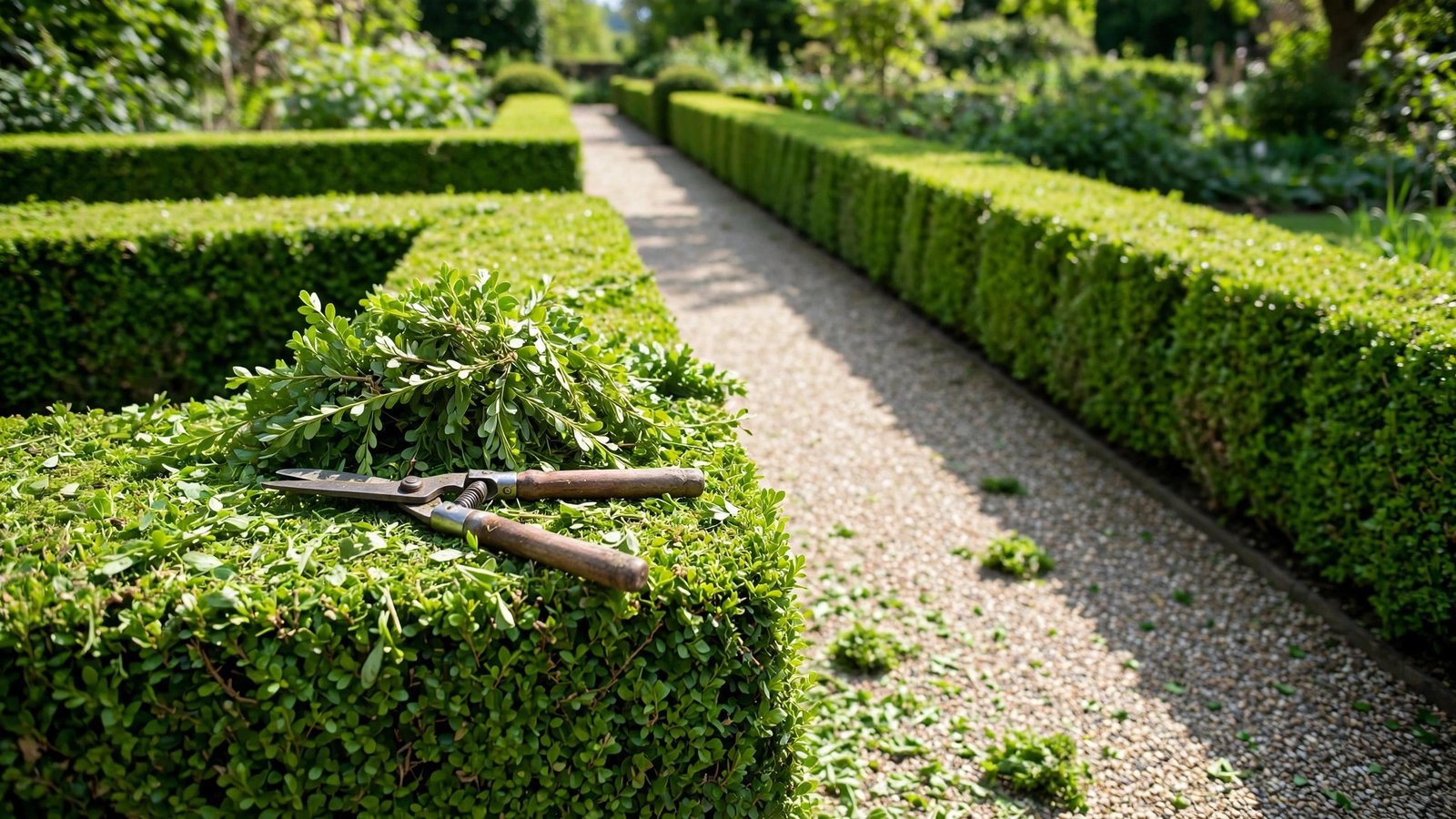
The right tools make a real difference when you are learning how to trim bushes — they make trimming faster, cleaner, and safer for the plant. Hand pruners, also called secateurs, are ideal for small branches and detailed shaping. Loppers, with their long handles, give you more leverage for thicker branches. A pruning saw is useful for the thickest branches, while hedge shears are best for shaping formal hedges and giving a neat, even surface.
Make sure your tools are sharp and clean before you start. Blunt blades crush stems rather than cutting them cleanly, which leaves ragged wounds that are slower to heal and more open to disease. Clean the blades before and after use, and between plants if you have been cutting diseased material.
Wear gloves to protect your hands from thorns and rough bark, and eye protection if you are working at face height. Long sleeves and sturdy shoes are also a good idea, especially for thorny shrubs.
Plan the Shape Before You Cut
Before you make the first cut when learning how to trim bushes, step back and look at the bush from a distance. Decide what shape you want and what needs to go. A good trim usually aims for a natural, slightly rounded shape that is wider at the base than at the top. This shape lets light reach the lower branches and helps prevent the bottom of the bush from becoming bare and thin.
Identify the branches that clearly need to go first: dead wood, which is dry and brittle; damaged or broken branches; and branches that are crossing or rubbing against each other. Removing these first often opens up the bush enough that you can see the shape more clearly. Avoid shearing the outside into a perfect ball if the bush is overgrown — a bush sheared only on the outside can develop a dense outer shell with a bare, dark interior.
How to Trim Bushes Step by Step
Start by removing dead, diseased, and damaged wood. Cut these branches back to healthy wood or to their point of origin. If you are unsure whether a branch is dead, scratch a small patch of bark: green underneath usually means the wood is alive, while brown and dry underneath suggests it is dead.
Next, remove crossing and crowded branches. If two branches are rubbing against each other, keep the stronger or better-placed one and remove the other. Also remove branches growing inward toward the centre, as these block light and air.
Then move on to shaping. Work around the bush slowly, stepping back regularly to check your progress from different angles. Make cuts just above an outward-facing bud or side branch, so new growth will grow outward rather than back into the centre. Cut at a slight angle so water runs off the cut surface.
Take off less than you think you need at first. It is easy to cut more, but you cannot put a branch back. A good general guideline is to avoid removing more than about a third of the plant in one session, unless you are renovating a very overgrown shrub and have checked that the species can handle hard pruning.
After Trimming: Cleanup and Care
Once you have finished, clear away the clippings — that is the tidy finish to how to trim bushes. Small, healthy clippings can go into a compost heap, but diseased material should be bagged and disposed of with garden waste rather than composted, so the problem does not spread.
Water the bush if the soil is dry, especially after a heavier trim in warm weather. A layer of mulch around the base, kept a little away from the main stems, will help the soil stay moist and suppress weeds. Avoid piling mulch against the bark, as this can trap moisture and cause rot.
Frequently Asked Questions
How often should I trim my bushes?
Most shrubs benefit from a light trim once or twice a year when you are learning how to trim bushes, with dead or damaged wood removed whenever you notice it. Formal hedges may need trimming more often during the growing season to keep their shape.
What is the best time of year to trim bushes?
It depends on the shrub — timing is a key part of how to trim bushes. Many spring-flowering shrubs are trimmed after flowering, while summer-flowering shrubs are often pruned in late winter or early spring. Light maintenance trimming can be done at most times of year.
Can I trim a bush back hard if it is overgrown?
Some shrubs tolerate hard pruning, but others do not regrow from old wood, so check the species first if you are learning how to trim bushes. For very overgrown plants, consider spreading the work over two or three seasons rather than cutting everything back at once.
Should I use shears or pruners for trimming bushes?
Use hand pruners or loppers for selective cuts and shaping, and hedge shears for a neat finish on formal hedges. Sharp, clean tools give cleaner cuts that heal better.
Conclusion
Learning how to trim bushes is a straightforward skill that makes a real difference to a garden. Choose the right time for your shrub, use sharp and clean tools, start by removing dead and crossing wood, and shape gradually, stepping back to check your work. Thinning the interior keeps the plant healthy, while light shearing gives a tidy finish where you want it. With regular, gentle trimming rather than occasional drastic cuts, your bushes will stay shapely, healthy, and easy to enjoy for years to come. For more detail on pruning, see the University of Minnesota Extension guide to pruning trees and shrubs. For another garden project, see our guide on how to grow basil.