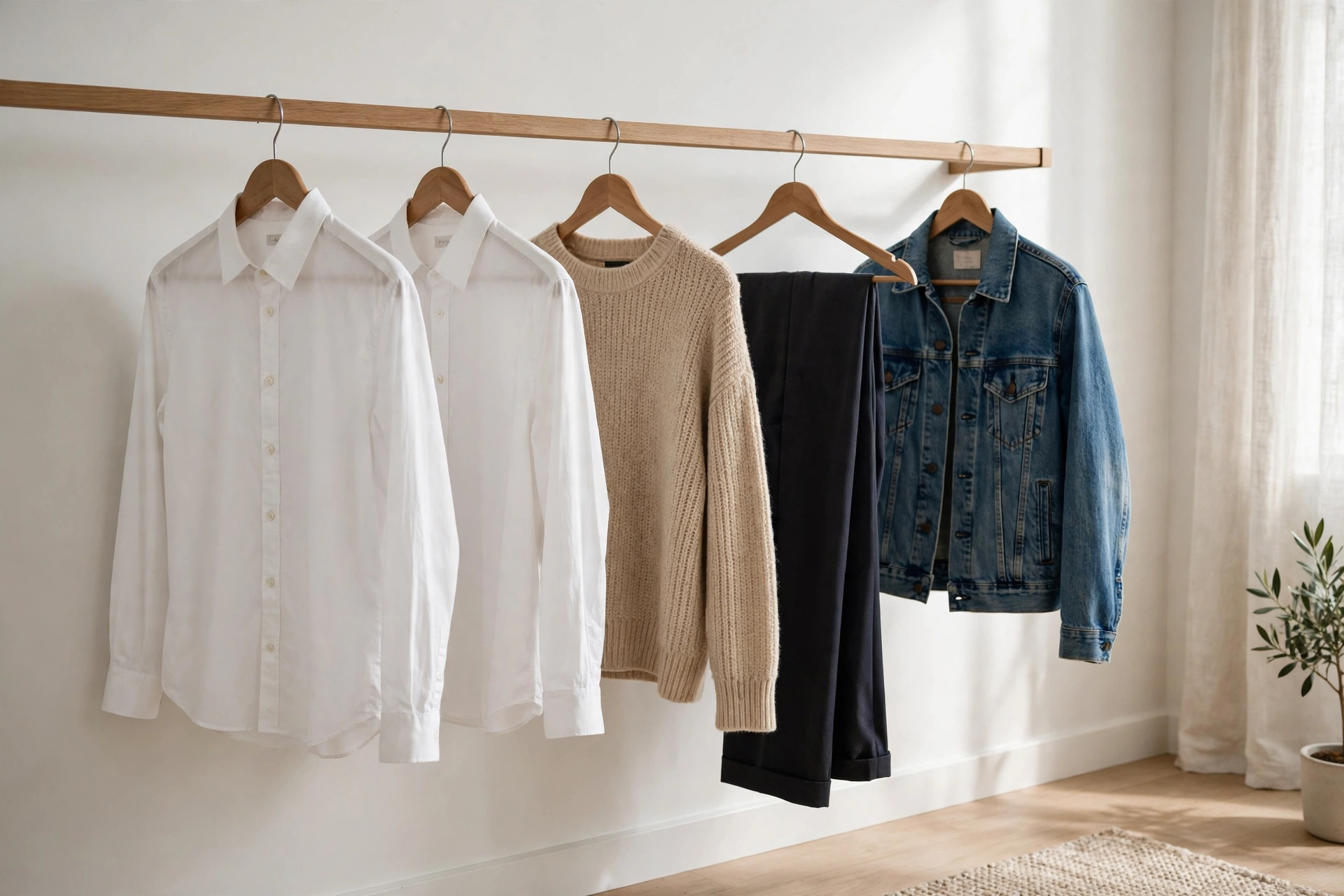
How to Build a Capsule Wardrobe: A Beginner’s Step-by-Step Guide
Open your closet, see dozens of clothes, and still feel like you have nothing to wear. That is the problem a capsule wardrobe solves. A capsule wardrobe is a small, intentional collection of versatile pieces that all work together, so getting dressed takes minutes and every item earns its place. Learning how to build a capsule wardrobe is not about throwing everything away or buying a whole new closet — it is about auditing what you already own, choosing a colour palette, and filling only the gaps that remain. This beginner’s guide walks through the process step by step, with realistic numbers and no pressure to be perfect.
The idea is simple, and it has been around for decades: instead of owning many clothes that rarely get worn, you own fewer clothes that mix and match easily. A typical capsule has around thirty to forty pieces per season, including shoes and outerwear but not underwear, sleepwear, or workout clothes. That number is a guideline, not a rule — your capsule might be bigger or smaller depending on your climate, your job, and your lifestyle. What matters is the principle: every piece should coordinate with most of the others, suit your actual life, and be something you genuinely like wearing.
Step 1: Audit Your Closet Honestly
Before you buy anything, take everything out of your closet and look at it with fresh eyes. Try things on, and sort them into three piles: keep, donate or sell, and maybe. The keep pile is for clothes that fit well, feel comfortable, and that you have actually worn in the last year. The donate pile is for things that do not fit, that you do not like, or that you keep just in case but never reach for. The maybe pile is for pieces you are unsure about — put them in a box for a month, and if you do not miss them, let them go. Be honest about duplicates: if you own five similar black tops, keep the best one or two and let the rest go. The audit is the hardest step emotionally, but it is also the most useful, because it shows you what you already have — and most people discover they already own half a capsule.
Step 2: Define Your Lifestyle and Needs
A capsule wardrobe that ignores your real life will fail within weeks. Before choosing any pieces, write down what your weeks actually look like. How many days do you work, and is the dress code formal, smart-casual, or relaxed? How often do you exercise, go out socially, or attend events? What is the weather like where you live, and how much does it change between seasons? A person who works from home needs very different clothes from someone who attends client meetings daily, and a capsule for a mild climate looks different from one built for freezing winters. List the activities you dress for each week, and estimate how many outfits each one needs. This list becomes the blueprint for your capsule — it tells you how many work tops, casual bottoms, and outer layers you genuinely need, rather than how many you imagine you need.
Step 3: Choose a Colour Palette
A colour palette is what makes a small wardrobe feel large, because when every piece shares a few colours, everything matches everything else. Start with two or three neutrals as your base — black, white, navy, grey, beige, or brown — and add one or two accent colours that you love and that suit you, such as olive, burgundy, or soft blue. Check your keep pile: the colours you already wear most are usually the right ones. When you shop for new pieces, stick to the palette, even when a pretty item in a random colour tempts you. That discipline is what turns thirty pieces into dozens of outfits. Patterns are fine too, but keep them within the palette — a striped top in navy and white, or a checked shirt in your accent colour, adds interest without breaking the system.
Step 4: Pick Your Core Pieces
Now build the capsule itself, starting with what you already kept. A typical beginner capsule includes a mix of tops, bottoms, layers, and shoes, roughly in these proportions: about ten to twelve tops, including T-shirts, shirts, and blouses; four to six bottoms, such as jeans, trousers, and a skirt if you wear them; three to four layers, such as a cardigan, a blazer, and a knit; one or two dresses or jumpsuits if you wear them; two to three pairs of shoes; and one or two coats or jackets for the season. Every piece should pass three tests: it fits well, it matches at least three other pieces in the capsule, and it suits at least two of the activities on your lifestyle list. If a piece fails any of those tests, it does not belong in the capsule — it can live in storage, but it should not take up space in your daily rotation.
Step 5: Fill the Gaps — Slowly and Intentionally
After the audit and the core selection, you will have a short list of gaps: maybe you need a good pair of dark jeans, a white shirt that actually fits, or a versatile jacket. Fill those gaps one at a time, and buy the best quality you can afford rather than the cheapest option. A well-made piece that lasts three years is better value than three cheap ones that fall apart. Try things on with pieces you already own before buying, and give yourself a cooling-off rule: wait a day before buying anything that is not on your gap list. This slow, intentional shopping is the opposite of impulse buying, and it is what keeps a capsule from slowly turning back into a cluttered closet. If you are thinking about the wider impact of your clothes, our guide to what is sustainable fashion explains how buying fewer, better pieces fits into a more sustainable approach, and our piece on what is fast fashion explains the system a capsule wardrobe helps you step away from.
Step 6: Plan Outfits, Not Just Pieces
A capsule works best when you think in outfits rather than individual items. Before the week starts, lay out or note down five or six outfits from your capsule, mixing tops, bottoms, and layers in combinations you have not tried before. You will be surprised how many outfits thirty pieces can make — the maths is on your side, because each top can pair with each bottom, and each layer multiplies the combinations again. Take a quick photo of outfits you like, so you can repeat them without thinking. If you find yourself always reaching for the same three outfits, that is useful information: it may mean the rest of the capsule does not fit your taste, and a small swap will fix it.
How to Build a Capsule Wardrobe for Each Season
A capsule is not a one-time project — it rotates with the seasons. At the start of each season, store the out-of-season pieces and bring back the ones for the coming weather. This is the moment to repeat the audit in miniature: try everything on, remove anything that no longer fits or that you did not wear last season, and note the gaps for the new season. A winter capsule needs heavier knits, a proper coat, and warmer shoes; a summer capsule needs lighter fabrics, fewer layers, and breathable shoes. Keeping the off-season clothes in a separate box or shelf keeps your closet calm and makes getting dressed easier every morning. The seasonal swap also gives you a natural moment to notice trends you like — if a style catches your eye, our guides to dark academia fashion and y2k fashion are good places to explore looks before deciding whether they fit your palette and lifestyle.
Common Capsule Wardrobe Mistakes
A few mistakes trip up nearly every beginner. The first is copying someone else’s capsule exactly — a list built for a different climate, job, and body will not work for you, so use other people’s capsules as inspiration, not as a shopping list. The second is buying everything new at once, which is expensive and usually means you have not learned what you actually like wearing. The third is choosing a palette of colours you think you should like rather than the ones you reach for. And the fourth is being too strict: a capsule is a tool, not a test. If a fun, non-essential piece makes you happy and you wear it, keep it. The goal is a wardrobe that makes your mornings easier, not one that follows a rulebook perfectly.
Maintaining Your Capsule Over Time
Once your capsule is working, maintenance is light. Follow a one-in, one-out rule: when you buy a new piece, remove an old one. Repair small damage promptly — a missing button or a loose hem is a ten-minute fix that saves a good piece. Wash clothes as the labels direct, and store knits folded rather than hung so they keep their shape. Every few months, check which pieces you have not worn and ask why: if the answer is fit or comfort, let the piece go; if the answer is that you forgot about it, move it to the front of the closet. A capsule wardrobe is a living system, and the small habit of reviewing it keeps it working year after year. Learning how to build a capsule wardrobe is really about learning what you like, what you need, and what you can let go of — and once you know that, getting dressed stops being a daily decision and starts being the easiest part of your morning.
Frequently Asked Questions About How to Build a Capsule Wardrobe
How many pieces should a capsule wardrobe have?
A typical capsule has around thirty to forty pieces per season, including shoes and outerwear. That number is a guideline, not a rule — the real question in how to build a capsule wardrobe is whether every piece coordinates with the others and suits your actual life.
Do I need to buy all new clothes to learn how to build a capsule wardrobe?
No. Start with an honest audit of what you already own, because most people discover they already own half a capsule. The first lesson in how to build a capsule wardrobe is to buy only the gaps that remain, one piece at a time.
How often should I update my capsule wardrobe?
Review your capsule at the start of each season, when you swap out-of-season pieces for the coming weather. That seasonal review is a natural part of how to build a capsule wardrobe, and it is the moment to remove what no longer fits.
What colours should I choose, and do they matter in how to build a capsule wardrobe?
Start with two or three neutrals as your base and add one or two accent colours you love. A shared colour palette is what makes a small wardrobe feel large, and it is central to how to build a capsule wardrobe.
Can a capsule wardrobe work for a formal job?
Yes. A capsule is built around your real life, so if your job requires formal dress, your capsule should be built from formal pieces in your colour palette. Learning how to build a capsule wardrobe means matching the clothes to your week, not copying someone else’s list.
What is the biggest mistake beginners make when learning how to build a capsule wardrobe?
The biggest mistake is copying someone else’s capsule exactly, because a list built for a different climate, job, and body will not work for you. Use other people’s capsules as inspiration in how to build a capsule wardrobe, not as a shopping list.